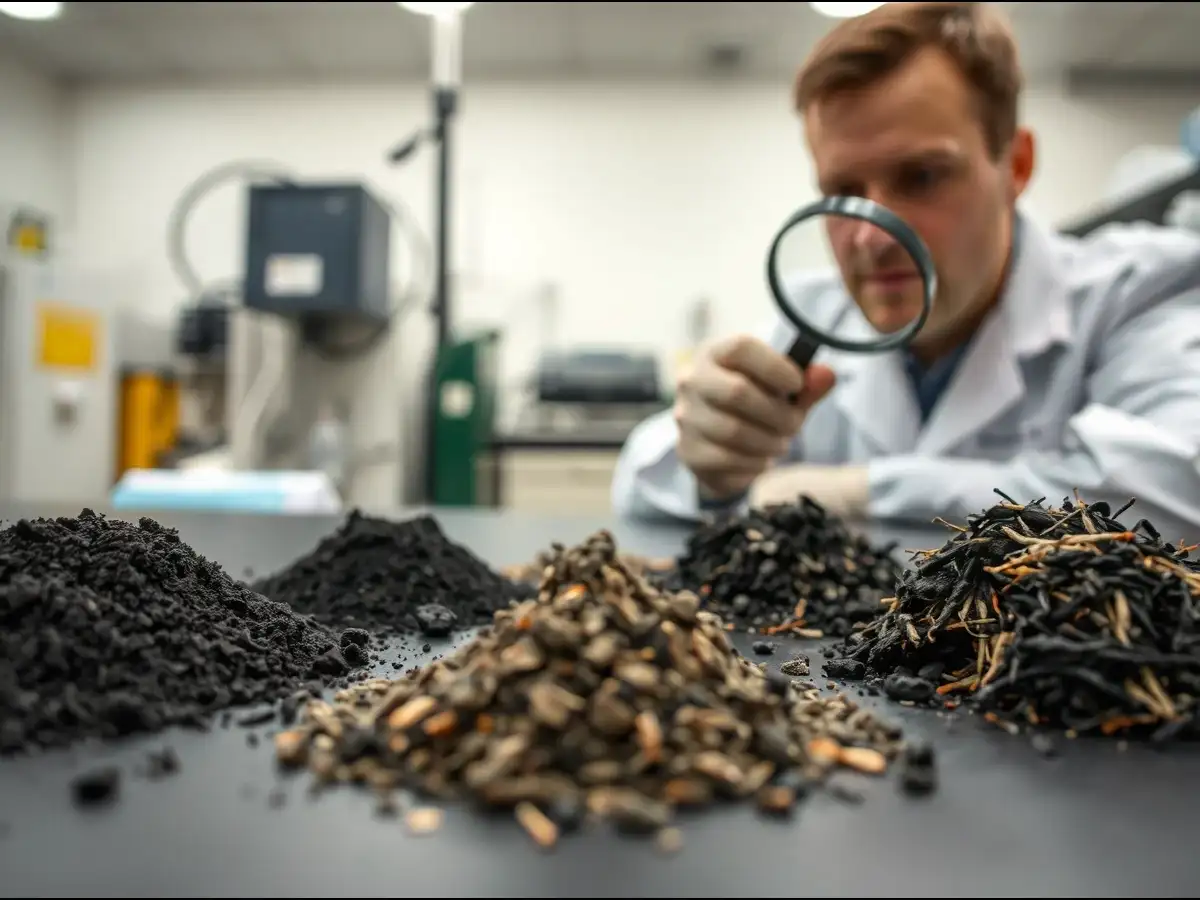
A carbon-rich material made by heating biomass could offer a new way to tackle one of the most persistent pollution problems found at US military facilities — and scientists are now investigating how the same type of material can be engineered from agricultural waste and even an invasive weed.
The research centres on biochar, a carbon-rich material produced by heating plant or other biomass under controlled conditions.

A NEW POTENTIAL
In a study published in 'Environmental Science & Technology' in February 2026 under the title 'Leaching of PFOS and PFBS to Groundwater at US Air Force Bases: Could Biochar Offer an Effective Mitigation Strategy?', researchers from the US Department of Agriculture's Agricultural Research Service examined the problem of PFAS contamination associated with US Air Force bases. They noted that the use of aqueous film-forming foams at military facilities can contaminate soil and groundwater with PFAS, particularly around testing and training areas.
The researchers then tested whether biochar incorporated into contaminated soil could prevent two PFAS chemicals (PFOS and PFBS) from moving downward towards groundwater.
THE BIG FINDING
The result was striking in laboratory soil-column experiments. A wood-based biochar produced at temperatures above 900°C, when added to sandy-loam soil at 1% by mass, retained more than 99% of PFOS. A further 400°C thermal treatment of the biochar in air produced essentially non-detectable PFBS levels in the column leachate.