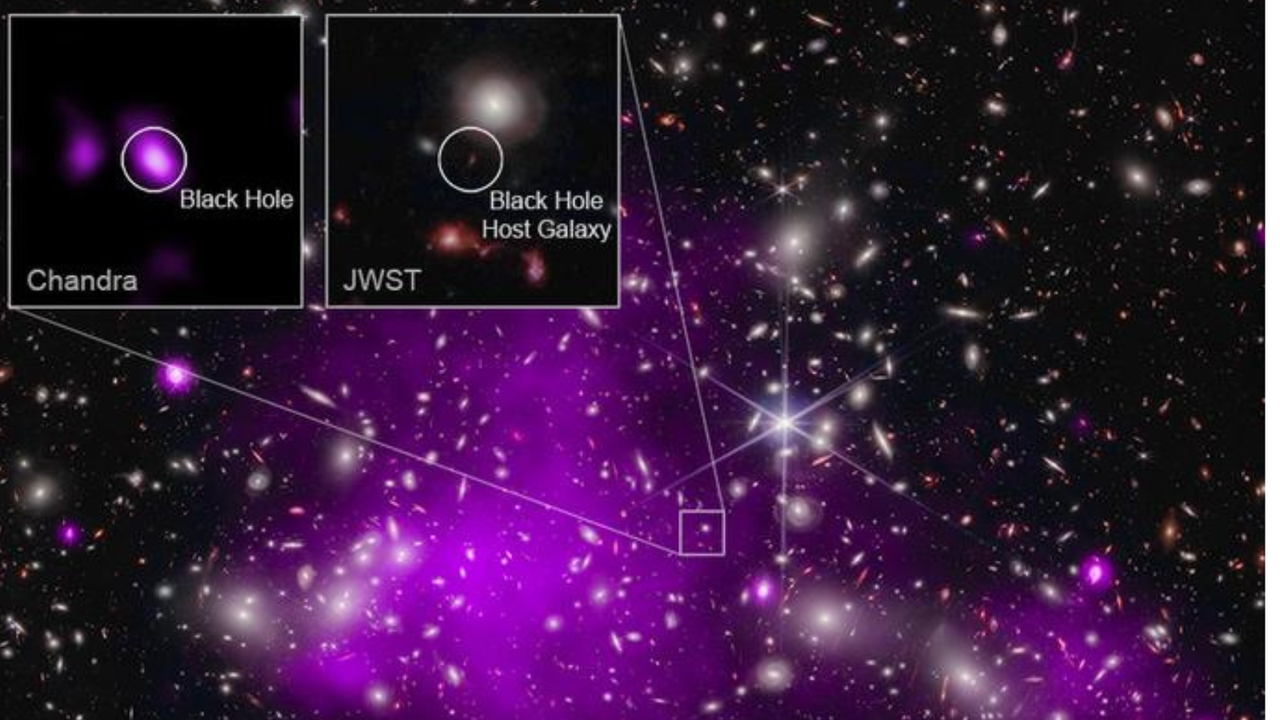
"Dark stars" could help solve three seemingly disconnected mysteries that emerged at cosmic dawn — mysteries recently discovered by the James Webb Space Telescope. The puzzles include the surprising overabundance of supermassive black holes in the early universe, the unexpected existence of "blue monster" galaxies, and the so-called "little red dots" scientists have been finding. The latter is an entirely new class of cosmic objects in the early universe that appear to have disappeared before the cosmos was around 2 billion years old.
Dark stars are hypothetical objects that are proposed to have existed in the early universe. Rather than being powered by nuclear fusion, as normal stars are, dark stars are thought to have been powered by the annihilation of dark matter particles. "Dark" refers to that source of these stars' energy; they would have, in fact, been incredibly bright.