Get all your news in one place.
100’s of premium titles.
One app.
Start reading
MyLifeXP
MyLifeXP
Noopur Kumari

What Ancient India Knew That We Forgot Secrets of Brihadeeswara Temple

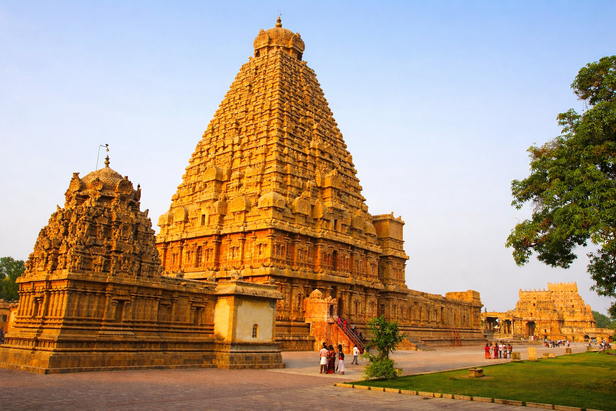
In Thanjavur, often called the cultural capital of Tamil Nadu, rises a temple that seems to touch the sky. Built in 1010 CE, the Brihadeeswara Temple has stood proudly for more than 1000 years. Dedicated to Lord Shiva, this grand monument represents the peak of Chola dynasty architecture. Every stone speaks of planning, devotion, and advanced knowledge of science. It is not only a sacred place but also a symbol of India’s rich heritage. Recognised as part of the Great Living Chola Temples by UNESCO, it continues to inspire awe across the world. Here are five powerful reasons why this temple remains unforgettable.

Built in Just Seven Years

A Temple Built Against Time
<p>A thousand-year-old structure completed in record time.</p>

Between 1003 CE and 1010 CE, this magnificent granite temple rose into the sky without modern tools or machines. There were no cranes, no cement mixers, and no advanced technology. Skilled artisans relied on traditional techniques, precise calculations, and remarkable teamwork. Massive stones were transported over long distances, carefully shaped, and placed with astonishing accuracy. Every step required discipline, patience, and deep knowledge of architecture. The Chola dynasty displayed outstanding organization and leadership. Completing such a grand monument in just seven years remains extraordinary even today. This masterpiece reflects the brilliant engineering vision and powerful determination of Raja Raja Chola I.

The 216-Foot Vimana That Still Stands Strong

Where Stone, Music, and Prayer Unite
<p>A thousand years later, worship continues daily.</p>

The towering vimana rises 216 feet above the sacred city of Thanjavur, commanding the skyline with silent authority. For more than a thousand years, it has stood strong without visible cracks, a symbol of extraordinary craftsmanship. Its carefully designed pyramid form allows the massive weight to spread evenly downward, reducing pressure on any single point. This intelligent engineering helps the structure withstand harsh weather, intense heat, and even mild earthquakes. The precise measurements reveal advanced knowledge of geometry and proportion. Every stone fits perfectly, creating balance and stability. Today, it remains one of the tallest and most remarkable temple towers in India.

The 80-Ton Mystery Stone

Stones Locked Without Cement”
<p>Precision carving created a self-supporting marvel.</p>

At the summit of the majestic vimana rests a single granite block weighing nearly 80 tons, known as the sacred Kumbam. Historians believe it was raised using an enormous ramp stretching almost six kilometres, a breathtaking feat for the 11th century. Imagine shifting such massive weight without cranes, engines, or modern tools. Elephants, sturdy wooden rollers, ropes, and the coordinated strength of skilled workers likely made the impossible possible. Yet the precise technique remains uncertain, adding to the wonder. Even today, structural engineers study this achievement with deep respect. The Kumbam stands as timeless proof of ancient India’s extraordinary architectural brilliance and vision.

Mortarless Engineering and Distant Granite

The temple was constructed without mortar, using a precise interlocking system that allowed each granite block to fit perfectly into the next. This dry construction technique created a self-supporting structure of remarkable strength and balance. The stones were shaped with such accuracy that they locked together naturally, distributing weight evenly across the monument and ensuring long-lasting stability. What makes this achievement even more extraordinary is that Thanjavur had no nearby granite quarries. Massive stones were transported from nearly 50 to 60 kilometres away. This required detailed planning, skilled labor, and advanced engineering knowledge, highlighting the Cholas’ exceptional mastery in architecture and logistics.

Unlock insightful tips and inspiration on personal growth, productivity, and well-being. Stay motivated and updated with the latest at My Life XP.

Frequently Asked Questions (FAQs)

1. Why is Brihadeeswara Temple so famous?

Brihadeeswara Temple is famous for its massive scale, precise granite construction, and 1,000-year-old durability. Built by King Rajaraja Chola I, it stands as a masterpiece of Chola architecture and engineering brilliance.

2. Was the temple really built without cement or mortar?

Yes. The temple was constructed using interlocking granite stones without mortar. This dry construction method makes the structure stable, strong, and long-lasting.

3. How was the 80-ton stone placed on top of the temple?

Historians believe a long inclined ramp was used to slowly move the heavy stone to the top. Though exact details remain debated, the engineering skill was extraordinary for that era.

4. How old is Brihadeeswara Temple?

The temple was completed in 1010 CE, making it over 1,000 years old and still standing strong today.

5. Is Brihadeeswara Temple a UNESCO World Heritage Site?

Yes. It is part of the Great Living Chola Temples recognized by UNESCO for its cultural, architectural, and historical importan

Sign up to read this article
Read news from 100’s of titles, curated specifically for you.
Already a member? Sign in here
Related Stories
Top stories on inkl right now
One subscription that gives you access to news from hundreds of sites
Already a member? Sign in here
Our Picks
Fourteen days free
Download the app
One app. One membership.
100+ trusted global sources.