
Get all your news in one place.
100's of premium titles.
One app.
Start reading
MusicRadar
MusicRadar
Entertainment
Paul Elliott

“What a weird song. Weird chord sequences, weird everything. I have no recall of what was going on in my head. For that to be your most streamed song… kind of weird, don’t you think?”: Mick Jagger on The Rolling Stones’ deathless classic

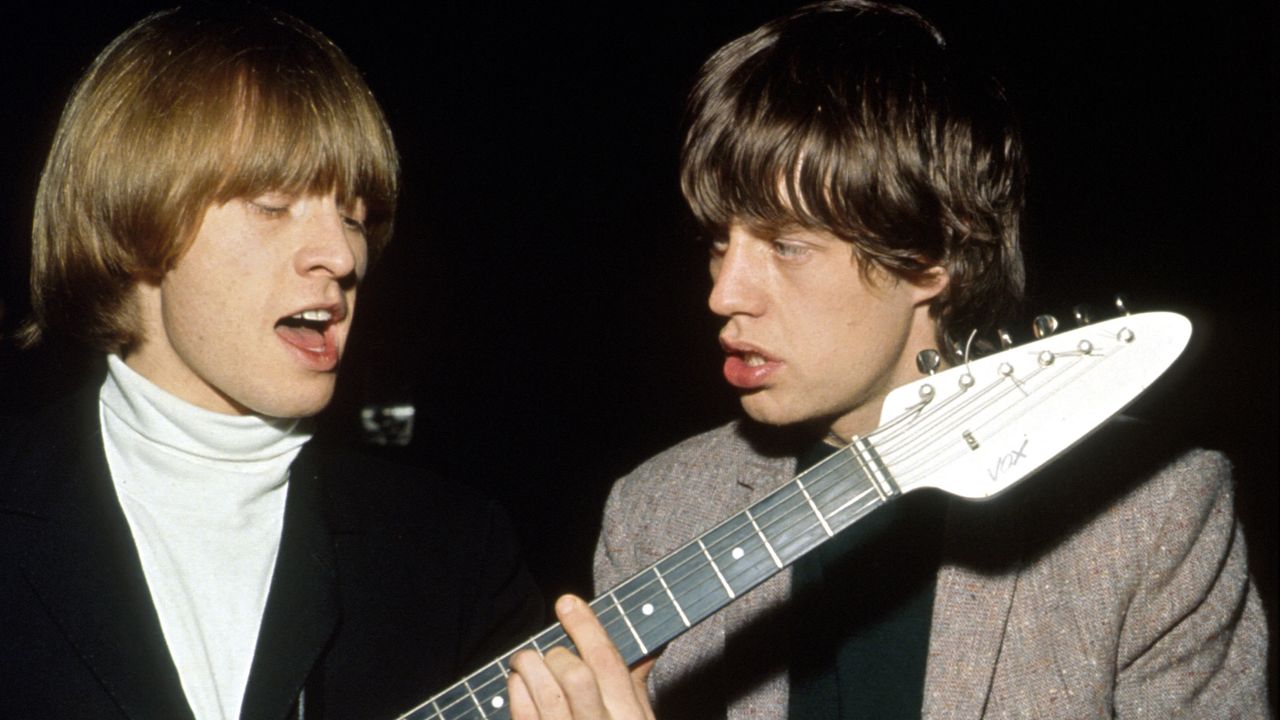
Brian Jones and Mick Jagger in 1966.

The Rolling Stones are back in business this year with a new album, Foreign Tongues, released on 10 July 2026. Meanwhile, Mick Jagger says he is somewhat bemused by the popularity of a classic Stones song from the ’60s.

In new interviews with MOJO magazine, Jagger and guitarists Keith Richards and Ronnie Wood discuss the making of Foreign Tongues and also look back on the Stones’ rich history.

Foreign Tongues was recorded in London with producer Andrew Watt and features an impressive array of guest musicians.

Paul McCartney plays bass on the ballad Covered In You, Steve Winwood plays Hammond organ on several tracks, and The Cure’s Robert Smith adds guitar to Divine Intervention and synthesizer and backing vocals to Never Wanna Lose You.

For all that, Keith Richards insists that with this album, as with any new Stones album, old values still apply.

Referring to his creative partnership with Jagger, Richards tells MOJO: “We are very different people and that’s what makes the gravy, but we all know what the Stones are supposed to sound like.”

Richards describes the new song Ringing Hollow as a kind of love letter to America and its great blues musicians, and says of his own journey of musical discovery: “You go through all the rock ’n’ rollers and realise that these cats all learned from Muddy Waters.

“Even now if I’m stuck for an idea I’ll go back to the blues because the musical form is limited and that makes it all the more intriguing. You’re telling me you can get more out of this thing? Ringing Hollow is our way of saying, ‘We love you.’”

Ronnie Wood suggests that his most important contribution to the band was acting as peacemaker between Jagger and Richards in the ‘80s.

“They definitely would have split at that point,” Wood recalls, “so yes, I am the glue of this band.”

Wood is typically self-deprecating when describing his role as guitar-playing sidekick to Richards.

“Keith might say, ‘I’m the cake and Ronnie’s the icing.’ Which is true. Keith has the riff and I do the fiddly bits, which he thinks doesn’t take any talent and anyone can do. Thanks, Keith.”

In Jagger’s exchanges with MOJO, he is sympathetic when reminiscing about Brian Jones, the guitarist and co-founder of the Stones whose problems with drugs led to his dismissal from the group and his early death in 1969 at the age of 27.

“Brian had all kinds of problems,” Jagger says, “and one of them is that some people should be very careful about going into show business. He might have been psychologically suited to being a session musician.

“To be in a band, in that era, as a young star, it puts a lot of pressure on you. Your music-making takes second place to all the externals you were not ready for and weren’t even expecting. You’ve got to be really tough to survive.”

Jagger also acknowledges Jones’ contribution to the classic Stones song that is far and away their most popular track on Spotify, with 1.7 billion streams and counting – the 1966 single Paint It, Black.

“What a weird song,” Jagger says. “Weird chord sequences, weird everything.

“I have no recall of what was going on in my head when I wrote the lyrics or how Keith came up with it in the first place. Then you have Brian, who is very dominant with that sitar lick.

“The mood is really odd. I wish we could do something like that now, is what I’m trying to say. For that to be your most streamed song… kind of weird, don’t you think?”

Sign up to read this article
Read news from 100's of titles, curated specifically for you.
Already a member? Sign in here
Related Stories
Top stories on inkl right now
Our Picks
Fourteen days free
Download the app
One app. One membership.
100+ trusted global sources.







