Get all your news in one place.
100’s of premium titles.
One app.
Start reading
Radio France Internationale
World
RFI

Western powers signal support for US as war spreads after strikes on Iran

Iraqi Shiites Muslim men chant anti-US and anti-Israel slogans, during a rally the day after the assassination of Iran's supreme leader, during a symbolic funeral in the district of Sadr City, in Baghdad on 1 March 2026. AFP - AHMAD AL-RUBAYE

Missile strikes and retaliatory attacks have spread across multiple countries, as Western powers signal support for Washington amid fears of a wider Middle East war.

The conflict between Iran, Israel and the United States widened sharply on Monday, with missile strikes, drone attacks and retaliatory bombardments rippling across the Middle East – raising fears that a regional war is no longer a distant possibility but an unfolding reality.
Iran and its allied militias launched missiles at Israel and several Arab states, with one apparent strike hitting the US Embassy compound in Kuwait City. Fire and smoke were seen rising from inside the complex as alarms sounded, though there were no immediate reports of casualties. The attack came shortly after US authorities warned Americans in Kuwait to take cover.

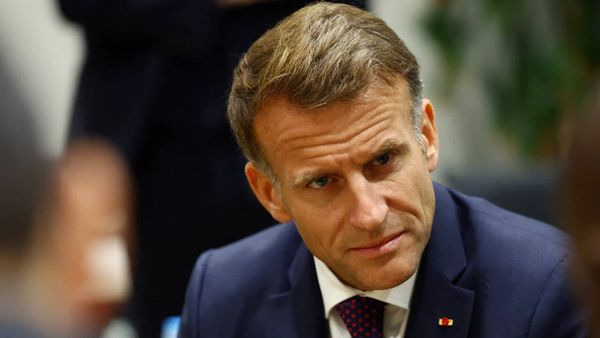
The escalation has quickly drawn in Western powers. Britain, France and Germany signalled their readiness to support efforts to curb Iran’s attacks, aligning themselves with Washington as the conflict deepens. While their role remains framed as supportive rather than directly combative, the statements underline how rapidly the crisis is pulling in key European players alongside the US.

At the same time, Israel and the US continued a sustained campaign of airstrikes across Iran, targeting missile facilities and naval assets. President Donald Trump claimed that nine Iranian warships had been sunk and that the navy’s headquarters had been largely destroyed, while US officials confirmed the use of B-2 stealth bombers dropping 2,000-pound bombs on strategic sites.

EU foreign ministers warn on impact of conflict in Iran after Khamenei's death

Regional flashpoints multiply

The fighting is no longer confined to Israel and Iran. In Iraq, a pro-Iranian militia said it had carried out a drone attack on US troops at Baghdad airport, a day after claiming a similar strike on a base in Irbil. Cyprus, meanwhile, reported that an uncrewed drone caused limited damage at a British air base on the island – a sign that the Mediterranean is also edging into the conflict zone.

Hezbollah opened another front, firing missiles from Lebanon into Israel in response to the killing of Iran’s Supreme Leader Ali Khamenei. Israel said most projectiles were intercepted or landed in open areas, but retaliatory strikes on Lebanon killed at least 31 people and wounded 149, according to Lebanese officials. Beirut was rocked overnight by explosions as Israeli warplanes flew low overhead.

Lebanon’s government convened an emergency meeting, reflecting growing alarm that the country is being pulled deeper into a confrontation it can ill afford. Israeli military officials warned that the intensity of strikes would increase, suggesting further escalation is imminent.

Across the Gulf, the impact has been immediate and unsettling. Iran’s counteroffensive has struck cities long seen as stable hubs, with fatalities reported in the United Arab Emirates, Kuwait and Bahrain. Authorities said most incoming missiles and drones were intercepted, but some slipped through or caused damage as debris fell, hitting civilian areas.

France's Macron insists on diplomacy to solve conflict in Iran and Middle East

Mounting casualties and uncertainty

Inside Iran, officials say more than 200 people have been killed since the start of the strikes. Tehran’s streets have largely emptied as residents shelter from bombardment, while the paramilitary Basij has set up checkpoints across the capital, tightening internal security at a moment of profound uncertainty.

The killing of Khamenei – Iran’s supreme leader for more than three decades – has created a significant power vacuum, adding another layer of instability. Senior Iranian official Ali Larijani struck a defiant tone, insisting Tehran would not negotiate with the US.

In Israel, missile strikes have hit multiple locations, including Jerusalem and a synagogue in Beit Shemesh, where nine people were killed and 28 wounded. The overall death toll in Israel has reached 11, according to rescue services.

Trump has warned that more casualties are likely, saying bluntly: “Sadly, there will likely be more before it ends.” He has urged Iranians to “take over” their government while also hinting at possible dialogue with new leadership in Tehran – though he stressed that military operations would continue “in full-force” until US objectives are met.

Meanwhile, the World Health Organization issued a stark reminder of the human cost, calling for the protection of civilians and healthcare facilities.

Yet with missiles crossing borders, militias activating across multiple countries, and major powers edging closer to direct involvement, the latest escalation now risks becoming a full-blown regional war, with consequences that could extend far beyond the Middle East.

(with newswires)

Sign up to read this article
Read news from 100’s of titles, curated specifically for you.
Already a member? Sign in here
Related Stories
Top stories on inkl right now
Our Picks
Fourteen days free
Download the app
One app. One membership.
100+ trusted global sources.