Get all your news in one place.
100's of premium titles.
One app.
Start reading
The Economic Times
The Economic Times

No ceasefire in sight: US bombs Iranian sites, IRGC hits back with missiles on American bases across Gulf

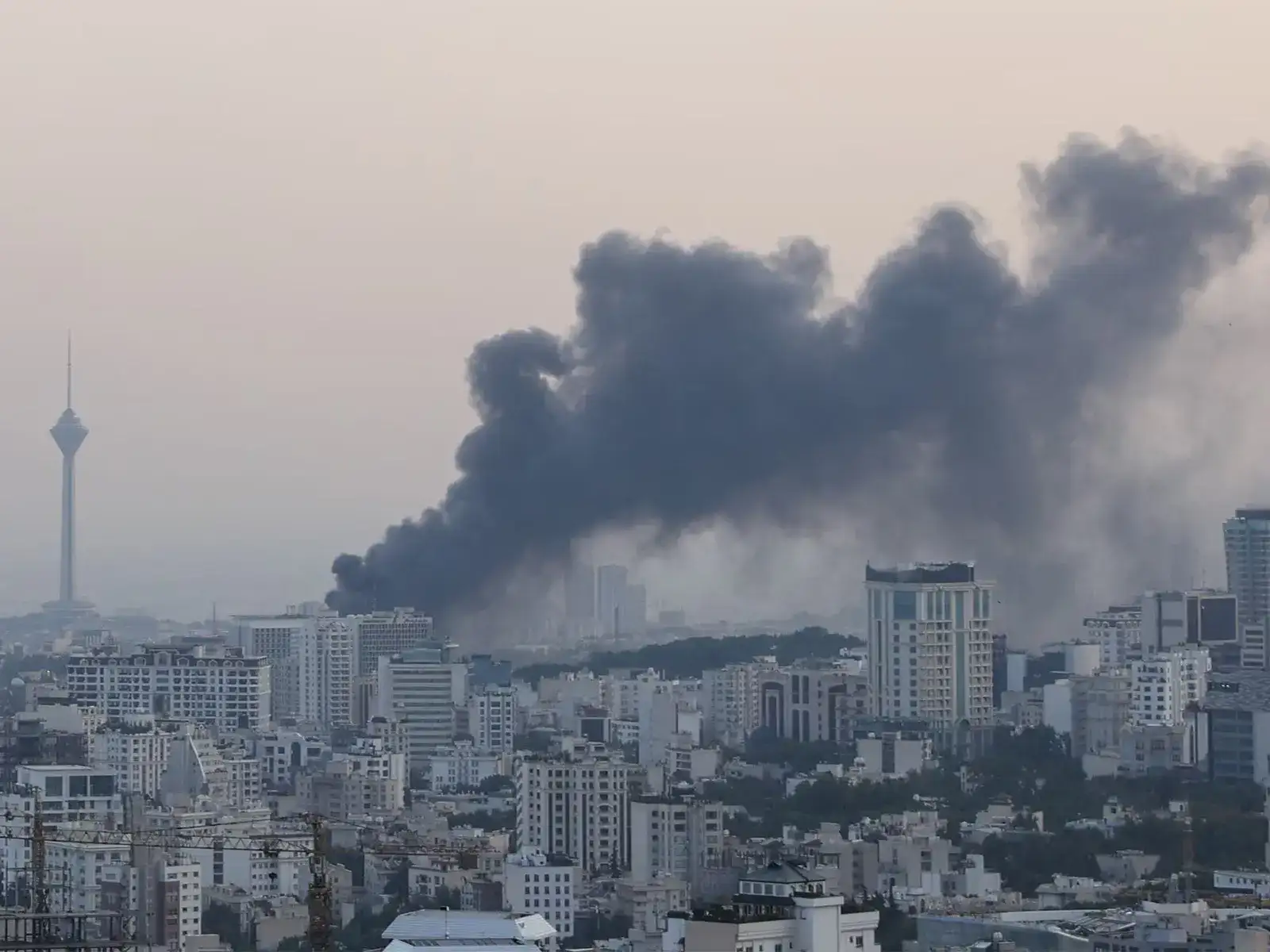
The United States launched retaliatory strikes against Iran on Tuesday after President Donald Trump blamed Tehran for downing a US Army Apache helicopter patrolling the Strait of Hormuz, triggering a rapid chain of escalation that, within hours, spread across the Gulf to Bahrain, Kuwait and Jordan, and pushed an already fragile ceasefire to the edge.

"I believe the response should be very strong, very powerful, and that's what this one is," Trump told ABC News.

THE HELICOPTER GOES DOWN

The Apache went down in waters near Oman's coast at around 3 am Tuesday while on patrol. A US Navy surface drone rescued both crew members within two hours. The US military's Central Command said the soldiers were in stable condition. Trump said the two pilots were uninjured, adding that the incident "wasn't a big deal" but that the US "must, of necessity, respond."

Also read: Iran's Guards attack US Fifth Fleet in Bahrain after US strikes on Iran

The Apache was brought down by a one-way Iranian attack drone, according to a US official who spoke on condition of anonymity. It remained unclear whether the collision was intentional, with official statements saying the crash is still under investigation. Iran's state media cited a military source as saying no offensive air operations had been conducted in the strait in the previous 24 hours.

In an earlier post on X, Iranian Foreign Minister Abbas Araqchi did not directly address the helicopter incident but said foreign forces in the region risked being caught in "accidents or crossfire." "To reduce risk, best solution is for them to leave," he wrote.

US STRIKES IRAN ALONG THE STRAIT

The US response came the same evening. The strikes, which began at 5 pm ET, targeted several Iranian air defence and radar systems around the Strait of Hormuz, according to Axios, citing a US official. Iran's state media reported explosions on Qeshm island in the strait, a projectile hit in the port city of Sirik, and later blasts near Bandar Abbas and Jask county, close to the entrance of the strait.

The IRGC said the US attacks damaged a telecommunications mast and destroyed two water tanks in Sirik. Washington described the operation as "a proportional response to unjustified Iranian aggression." Tehran said it would not let it go unanswered.

IRGC TARGETS FIFTH FLEET IN BAHRAIN

In the early hours of Wednesday, the IRGC said its naval forces launched a drone attack against the US Navy's Fifth Fleet headquarters in Bahrain at approximately 2:30 am local time, using Shahed-136 one-way attack drones. The IRGC framed the strike as direct retaliation for the US attacks on Jask, Sirik and Qeshm. It warned that clashes were "still ongoing" and that any further US military action would trigger a "stronger response." The attack claim could not be independently verified, with no immediate confirmation from Bahraini authorities or US Central Command.

SIRENS IN KUWAIT AS MISSILES, DRONES INTERCEPTED

Kuwait's military confirmed its air defences had been activated, saying "Kuwaiti air defences are currently engaging hostile missile and drone attacks." The Kuwaiti military said any explosions heard were the result of interceptions and urged the public to remain calm.

Also read: Iran war fallout: Fuel use drops 6.5% in May; experts see warning signs for economy

The US military said Iran launched seven ballistic missiles towards Kuwait and Bahrain, of which six were successfully intercepted while the seventh failed to reach its intended target. The IRGC also claimed a drone strike on Ali Al Salem Air Base in Kuwait, which hosts US helicopter units. Iran warned that further aggression would prompt a response beyond limited strikes, including the complete closure of the Strait of Hormuz to oil and gas shipments.

JORDAN BASE HIT, PEACE TALKS UNDER FRESH STRAIN

The IRGC said it targeted four sites at the US Al-Azraq Air Base in Jordan using long-range missiles, saying the targets included F-35 fighter jet hangars and a command-and-control centre, and warned it was ready to deliver a "crushing and decisive" response to any further US attack. There were no immediate reports of air raid sirens in Jordan. A CNN investigation published in early May had found that at least 16 American military sites had been damaged in Iranian strikes since the conflict began.

The widening of strikes to Jordan, a key US ally that has largely stayed on the margins of the conflict, marks a significant escalation, and deals a further blow to Trump's push for a negotiated settlement. As recently as Monday, Trump had said there was "a good chance" of signing a deal within two to three days. The events of Tuesday night and Wednesday morning have made that timeline look increasingly unlikely.

PEACE DEAL IN DOUBT

The episode compounds an already difficult path to a settlement. The Strait of Hormuz, which before the conflict carried a fifth of the world's crude oil and liquefied natural gas, remains largely blocked. Any deal faces significant structural hurdles: Iran's demands include the lifting of international sanctions, the release of billions of dollars in frozen assets and recognition of its control of the strait. Washington insists any agreement must ensure Tehran cannot develop a nuclear weapon and has imposed its own blockade of Iranian ports.

US Energy Secretary Chris Wright said on Tuesday that ship traffic through Hormuz is rising "very meaningfully," but cautioned it would take many months to return to normal energy flows once the war ends.

ISRAEL STRIKES TYRE

In a parallel conflict, Israel struck the historic port city of Tyre in southern Lebanon, killing at least eight people, the deadliest attack on the city since fighting erupted there in early March, when Hezbollah launched rockets at Israel. Iran and Israel also exchanged airstrikes earlier this week, killing two people in Tehran. In northern Israel on Tuesday, Israeli troops killed one person near the Lebanese border after coming under fire, the military said.

Israel's refusal to halt its campaign against Iran-backed Hezbollah has been a persistent obstacle to Trump's ceasefire efforts. Tehran has long maintained that any peace deal with Washington depends in part on an end to the fighting in Lebanon. Israel has consistently said the Lebanon conflict should be treated separately from any US-Iran ceasefire, a position Hezbollah has implicitly reinforced by continuing its own attacks.

With inputs from Reuters

Sign up to read this article
Read news from 100's of titles, curated specifically for you.
Already a member? Sign in here
Related Stories
Top stories on inkl right now
One subscription that gives you access to news from hundreds of sites
Already a member? Sign in here
Our Picks
Fourteen days free
Download the app
One app. One membership.
100+ trusted global sources.