"Divide and conquer." It's a simple concept that has won wars for over a millennia. And it's a concept that's been employed to fragment societies, groups, and peoples so they turn on and fight each other while the true villain gets away with whatever dastardly scheme they've concocted. Why? Because we're stronger together than we are divided. And not much actually divides regular folks.
That's the ploy currently attempting to be used against the outdoors community, as after last year's defeat of the land sales provision in the "Big Beautiful Bill," thanks to the coming together of every outdoorsy group, the folks who want to push forward their agenda of sales, extraction, development, and divestment don't want us unified. They know they can't win when we're standing arm in arm. They know they can't give away our public lands when we're a concerted bloc.

They can't fight us all.
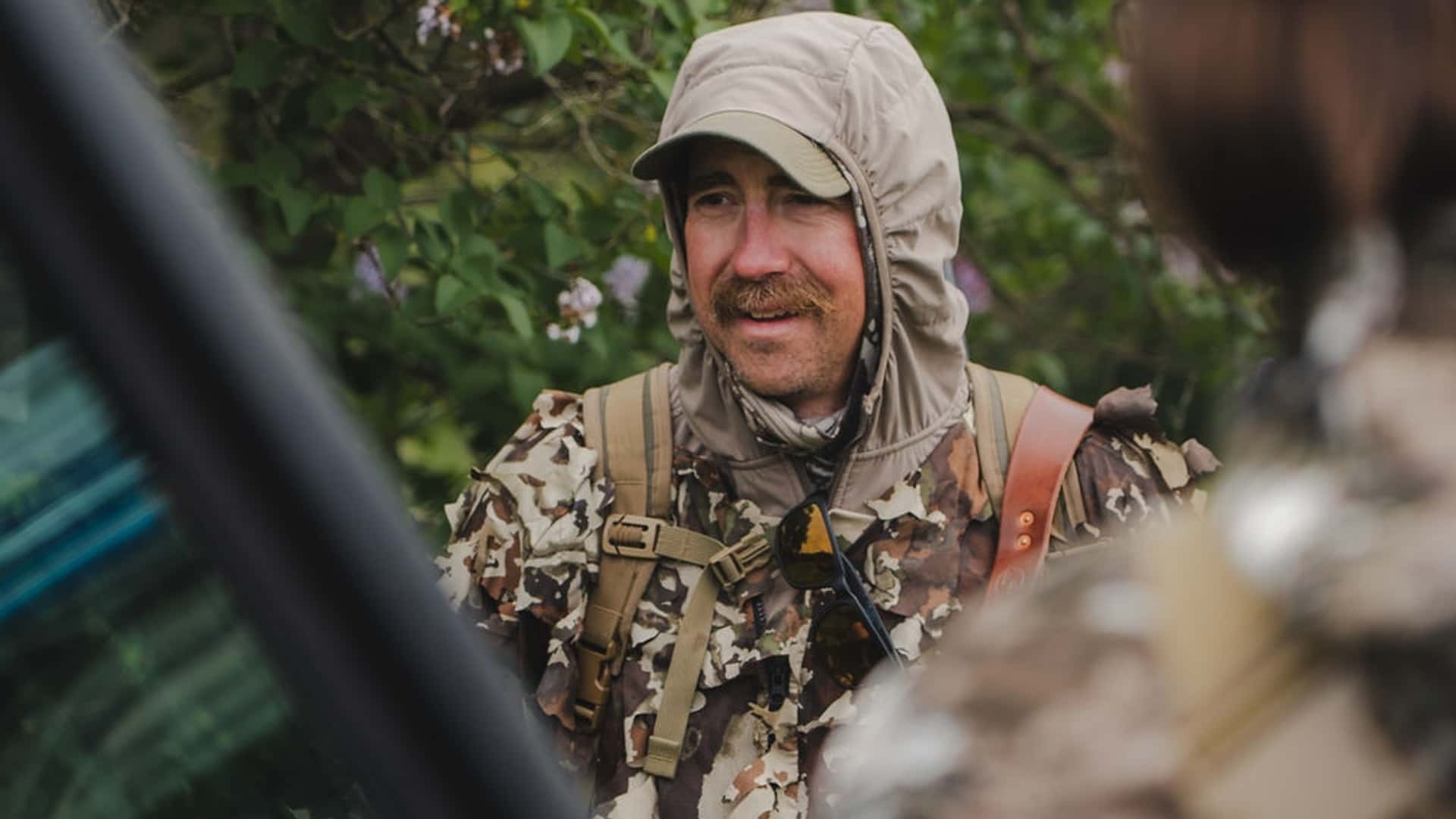
And that concept of "divide and conquer" is one that newly-minted Backcountry Hunters & Anglers President and CEO Ryan 'Cal' Callaghan has been thinking a lot about since his appointment. How important it is to get the groups—the hunters, anglers, off-roaders, campers, hikers, climbers, rafters, and other fellow land stewards—talking to one another, seeing that we aren't all that different, and how best to mobilize everyone to fight the devil at our doorsteps.
Because, folks, the attacks on our public lands and parks we've seen aren't getting fewer or less intense. If anything, they're only becoming more frequent and far more destructive. And those in charge are doing their damnedest to cut the public out of the process of how we manage, steward, and conserve our public lands.
I sat down with Cal a few days ago to talk about everything we can do, everything that needs to be done, the need for managing our public lands correctly, and the hope, the real hope, that he has for the groups to come together, put aside our supposed differences, and ensure future generations have access to the same places we now enjoy.
RideApart: What can we do to hopefully stop the "progress" on the sell-off public lands team?
Ryan Callaghan: Oh, I think at a very base level, people just need to understand that you do have a voice, at least right now, you do have a voice.
Some of the proposed changes would limit public comment, which is really scary, literally taking the public out of public lands. But at minimum, you should be writing your representatives and your senators and letting them know that these places mean a lot to you, even if that's your whole message. Love these places. This is what I do. I'd rather see them improved or maintained in such a way that other people have those opportunities, too. Very, very simple message. And then any other channel that's out there, including your own, if you want to make social media posts that just say, "Hey, it seems like there's a lot of stuff going on. At the end of the day, I love these places. I love the opportunities they provide and I don't want to see that changed."
I think that just kind of raises the tide of awareness for everybody, and that's a message anybody can get behind.
RA: To that effect, there's a growing, not division, but almost a concerted effort from the sell-off side to divide the community, the outdoors community. How do you get that message across when there are legitimate concerns and legitimate issues with how these places have been managed, how certain groups have been pulled out of the process, how certain groups have been elevated in the process? How do you bridge that divide? Because I see one of the communities, one I'm obviously attached to, is the off- roading community. They're being used as basically a hammer to...
RC: Trojan horse.
RA: Yeah, a little bit. We've seen that with hunters when they opened up certain portions of federal national parks to hunting, too, and they're like, "Well, you guys can now do this." And you're like, "Well, wait, what?" The same is being done to the off-roading side; to use your own words, they're being used as a Trojan horse. "You'll get all these awesome new off-road trails!" And I keep asking, "Are we?" I don't think we are. That's not the intent behind it, but everyone's kind of just saying it's increased access.
RC: It is. Divide and conquer is like the Art of War for a reason.
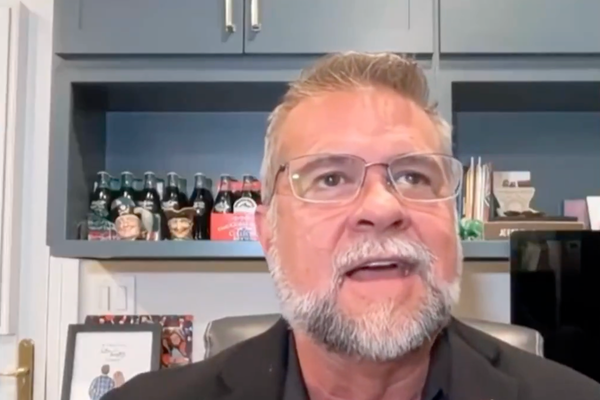
And folks are banking on the fact that these different communities are not interacting and talking. So it's like you got all sorts of great stuff on your wall back there representing motorized sports and archery and Calvin and Hobbes and fly fishing. There's a lot of overlap with a lot of different communities there. But the reality is the individual marketing is what sells and everybody's trying to, from the politicians to the manufacturers, we're trying to market people.
It's just going to be easier for us to sell you if you're just a fly fisherman and that's how you identify. And eventually we fall into these cliques, and we're not actively reaching out to these other communities. Whereas we know in the motorized world, there is a giant overlap with agriculture and a giant overlap with hunting. And there's probably in certain areas, it's just the fringes that are like, "Nope, all I do is this, and there's no part of me that uses this bike to access something to fish or hunt or ski or you name it."
Where we're at right now, it forces people to go, "Oh my gosh, I actually do do these other things and they're important to me too." But the way the messaging is I have to betray my own people, whereas it doesn't really exist.
Growing up in the Rocky Mountain West, everybody does everything. If you can't find a way to enjoy a season, you just don't live here because all the seasons can be harsh. And that's existed for a long time. It's just being really well weaponized, if you will, right now. So it is just like the economics of things, if you want to take roadless for instance, whether you want to see that go away or not, I just caution people. And one of the things, our job at Backcountry Hunters and Anglers is to go through every page of the 300-page draft environmental impact statement and actually read it and see what it says.
And in the draft environmental impact statement, it's very clear. Here are all the benefits, here are the things that we want to get rid of, and it just says right in there. It's like making these changes will likely decrease access, not increase access. As it stands, roadless areas get 76% of the overall visitation to the National Forest system, but we're being told that there is no access when, in reality, there's lots of roads and trails in there.
RA: I was on a trail in a wilderness area the other day.
RC: And the reason that Roadless is in place is not because we were shutting down roads with the Roadless Rule. Those roads were already shutting down because there was no budget to maintain them and there was no appetite to increase the budget to maintain them. And that happened before the Roadless Rule was in place.
The interesting thing right now, as this is being framed as pro-access, is there is no talk and no appetite from a Republican or a Democrat to say, "Hey, here is a hundred billion dollar bill that I want everybody to get behind so we can fund road expansion and trail expansion and maintain those roads and trails in the name of access."
So in a way that kind of works in our favor because we're not going to see this whole-scale expansion and destruction anytime soon, but it does remove a barrier for expansion into certain areas that aren't being talked about, and that's for mineral extraction. And I don't care if you run cattle on public land or you hike or you hunt or you fish or you ski or you like riding dirt bikes or side-by-sides. None of us get access in active mining operations.That's one of the few areas where for personal safety, you just don't get the option of going.
RA: You put it perfectly: there is no appetite to actually fund these things, both on an expansion side, but also to maintain these things. So when the groups that are actively proponents of these land changes, these management changes, no one's talking about how we actually maintain any of these trails or how we add new trails or how we do anything. It's just, "Well, this just deregulates things." And you're like, "Yeah, but for who is it deregulating for? Is it deregulation for you and me, or is it deregulation for extractive and development?"
Even in the Executive Orders or in even some of the press releases, like the last one about the Travel Management Plan, there's a lot of language about outdoor off-road recreation, but in it, they're also talking about energy independence. It's in the statements that they're using, even in small ways, because they can't help but include those things to be later to be like, "Well, we pointed out to this. We were being truthful. We told you what we were going to do. We just also couched it a little bit."
RC: Exactly. And then with the Roadless Rule or Travel Management Plan revision, I have worked with a broad spectrum of groups and with the exception of people way out on the fringes, nobody is talking about, "Oh, there's no room to improve any of this. It's perfect." I haven't heard that at all. And so it is really frustrating that there is so much infighting here because we're all arguing about symptoms, not the disease.
And for some of the things outlined in Travel Management, where it's for cross-country OHV areas, it's like those exist. They do get heavily used. People love them for what they are, but I have not found riders or riding groups that are going, "And we want it all to be this way." Because the riders and riding groups all do a bunch of different stuff. They love their single track motorized, going and checking out quiet, awesome spots. And they don't want to see that turned into a cross-country OHV area where every knucklehead can come out and try all the crazy stuff that they want to try.
But they also love that those places exist in their very defined areas. So one weekend a year or one week a year, they can all go out and pretend it's King of the Hammers, right? And that's the thing that ticks me off is we are not now, or have we ever, really been in a position of, " Well, it's got to be all this way or all this way."
RA: Do you think we've now, because of the current political climate, the current social media climate, do you think it is just we're losing the forest for the trees? Has it just been boiled down too much that everyone's been siloed off in their own respective groups to the point where they can't think outside that bubble? Does it behoove the groups as a whole to talk about more like that? Where it's just like, we need to look at this more holistically.
RC: Oh, I mean, we definitely need that more holistic approach. And I work with groups that are not necessarily pro-hunting on certain habitat things and stuff, and they've never ever asked me to not hunt. They need me at the table because I do represent hunters and they need to be able to say, "Yeah, the hunters support this too. It's a good thing."
So you maintain your individual character and your representation, but you also recognize the fact that within your riding group, there's a bunch of elk hunters or future elk hunters, and we don't want a road and trail density that takes public elk and puts them on private property by the time hunting season rolls around. It's like we can make these carve-outs and have to date, and there's fantastic examples of OHV community and the logging community and the agriculture community and the hunting community coming together and saying, "How do we achieve all these things?" And it can be done.
We're the greatest country in the world, and we just totally forget about that when we get down into the nitty-gritty, we're capable, we can figure it out. Land of many uses is awesome, and it's not about getting rid of groups and their interest because truly the reason that we have 640 million acres of public land is because all of these interest groups have a stake. I think of it as this interwoven Kevlar vest that ideally cannot be penetrated.
And we saw that during the big public land sell-off scare during budget reconciliation last summer, where it was like it wasn't just one group saying, "Oh my gosh, everybody eventually got fired up and said, "Hey, we're not for this. These areas are important. We're not making any more of it. Go back to the drawing board." And the problem with the "One Big, Beautiful Bill" is there's a bunch of stuff in there that we're dealing with right now that because that threat to large- scale selloff was so dominant, a lot of other things slipped through, but it was very, very important and I'm glad it happened nonetheless.
RA: How do you combat the voices that are proponents of those selloffs that may have outsized voices? When you have those voices within the community saying, "No, no, no. Roadless needs to be repealed. Travel Management is terrible. We're applauding the administration." With that type of push from the community through these "advocacy groups", how do you combat that kind of what I would call misinformation?
RC: I mean, you just got to rise the tide, right? I mean, I know within, just like we've been talking about, there's not just one type of person in any organization. And in very, very simple terms, you sit down at your dinner table with your family every night, not everybody thinks the exact same way on every single topic. Everybody's their own individual thoughts. And just like I'm constantly preaching with holding our elected officials accountable and our employees accountable is you have to hold your groups, your membership organizations accountable as well.
And we have tons and tons of folks that work in extractive industries as part of our membership and are part of all the memberships of hook and bullet organizations that make a good living. They have time off, and by and large, they like spending it outside, especially with their families. So I know for a fact you can be involved in the extractive industry and be a very conservation-minded person. And some of these industries have made giant steps to reduce their footprint and efficiency and put safeguards in place and make sure that... They are without a doubt destroying some things and they're making sure to purchase offsets to ideally balance that out. And there's plenty of bad actors out there who do not do those things. But we got to recognize the good players, too.
I'm already seeing within a lot of these groups that are just pushing whole-scale deregulation that they're getting out beyond the tips of their skis and their memberships are going, "Whoa, whoa, whoa. Some of this is really good. In fact, how we got into riding was because we like to get access to these areas. And what you're saying is that there's no access is completely wrong. It just so happens that we recognize that you got to get off the bike or the side-by-side to start your archery hunt."
So it is a wild time, but I have great faith in humanity. I mean, I really do. There's a bit of a tragedy of the commons going on here. We're thinking in terms of elk and mule deer and pretty scenery, and that's what we're kind of squabbling over is how we have access to those things and how we define that access. Whereas I think if we all take a step back, we very quickly understand that we get to enjoy that pursuit and it happens to be awesome because it doesn't exist everywhere all the time. And if it was ubiquitous across the landscape, we would have given up on public elk herds on public land a long time ago.
RA: You were talking about the dining room table, talking with your family, but do you see it as local organizers? Do you see it going to that type of room to sway public opinion in a more effective way, is getting out with the local BHA chapters and then having them get with the snowmobilers and them with the rock climbers or the rafters? Do you think it's more of a national issue, or do you think it's a grassroots organization issue or does one outweigh the other?
RC: I think it's all different pieces of the puzzle, but that grassroots organization is certainly where the magic's at. You want to get the national to move, you prove it at the grassroots level. And I was just talking with Dave Simonett, Trampled by Turtles, Dave Simonett. They just did a rally for the Boundary Waters and they did a pop-up concert to raise cash for the Boundary Waters. And then they also raised some cash for a bunch of the outfitters up there that got fired out and shut down the bulk of their earning season up there.
He's like, "We had a great turnout and raised some cash, not crazy cash, but..." And he's like, "I mean, what do you think the impact is of something like that?"
And man, in this day and age where we are so siloed and intentionally siloed, going out into crowds of people and being like, "Yeah, we're all here for this public lands cleanup. We're all here for this fence pole. We're all here for this concert fundraiser around this thing." And opening your eyeballs and looking around and being like, "Oh, plenty of people that I've never seen at the archery shop, plenty of people that don't look like me, plenty of people that I just wouldn't have though cared about this," is incredibly powerful. I mean, it's a huge step in the right direction, and I think it's just very mentally needed as well right now because it's like, again, the power is concentrated through division.
If we, as these individual groups are coming together and working on things, even neutral things like public land trash pickups, I think it's very dangerous for the powers that be. Very dangerous. They're like, "Oh my God, you guys have found that the middle of the Venn diagram is 100X what the fringes are? We've spent all of our time telling you how you need to be focusing on these little fringe things!" So yeah, this coalition building, and some people would be very scared to be like, "Oh, I work with groups that sometimes don't like what we do." It's like we have to be doing that stuff, have to be doing that stuff.
I will tell you when it comes to the Roadless Rule, there's a lot of fingers to be pointed in different directions, one of which I will unashamedly say should be pointed at some of these groups that want no tree to be felled by man, no mechanical thinning, no fire mitigation work, no habitat work, no timber cuts on public land, even when they're in the forest management plan. And you cannot effectively talk to those groups from the outside. And why I like talking to motorized groups is they don't want to hear a backpacker tell them what they should be doing. We need people in helmets and knee pads smelling like 2-stroke oil regulating other people who look that way. That's the most effective way to do it.
And so you have to have some meaningful conversations with groups that you don't see eye to eye with if you want to make some meaningful change, right?