Get all your news in one place.
100's of premium titles.
One app.
Start reading
The Times of India
The Times of India
World
TOI World Desk

Weed Spread Via Soybean Trade: Studies track Palmer amaranth in China; USDA tightens biosecurity

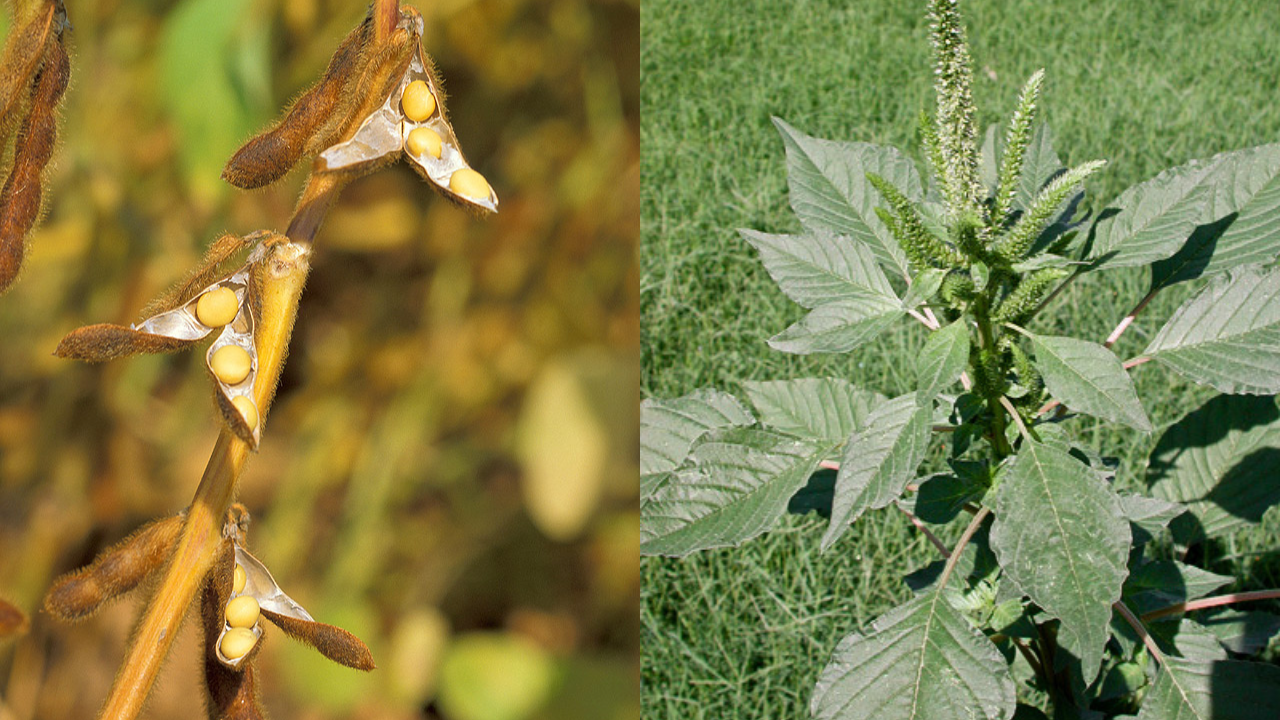
Soybean imports from the United States have carried seeds of foreign plants into Chinese ports, with some of those weeds later establishing populations beyond the places where they were first detected. One of the clearest examples is Palmer amaranth ( Amaranthus palmeri ), a weed that is native to the Americas and has become an agricultural problem in parts of China. A 2026 study in the Journal of Integrative Agriculture traced populations of the weed in China and found evidence that linked repeated introductions to imported soybean shipments.

Get breaking news anytime, anywhere. Download the TOI app now!

The research identified 1985 as the date of an initial introduction in Beijing and found that later populations were associated with the movement of imported soybeans. The researchers concluded that repeated introductions through global grain trade played a major role in the weed's distribution across China.

The pathway ran through imported grain

Weed seeds can become mixed with harvested grain as crops are collected, stored and transported, and some seeds can survive the journey and enter agricultural areas if they are not detected or removed. Chinese officials raised concerns about this pathway directly with U.S. authorities in 2017, and the U.S. Department of Agriculture's Animal and Plant Health Inspection Service said China had notified the agency about increased detections of weed seeds of quarantine concern in U.S. soybean shipments.

USDA subsequently developed a farm-to-export systems approach that was intended to reduce the amount of foreign material and weed seed entering soybean consignments, which was scheduled to begin with the 2018 crop year.The issue was important enough to affect the phytosanitary conditions under which U.S. soybeans could enter the Chinese market. USDA said the measures were designed to reduce plant-pest risk while keeping soybean exports moving.

Palmer amaranth spread beyond its first arrival points

A 2025 study published through the National Library of Medicine reported that Amaranthus palmeri seeds had been repeatedly introduced into China as contaminants in soybean imports since 1985. The researchers found that populations were concentrated near grain-import facilities and documented cases in southern, central, northern and northeastern China.

Grain facilities provide a starting point, after which seeds can move through agricultural machinery, transportation networks and crop production areas. The researchers also found that populations differed in their degree of establishment; some remained temporary, while others became naturalized or invasive and spread beyond their initial locations.

Palmer amaranth is particularly difficult to manage because individual plants can produce large quantities of seed and the weed can compete aggressively with crops. Its presence in China therefore became more than a matter of contaminated cargo, and it eventually became a question of whether a plant introduced through international trade could establish itself in agricultural landscapes.

Biosecurity became part of the soybean trade

Soybeans are traded in bulk, and separating every foreign seed from a large shipment is difficult, so prevention has to begin before the grain reaches a port. USDA's 2018 systems approach included measures at farms, export facilities and other points in the supply chain, with the goal being to reduce the number of weed seeds entering them in the first place.

The practical problem is that once a species establishes itself in a new agricultural region, removing it can be much harder than preventing the original introduction. The newer research on A. palmeri suggests that the trade route remains important, as its analysis found genetic and geographic patterns that were consistent with repeated introductions linked to soybean imports, rather than a single introduction followed by uninterrupted expansion.

The original soybean shipments were part of a much larger trade system moving food and animal feed across continents, but within those cargoes, tiny quantities of weed seed could travel the same routes. In China's fields, some of those seeds found conditions in which they could establish and spread.

Sign up to read this article
Read news from 100's of titles, curated specifically for you.
Already a member? Sign in here
Related Stories
Top stories on inkl right now
One subscription that gives you access to news from hundreds of sites
Already a member? Sign in here
Our Picks
Fourteen days free
Download the app
One app. One membership.
100+ trusted global sources.