
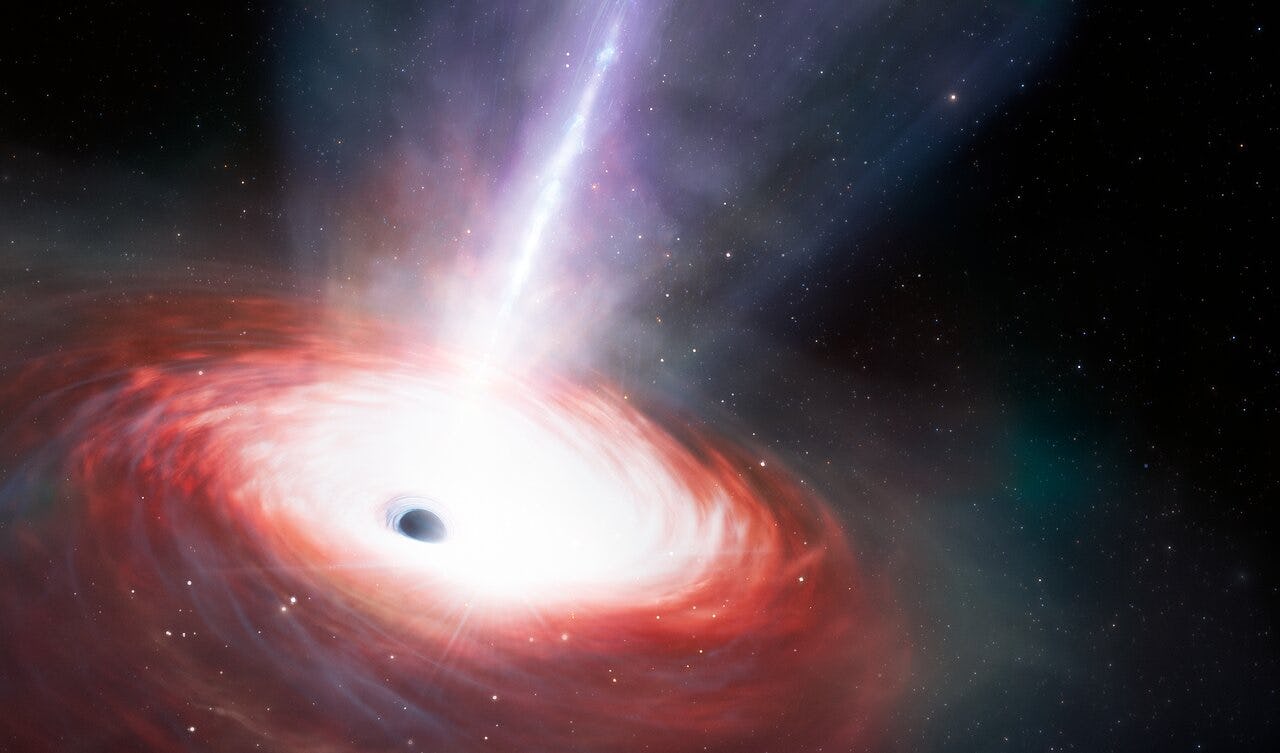
The super-heated material churning around an ancient black hole shined brighter than astronomers previously thought was possible.
There’s a theoretical limit to how bright gas and dust can get when spinning around the edge of a black hole. It’s called the Eddington limit. But the black hole at the center of new research, described in a paper published Monday in the journal Nature, breaks this barrier — and by a large margin at that.














