
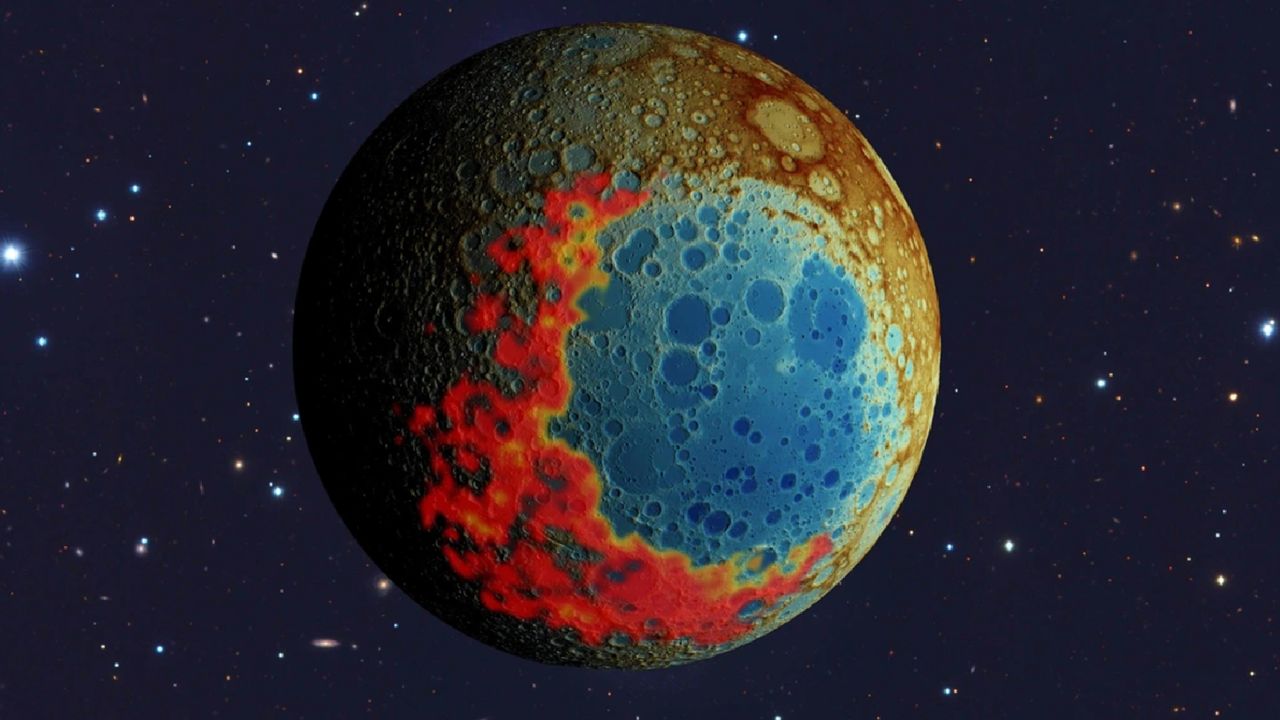
The largest and oldest crater on the moon did not form as we initially suspected, a new study suggests. The findings hint that a specific region of the lunar surface could be more scientifically interesting than we thought — with big implications for NASA's upcoming Artemis missions, which are scheduled to land astronauts within this newly realized area of interest as soon as 2027.
The moon formed around 4.46 billion years ago, when an ancient Mars-size protoplanet, known as Theia, collided with Earth, creating a giant cloud of debris that combined into a large spherical satellite orbiting our planet. For the next 200 million years or so, the lunar surface was covered by a hellish magma ocean, as a result of gravitational squeezing from Earth. But as the moon moved farther away from our planet, the molten rock eventually cooled and crystalized, forming an outer rocky crust that has remained largely unchanged ever since — aside from a near-constant bombardment of space rocks.