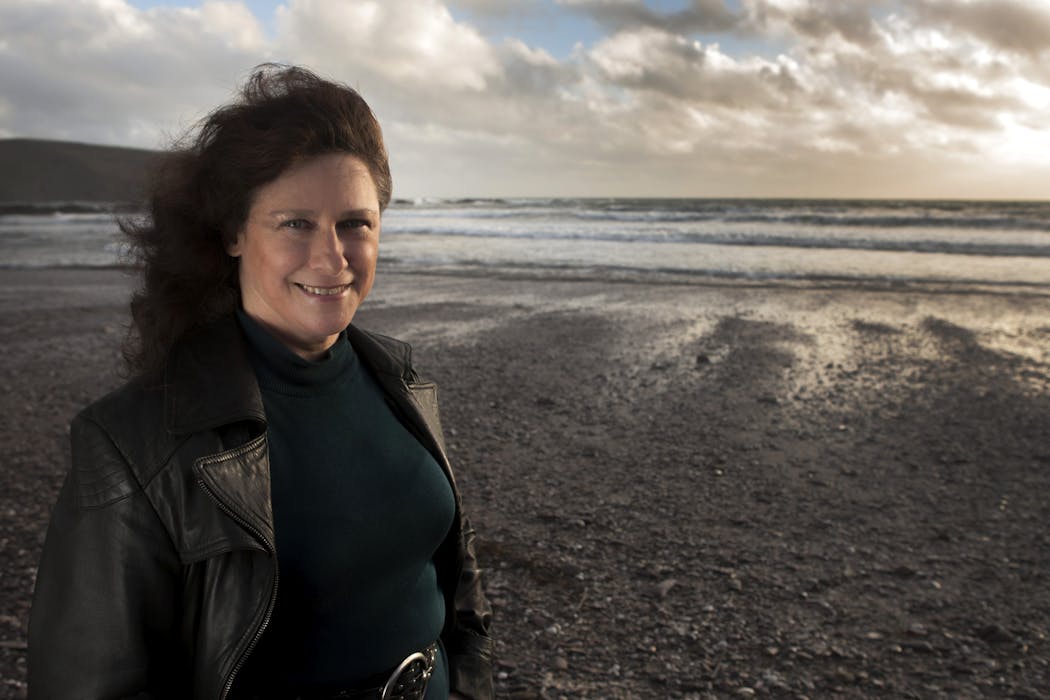
She is an ecologist recognized worldwide for being the first to unequivocally demonstrate the impact of climate change on a wild species: the Edith’s checkerspot butterfly. In recent years, however, Camille Parmesan has been interviewed not only for her expertise on the future of biodiversity in a warming world or for her share in the Nobel Prize awarded to the IPCC, but for her status as a refugee scientist.
Twice in her life, she has chosen to move to another country in order to continue working under political conditions that support research on climate change. She left Trump’s America in 2016, and later post-Brexit Britain. She now lives in Moulis in the Ariège region of southwestern France, where she heads the CNRS’s Theoretical and Experimental Ecology Station.