
Get all your news in one place.
100’s of premium titles.
One app.
Start reading
Golf Monthly
Golf Monthly
Sport
Sam De'Ath

We May Already Have The Longest Fairway Wood Of 2026

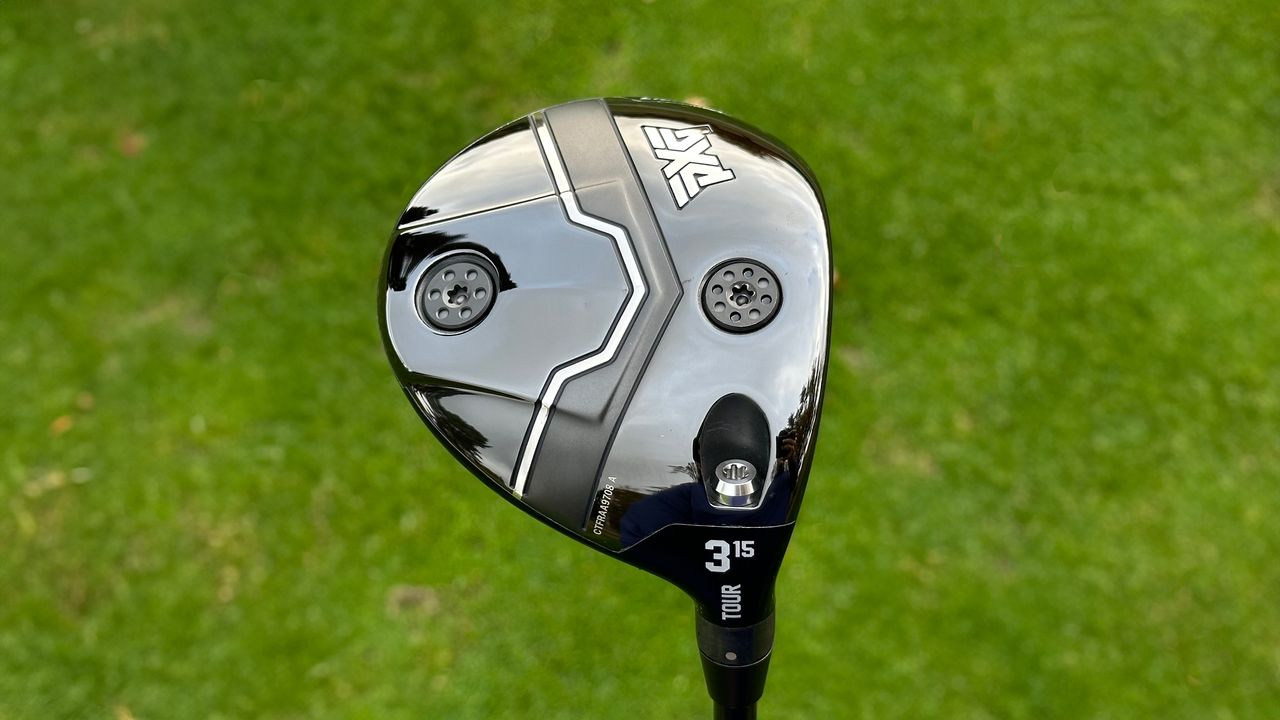
PXG Lightning Tour fairway wood.

When I first saw the PXG Lightning Fairway Woods line-up, I was immediately drawn to the Tour model. While the standard Lightning fairway wood offers confidence-inspiring forgiveness with its slightly larger footprint, the Tour version just suited my eye down to a tee. It’s built for the player who prefers to shape their shots and demand maximum shot and trajectory control, with the visuals certainly reflecting that.

What struck me first about the Tour head was its distinctly smaller footprint and the beautifully rounded sole that sits flush to the turf. It sits compactly behind the ball, offering a slightly deeper face profile that just screams workability and, in my opinion, rivals the looks of some of the best fairway woods on the market.

The High-Strength carbon fiber crown gives it a premium, modern look, a recurring signature in PXG’s recent designs. This shaping is exactly what I want in a fairway wood that I plan to use equally off the tee and the turf, as I look for a club that feels like you can manoeuvre the ball whichever way you please.

The carbon crown on the PXG Lightning Tour fairway wood (Image credit: Future)

PXG has packed some interesting innovations into this metalwood, particularly the new Progressive Face Geometry, which features in both models. Unlike many fairways that use a consistent bulge and roll across all lofts, the Lightning woods tailor the face curvature based on the loft.

Since lower lofts tend to require more correction for heel and toe strikes, the 3-wood gets more curve, while the higher-lofts get less. When out on the golf course, this paid off immediately on off-center strikes, keeping the ball on a much tighter line than I initially expected, albeit not as much as the standard Lightning fairway wood, which proved to be extremely forgiving.

The refined face and shaping of the PXG Lightning Tour fairway wood (Image credit: Future)

The second key development with this fairway wood is the faster, thinner face design. PXG claims the perimeter is 12.5% thinner than the previous Black Ops 0311 model, translating to 4% more face flex. This is a bold claim, although I did see a jump of around 2mph ball speed compared to the model released a few years back.

During my testing using a Foresight GC3 launch monitor, the ball speed was really impressive. I averaged a strong 157.8 mph ball speed, a small but still significant jump compared to the standard model. But speed is only part of the equation as control is key in any Tour model, and so the combination of the compact head shape and the precision weighting system helped me achieve the ball flight I was looking for - penetrating and in control.

Foresight GC3 data comparing the PXG Lightning and Lightning Tour fairway woods (Image credit: Future)

Crucially, the spin dropped a couple of hundred rpm compared to the standard Lightning fairway wood, allowing me to settle in at an average spin rate just over the 3000rpm mark when hitting from the deck and even a fraction lower than that off a tee.

This lower spin, combined with the higher launch from the forgiving tech, is the sweet spot for maximum distance and control and made it a perfect alternative to a driver from the tee when playing slightly tighter driving holes.

The PXG Lightning Tour has a dual weighting system to customize flight and spin (Image credit: Future)

The Precision Weighting Technology in the Tour model features one heavy (10g) and one light (2.5g) adjustable weight port positioned forward and back, which allows you to dial in a preferred trajectory. When switching the heavier weight to the back, I saw around 200rpm more spin and a slightly higher ball flight due to the change in CG placement, but since then, I have kept it with the heavy weight forward produced the desired penetrating flight and low spin I saw in my test numbers.

Sam De'Ath testing the PXG Lightning Tour fairway wood using a Foresight Sports GC3 launch monitor (Image credit: Future)

Overall, the PXG Lightning Tour fairway wood produced really impressive distance with control, all in a compact, deeper face-shaped head. While I don’t think in the past I would have used a PXG fairway wood because of the squarer footprint and lack of ball speed, the Lightning Tour could easily find its way into my bag this year, and I think it will provide some healthy competition from some of the other manufacturers' lower-spinning models.

Both PXG Lightning fairway wood models are now available online and in recognized PXG retail stores for $379.

Sign up to read this article
Read news from 100’s of titles, curated specifically for you.
Already a member? Sign in here
Related Stories
Top stories on inkl right now
One subscription that gives you access to news from hundreds of sites
Already a member? Sign in here
Our Picks
Fourteen days free
Download the app
One app. One membership.
100+ trusted global sources.