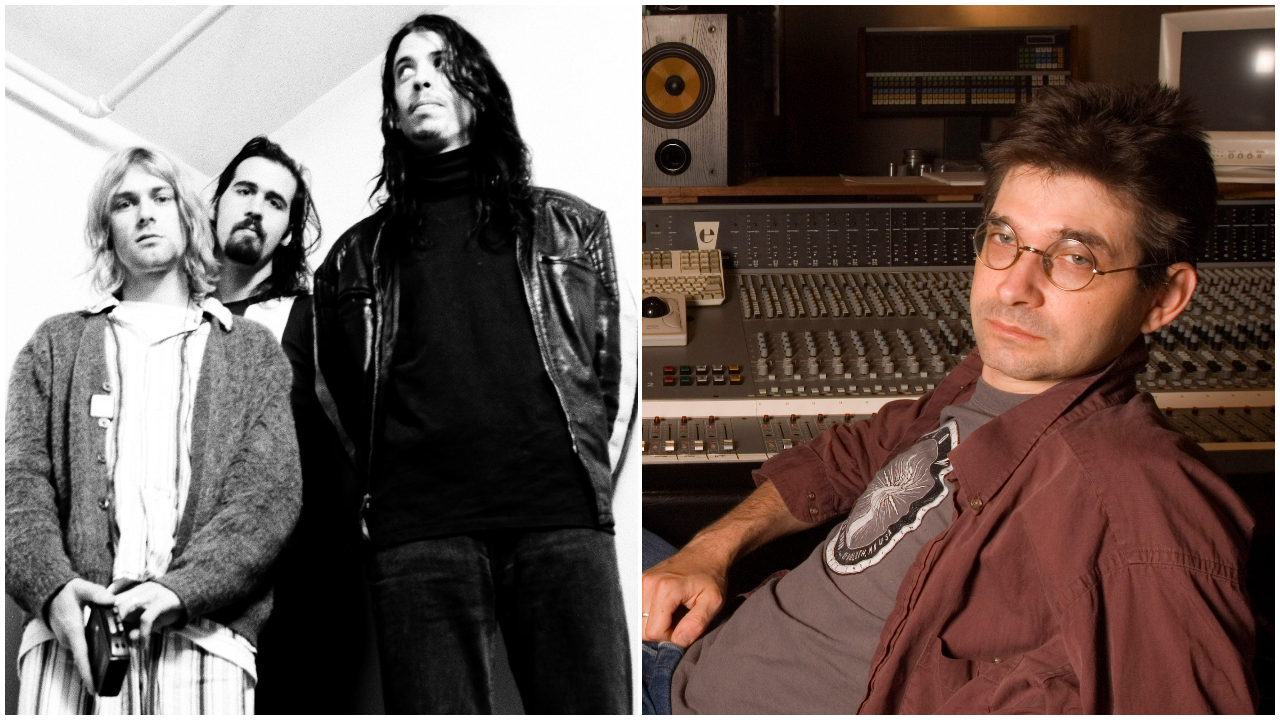
In November 1992, Steve Albini wrote a letter to Nirvana outlining his working methods, his core beliefs and the non-negotiables that would come into play should Kurt Cobain's band commit to working with him on the recording of their much-anticipated third album.
In informal introductory phone calls with Albini, Cobain had already laid out his vision for Nirvana's follow-up to their unimaginably successful Nevermind album. In past interviews, Cobain had regularly expressed his admiration for the unfiltered, live-off-the-floor sound Albini captured on Pixies' 1988 album Surfer Rosa, and The Breeders' 1990 album Pod, and he now desired that Nirvana's next recordings be brought into the world in a similarly unvarnished, undiluted form. The media-savvy Cobain was also entirely aware that in hiring Albini, a man known for his integrity, uncompromising nature and disdain for the corporate music industry, Nirvana would be making a very clear statement to their record label, their management, their peers and their fans. And Steve Albini knew that, whatever the band's best intentions might be, someone, somewhere would inevitably seek to meddle in their art. Hence his letter, which laid out the ground rules in clear, unequivocal terms.
"I'm only interested in working on records that legitimately reflect the band's own perception of their music and existence," he wrote. "If you will commit yourselves to that as a tenet of the recording methodology, then I will bust my ass for you."
This was exactly what Kurt Cobain wanted to hear, and exactly what the 'suits' at Geffen feared.
“I don’t think [the label] were behind it,” Krist Novoselic admitted. “But we’d sold enough records to do whatever the hell we wanted.”