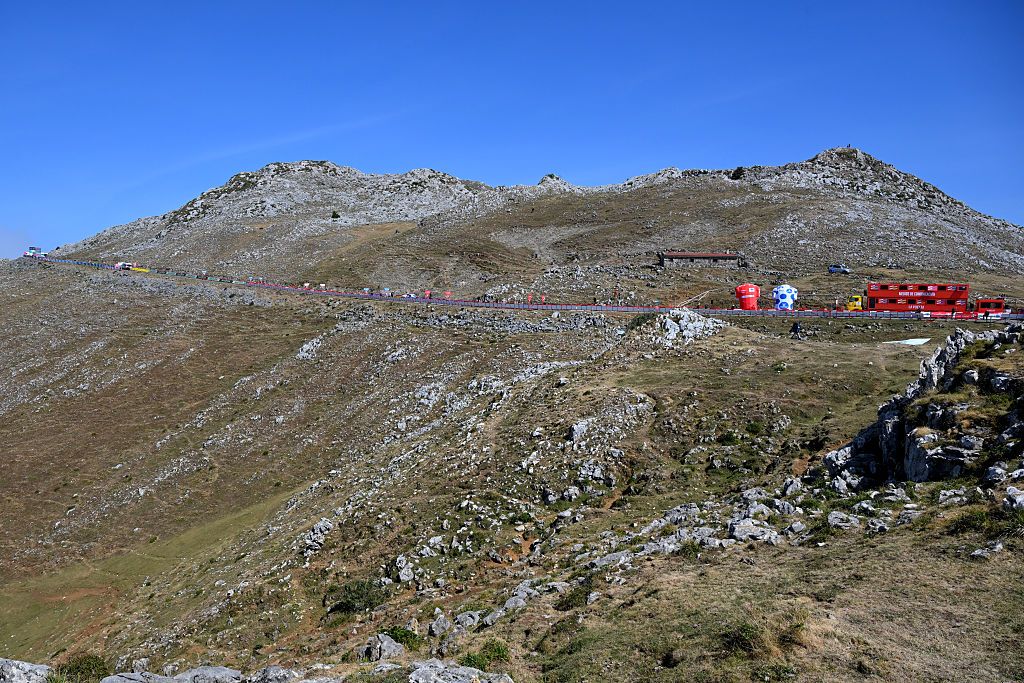
It may still be Classics season, but the 2026 women's calendar will be defined by the mountains, with iconic summits featured in all three Grand Tours. The Tour de France Femmes has Mont Ventoux, the Giro d'Italia Women featuring the Colle delle Finestre, and it was confirmed on Monday that the Vuelta Femenina will tackle the Alto de L'Angliru, one of the sport's most fearsome climbs.The 2026 Vuelta Femenina route, revealed in Madrid, features a gentle build-up through Galicia and Léon, before a mammoth double header finale in Asturias, with stage 6 finishing atop Les Praeres, and stage 7 tackling the Angliru. At 13km in length with an average gradient of 9.7% – though it's closer to 13% in the second half – the Angliru already looks hard on paper, and historic men's Vuelta battles on its slopes have cemented in our minds just what a beastly climb this is. So, for the women's race to finish at its peak is an exciting and important moment, but it wasn't one that the Vuelta organisers came to easily or on a whim."We always like to be in touch with the teams and with the riders, and until now we have had a few doubts about [whether] to do it or not," Kiko García, the Vuelta's technical director, told Cyclingnews. "Because a few teams say 'yes, it's a good idea to do it' and other ones say 'maybe it's too early, maybe just wait a couple of years' because we were still building women's cycling."We know that the top riders are able to do it, no problem, but it's important to think about the median level and the bottom of the bunch because we respect everyone, we have a lot of respect for the athletes, and we needed to be sure that everyone was OK doing that. So as I said, after many consultations with the teams and with athletes, we considered that it was the right moment to do it."The Asturias region is an area both the women's and men's races have frequented in the past, and there are plenty of climbs to choose from, but the organisers felt that it was time to visit the region's most infamous ascent. "We really think that it's a good time to be able to go with the women to these climbs. It was a little bit challenging because, as you can imagine, they are both very steep climbs, and especially Angliru on the last day, after a week of racing, probably the legs will be a little bit tired for the last day," García said. "But we are convinced that it's a fantastic challenge for the girls and it will be for sure a big show – we expect a great result with a fantastic final with these two climbs at the end."Even when the inclusion of the Angliru was still just a rumour last week, the debate over whether female pros 'could' or 'should' take on the climb had already begun, with El País going as far as asking a physiologist to weigh in, but García was unequivocal in his feelings."I really believe that the athletes have the capacity to do it without many problems. For sure everyone will be very tired, and that also happens with the men's," he said. "The only question is to know if the show will be still alive until the end. That's why we put all the difficulties at the end of the race, because we want to maintain an open GC until the last two days. We didn't put any other finish on summits or climbs until the last two days, we tried to find a balance to be able to arrive to the last two days with good legs and with power enough to do it in a good condition."