Get all your news in one place.
100's of premium titles.
One app.
Start reading
Louder
Louder
Entertainment
Paul Sexton

"We certainly weren't strutting around like Deep Purple. My God, they had a lot of fun. We did not have fun." How the UK college rock scene shaped the genesis of Genesis

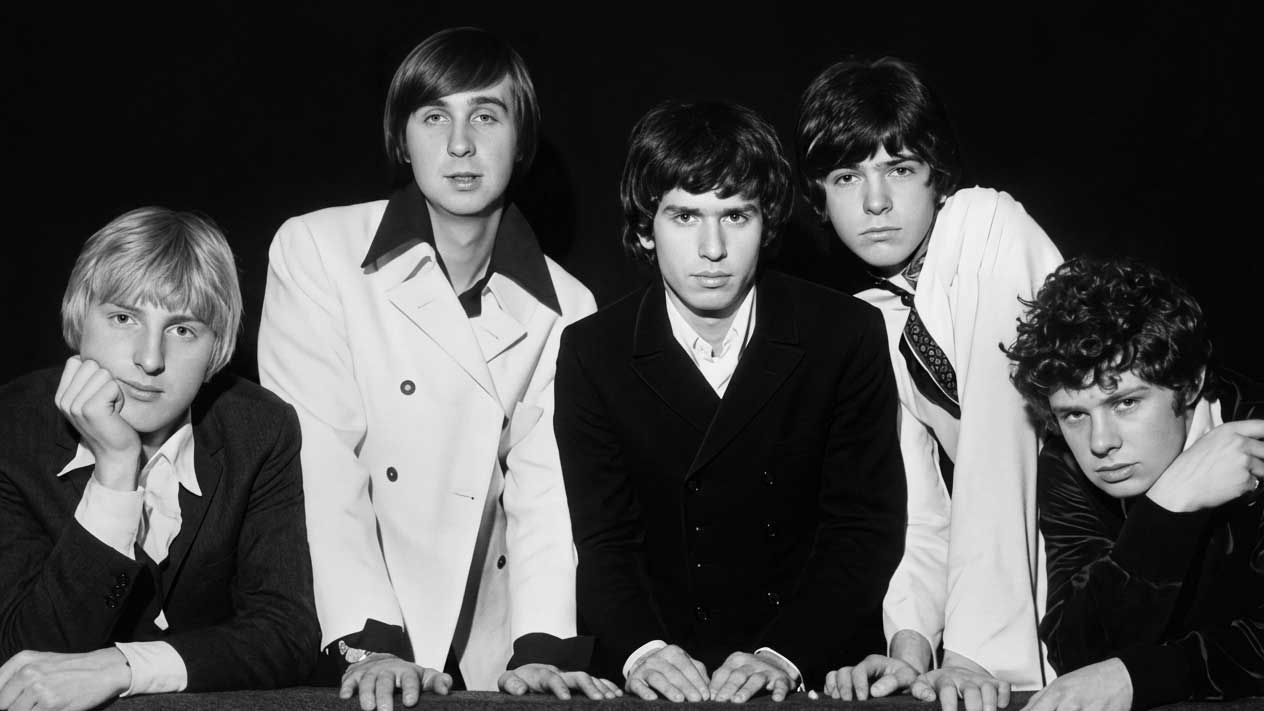
Genesis as they appeared on their debut album, From Genesis To Revelation.

The new book by Classic Rock and Prog writer Paul Sexton is Rock Goes to College: The Campus Music Scene That Shaped A Generation. It tells a story of British music in the late 1960s and early 1970s, with a focus on the live music presented at universities and polytechnics all over the UK, a lively if amateurish scene that hosted Pink Floyd, Led Zeppelin, The Who, Fleetwood Mac, Black Sabbath, Queen, The Kinks, Elton John and many more. In the excerpt below, members of Genesis recall their earliest shows.


On 1 November 1969, with pop tastes in Britain stretching on disc from the Archies to Abbey Road, Pink Floyd were setting the controls for the heart of the sun in the Main Debating Hall of Manchester University. Yes were in the same city, playing Manchester Institute of Science and Technology. Meanwhile, down in Uxbridge, Middlesex, Caravan were at Brunel, supported by the Idle Race (Jeff Lynne and all) and by a largely unknown band giving their first-ever public performance. This was the genesis of Genesis.

Paul Sexton's Rock Goes to College: The Campus Music Scene That Shaped A Generation is published by Harper Collins. Foreword by Mark Knopfler (Image credit: Harper Collins)

"We were facing the wrong way and three deep because we weren’t used to proper concert set-ups," guitarist Mike Rutherford later remembered with a laugh. "It was hard to keep so many 12-strings in tune." To do so, he added, "we used to spend ages in the toilet." Genesis didn’t even make the bill by name on the ticket and were simply listed as "guest group."

Admission was eight shillings in advance, ten on the door and six shillings for ladies ("Men must show S.U. cards"). Alongside the main groups were the somewhat unattractively named south London "psychedelic blues" quintet Screw, who might be little remembered these days but had played at the Rolling Stones’ famous Hyde Park show that summer. In the spring of ’69, they had recorded at least two songs produced by a distinguished college rock graduate, Floyd drummer Nick Mason.

Memories of that night at Brunel remain vivid for Genesis co-founder Anthony Phillips, too. "It was really important," he tells me, "because we had all these agents coming along. I just remember us being completely out of our depth, in quite a big room. We knew the pressure was seriously on. We’d rehearsed and rehearsed, but we hadn’t ever properly played live. We’d played at someone’s party a couple of weeks before [down the road in Chobham, Surrey].

"Everyone argued about where the PA should be. Peter Gabriel kept moving it to one position, then somebody else kept moving it into another position. We finally got to the first number, and I’d made the mistake of restringing my Strat just before the gig, which you don’t do."

Phillips continues: "We kicked off with a song called In the Beginning that has a nice riff, but then it comes to an instrumental break where everything stops and I have to go 'da-da-daa.' And suddenly, I realised that one of the strings had slipped, it was completely out of tune, and I couldn’t tell which string it was. These guys hadn’t heard us before, and they were looking at us like we were some sort of avant-garde outfit. It was so embarrassing, I could have died. It was like scoring an own goal in a cup final.

"I just remember turning the machine head, just guessing. Sheer panic. It was terrifying, but somehow we got through it, despite this complete amateurishness, and then this sort of semi-disaster, when people could have just walked out at that point and thought, 'Who are these guys?'

"I don’t know what I was doing, but somehow I must have tuned it the right way," he adds. "And I learned then. I think I had a loose machine head, but don’t restring just before you go on stage! But we got some dates that came out of it. We did start getting asked to do more gigs in techs and universities."

Genesis's first show: Billed as "Guest Group" (Image credit: Brunel University)

The band’s opportunity to find their progressive identity would have been sunk without the fairly anonymous surroundings of college bookings. The Genesis datebook for the 1969–1971 period had a wealth of engagements, amid working men’s clubs and youth centres, at places like Twickenham Tech and Thames and Teesside Polys.

At their earliest university shows, the perils of being unknowns were palpable. "We were like an appendage to them boozing," says Phillips. "Because of the size of the colleges, there were lots of people there and lots of noise, and if you were doing poncy, quiet 12-string songs, you basically weren’t listened to. We gradually excised all our quiet songs, virtually. They just all died a death."

It was the same for their sometime gig partner Nick Drake, a brilliant but entirely miscast sensitive singer-songwriter and former English literature student at Cambridge, where his reading of Wordsworth and Blake helped inform his beautiful, fragile lyrics. "Poor old Nick," says Phillips. "We played with him quite a lot of times, and we never had the chance to do more than say 'Hi, Nick' and goodbye.

"He should have been doing club or pubs or folk gigs, and here he was doing the biggest places, where people didn’t listen. You haven’t got the PA. He should have been doing concert halls, and you felt so sorry for this guy."

That point was underlined when Drake played at Westfield College in London in June 1970, in a line-up with Elton John, Stefan Grossman, John Martyn and the Humblebums, featuring the young Billy Connolly and Gerry Rafferty. Martyn was there with his friend and collaborator, film composer John Altman, who remembered that Drake’s set, or rather its reception, was a disaster – even though the entertainment didn’t begin until after the World Cup Final, won magnificently by Brazil.

June 21, 1970: Brazil win the World Cup and Nick Drake appears as a "surprise guest" on a bill headlined by Elton John (Image credit: Westfield College)

The two Johns "spent an hour trying to convince Nick Drake not to get disheartened by university bar gigs and give up live performance," said Altman, as quoted in johnmartyn.info. "We missed Elton John’s set but caught Billy Connolly and Gerry Rafferty."

In a July 1971 analysis of the UK folk scene, Melody Maker’s Karl Dallas damned Drake with undeservedly faint praise for his records, which he described as ‘very nice," and was overtly scathing about his live persona. "His stage presence has been virtually nil," he wrote, "a private communion which it is very hard to join."

Genesis and Drake were on a Ewell Tech bill in January 1970, supporting Atomic Rooster, who still featured the soon-to-be P in ELP, Carl Palmer. Soon afterwards, the prototype progsters opened for those rockers again at Watford Tech, where Genesis had some weeks earlier supported the progressive-rock outfit Spirit of John Morgan, named after their keyboard player.

Ewell’s booker was now Lindsay Brown, another future industry executive at Polydor, Eagle Rock and other companies. He secured an early show by Queen, who played not on the stage but on the floor. Briggs, on a gap year but still at the gig, remembers that even years before anyone was really taking notice, Freddie Mercury had a hairdresser.

(Image credit: Ewell Technical College)

One shudders at how Nick Drake would have struggled to be heard a few weeks later in May, when, for example, he was bottom of the bill at an all-night Bedford College ‘initiation’. Running from 9.30 p.m. to 6 a.m., it also featured John Martyn, Spencer Davis (without the titular Group that had split the year before, only to reform in 1973), Jo-Ann Kelly, and groups including East of Eden and the Climax Chicago Blues Band, with erstwhile pied piper of British rhythm and blues Graham Bond atop the bill.

Cambridge’s Caius College was an important incubator of the local folk scene, and Drake had played its May Ball in 1969. As David Quinn wrote on the university’s varsity website in 2024: "The event seems strange from a distance. It’s difficult to imagine the reserved Drake gently singing Cello Song against a bustling backdrop of dancers dripping with jewels and feather boas."

Further emphasising the remarkable shows that were being laid on by colleges across the country every weekend, Genesis and Nick Drake also shared a bill at Leicester University on Saturday, 14 February 1970 – at the exact moment The Who were just up the road in Leeds, immortalised on disc.

"We were memorably called 'snotty-nosed bastards' by the guy at Leicester," laughs Phillips. ‘I think we were just nervous and shy. We certainly weren’t strutting around like Deep Purple. My God, they had a lot of fun. We did not have fun, we were just a bit edgy. But that quote went down in history.

"At the pub and the club gigs, people were coming to see a band,’ he reflects. "You might be supporting, but they were coming to see somebody specifically. The thing about the tech and university gigs was that it was a Friday night out for the lads. We played at Queen Mary College [in London], where there were about six or seven stages and loads of different groups. Alan Price was in one place, we were in another.

"If you’re going to get [students’] attention, for a start you have to have volume. Secondly, you have to have something which captures their interest. So we really tailored our set. You could argue that the people that like the more lyrical stuff might have been a bit miffed at losing some of their songs, but it definitely encouraged Genesis to go heavier, and more dramatic."

(Image credit: Watford College of Technology)

Just six weeks later Genesis returned to Brunel, and things were already looking up. "The second time we played there, we had an audience that listened more," recalls Phillips. "We played with Fairport Convention, who’d been a huge influence on us. There was a short track at the end of What We Did On Our Holidays called End Of A Holiday, which was gorgeous. Sandy Denny and Richard Thompson had gone by the time we played with them. But that was one of the few gigs which I remember being really successful.

"We never went to the pub or a restaurant," he adds. "We had to drive the van back to the cottage in the country we were sharing, and if it got too late, we had to bring all the gear out of the van, unpack it up the bloody 39 steps every night and in the snow, and it was a dodgy winter."

Catching himself sounding like one of Monty Python’s Four Yorkshiremen, he quotes them with a laugh: "'Luxury!' I was really going there, wasn’t I?!"

Paul Sexton's Rock Goes to College - The Campus Music Scene that Shaped a Generation is out now, published by Harper Collins.

Sign up to read this article
Read news from 100's of titles, curated specifically for you.
Already a member? Sign in here
Related Stories
Top stories on inkl right now
One subscription that gives you access to news from hundreds of sites
Already a member? Sign in here
Our Picks
Fourteen days free
Download the app
One app. One membership.
100+ trusted global sources.