Get all your news in one place.
100's of premium titles.
One app.
Start reading
The Independent UK
The Independent UK
Hannah Stephenson

Ways to declutter your garden shed for autumn

Whether you’re a shed-head or ‘unshed-ucated’ here’s how to get your outdoor space sorted (Alamy/PA) -

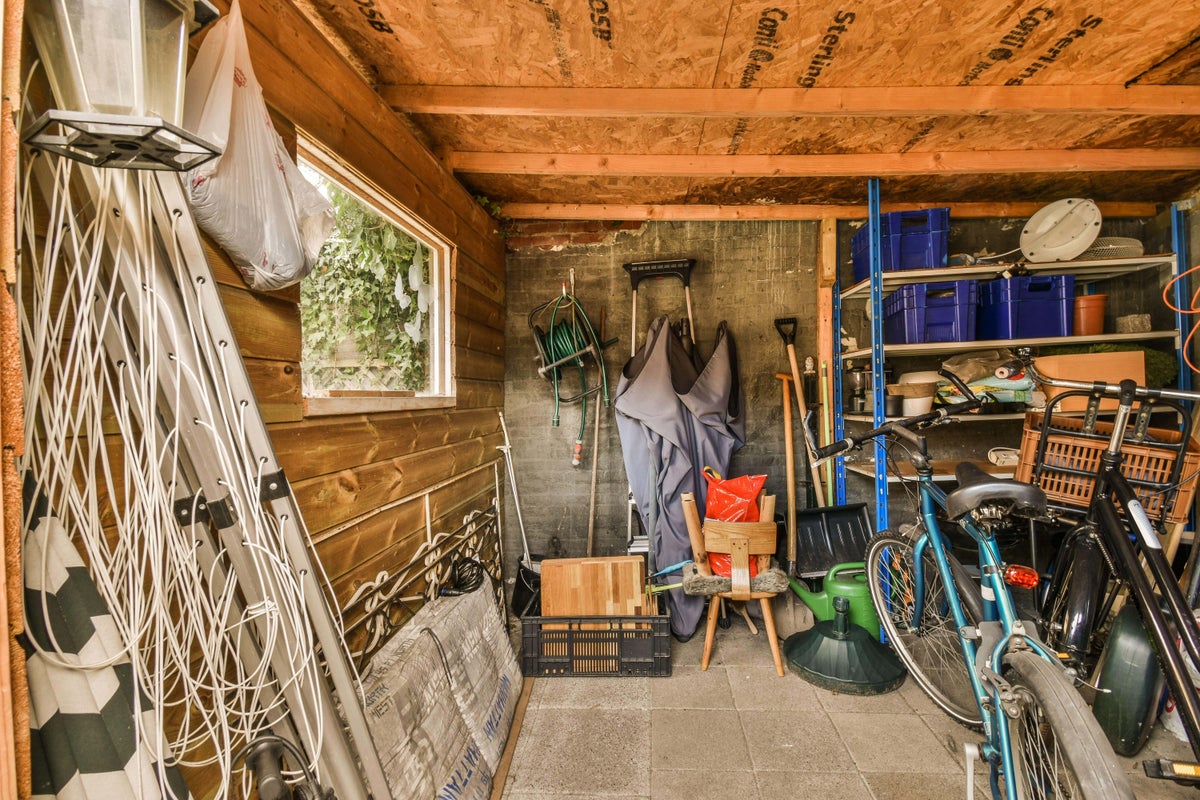
As people start to think about putting away their gardening tools, mowers and other items which won’t be needed in the cooler months, it’s time to clear out your shed clutter to make space.

“If your shed has just become a repository for putting things away, then your operating space will slowly creep towards the door, when you can’t get to stuff,” says Sam Jenkinson, head of marketing at Tiger Sheds and a self-professed shed devotee with five sheds at home.

He puts shed owners into three categories: ‘shed-heads’, who love sheds or are very DIY-orientated; ‘unshed-ucated’, who know what kind of buildings they like but need a bit of guidance; and ‘space-hunters’, a broader group just looking for extra room.

Sam Jenkinson (Tiger Sheds/PA)

The shed-heads probably know what they’ve got to clear out, but he offers the following advice to those who don’t.

Make a plan

If you don’t know what’s in your shed, you could just remove everything on a fine day so you have a clean slate, but it always helps to go in with a plan, Jenkinson suggests.

“Think, ‘Is my ideal shed organising various zones for things like gardening and potting in one area, DIY and auto fixes somewhere else, lawn and hedge care somewhere else?’

Work out what you need to keep and what you can ditch (Tiger Sheds/PA)

“When I was younger and fitter I kept a lot of my sports gear in the shed. Then there are often decorating items you store in the shed, as well as bikes.

“It’s always good to have an idea of what you have in your shed before you go into it.”

Ask yourself, ‘Do I really need this?’

“There will always be bits in the shed which you’d forgotten were there. This is a sign to ask yourself, ‘Should it still be in here?’ or ‘If I’d forgotten about it, how valuable to me is this?’” says Jenkinson.

“To give a dividing line, if something hasn’t earned its place in spring and summer it’s worth asking whether it needs prime space in the shed.”

Work out what you can ditch

(Alamy/PA)
(Alamy/PA)

Consider ditching children’s outdoor equipment that they’ve outgrown, empty paint tins and expired garden products, as well as old seed packets past their use-by dates, almost empty compost bags and broken or dilapidated tools and chipped, broken or surplus plant pots. “How many plastic pots do you need?” he asks.

Jenkinson says he’s guilty of storing leftover project materials kept without a specific purpose, such as old wood bits and even worktops from when he had his kitchen revamped two kitchens ago.

Think about getting rid of old packaging you’ve kept in your shed, such as cardboard boxes which have now gone damp.

If you keep cushions in the shed (maybe in vacuum bags or storage containers with silica gel sachets inside to absorb the moisture), are they from a previous garden set that you have now updated and are unlikely to be used again? If so, it may be time to get rid of them, possibly selling them through Vinted or other online sites.

Some items, such as shelving, curtain rails and rods, might have been bought on impulse and left in the shed, but do you really need them, are you ever going to put them up? If not, find an online marketplace to sell them, he suggests.

Old paint oils and pesticides may need chucking, but check your recycling facilities to make sure such items are disposed of responsibly. Never mix the contents of cans or combine garden chemicals, he stresses.

Put frequently used things closer to hand

“Try to understand whether things are used frequently or occasionally and where you put them in the shed, because cluttering is also about how you arrange the shed.

“If you have to go past a lot of things, no matter how tidy they are, to get to the thing you use quite a lot, that’s a pain.”

Put items you use frequently at the front, whether it’s on a shelf or in a box, he advises.

When you put your lawnmower in the shed for the winter, put it further back because you won’t be using it for a few months and prop it up against the shed wall if you can, rather than hanging it, he suggests.

Keep gardening gloves and other work clothes close to hand, along with a small box of essential hand tools such as secateurs so you’re prepared for autumn and winter jobs.

Maximise floor space

Take as much off the floor as you can, to avoid you having to hop over boxes and tools.

“Add hooks or lift things off the floor and use the side space as much as possible because so often shelves won’t go all the way across. Timber sheds will have framing you can put hooks into. Heavy duty framing can take heavier items.”

Free-standing shelving units are also widely available which can hold boxes and clear plastic containers, which you can label to easily identify what you want at any one time.

Use budget-friendly decluttering items

(Alamy/PA)
(Alamy/PA)

Decluttering is an opportunity to put things back in more of an organised way and there are budget-friendly approaches like reusing jars and containers,” he says.

If you have an old umbrella stand or something similar, consider putting long handled tools in that, he suggests.

Do shed repairs

When decluttering, especially if you’re removing everything from the shed, check if it needs any maintenance work and make repairs before putting stuff back, he advises.

Sign up to read this article
Read news from 100's of titles, curated specifically for you.
Already a member? Sign in here
Related Stories
Top stories on inkl right now
One subscription that gives you access to news from hundreds of sites
Already a member? Sign in here
Our Picks
Fourteen days free
Download the app
One app. One membership.
100+ trusted global sources.