
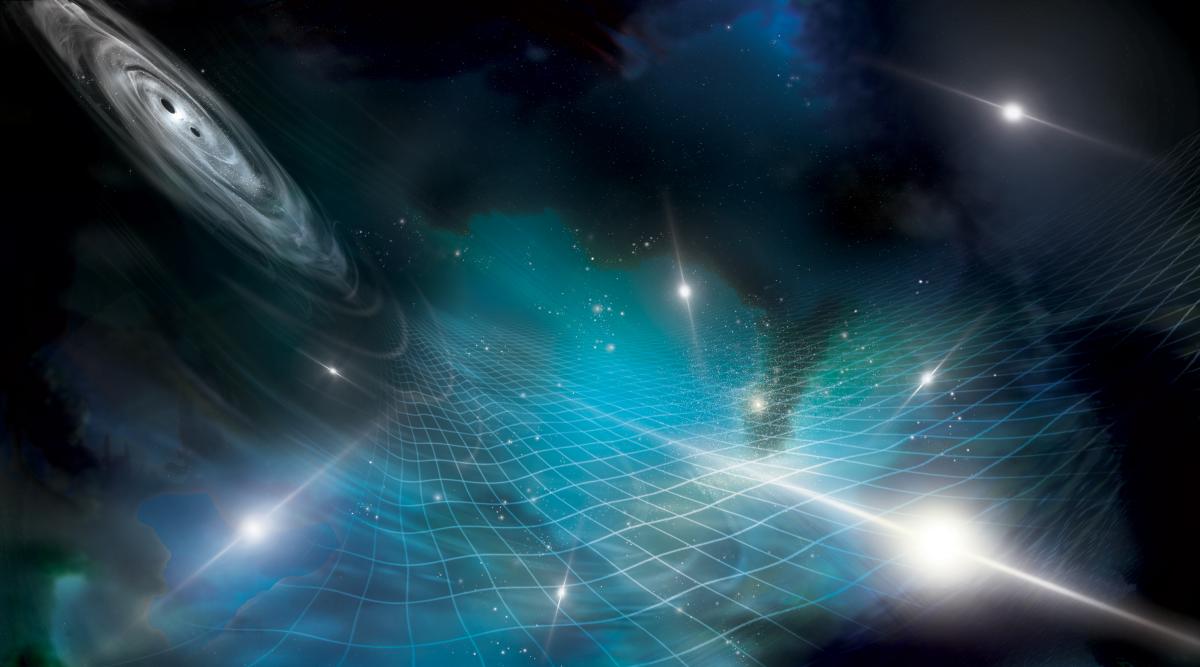
A new theory suggests that the unification between quantum physics and general relativity has eluded scientists for 100 years because huge "fluctuations" in space and time mean that gravity won't play by quantum rules.
Since the early 20th century, two revolutionary theories have defined our fundamental understanding of the physics that governs the universe. Quantum physics describes the physics of the small, at scales tinier than the atom, telling us how fundamental particles like electrons and photons interact and are governed. General relativity, on the other hand, describes the universe at tremendous scales, telling us how planets move around stars, how stars can die and collapse to birth black holes, and how galaxies cluster together to build the largest structures in the cosmos.