
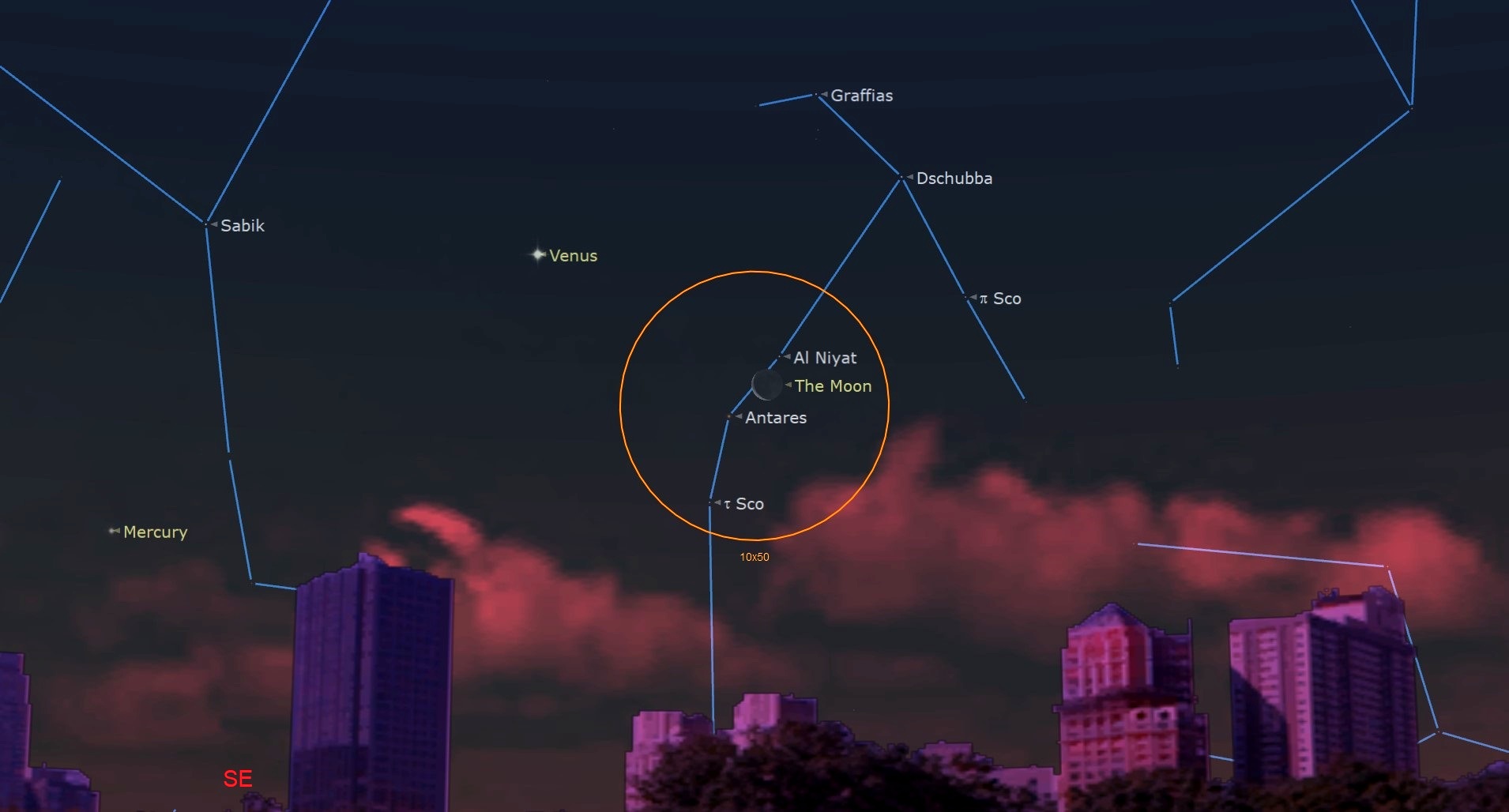
As the moon makes its monthly circuit around the sky it often passes in front of stars, blotting them out for as much as an hour or so.
Such an event is called an occultation (derived from the Latin word occultāre, which means "to conceal."), and it can be a startling spectacle, especially if the star happens to be bright. The star appears to creep up to the moon's limb, hangs on the edge for a minute or two, and then, without warning, abruptly winks out. Later it pops back into view just as suddenly on the moon's other side. The suddenness with which occultations take place was one of the first proofs that the moon has no atmosphere. If our natural satellite were cloaked with an atmosphere, a star approaching its limb would appear to fade away gradually, just like one seen setting beyond the western horizon from here on Earth.












