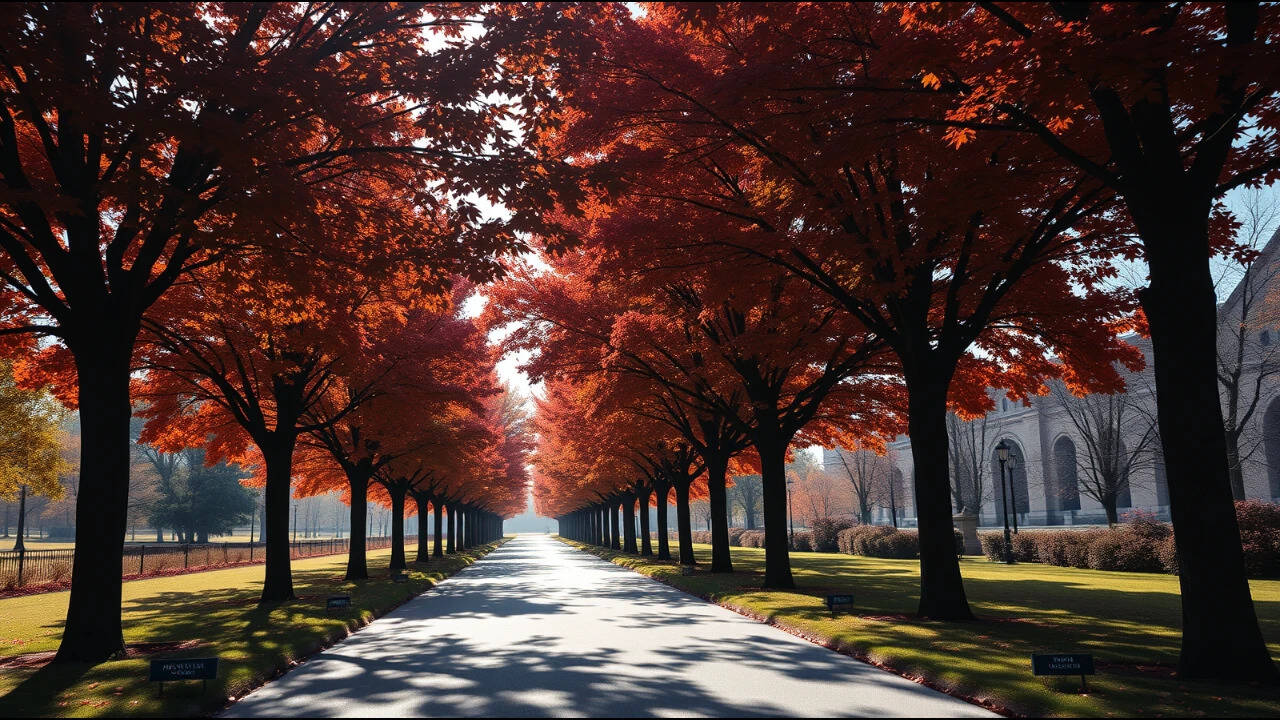
In 1920, the city of Washington planted 507 Norway maple trees along 16th Street NW to honour residents who had died in the First World War. The memorial was arranged by the District of Columbia Department of the American Legion, and the trees stretched in a row between Alaska Avenue and Varnum Street, each paired with a small bronze marker bearing the name of a fallen soldier. What began as a solemn tribute to more than 500 lives lost has since turned into an unusual environmental case study. Norway maple, native to Europe and western Asia, was never meant to travel far beyond the avenue where it was planted. Over the following century, its seeds drifted into nearby Rock Creek Park, where the tree has taken hold as one of the most persistent invasive species in the area, quietly altering the forest floor of the capital's largest natural landscape. The trees now illustrate how memorial plantings can have ecological consequences that remain invisible for generations. Their spread has raised concerns because dense maple growth can suppress native plants, change forest structure and reduce the diversity of species that depend on the original habitat.
Get breaking news anytime, anywhere. Download the TOI app now!