
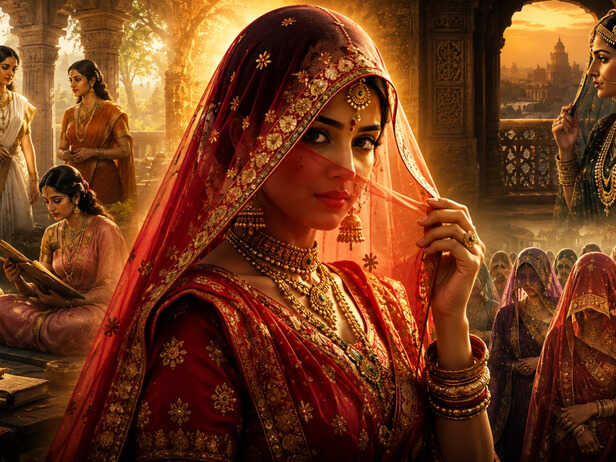
Why do many Indian women cover their heads in some families and religious settings, while others never follow the practice? Is it an ancient religious rule? Or did different social customs develop at different points in Indian history? This question has recently sparked debate after a viral discussion about ghoonghat, purdah, and head covering in Indian culture. One claim says that covering the face or head was mainly introduced as a social response to invasions and concerns about women's safety. Another view points to religious customs where devotees cover their heads as a sign of respect. The truth is more interesting than a simple yes or no. Indian traditions are diverse, and head covering, ghoonghat, and purdah are not necessarily the same practice.












