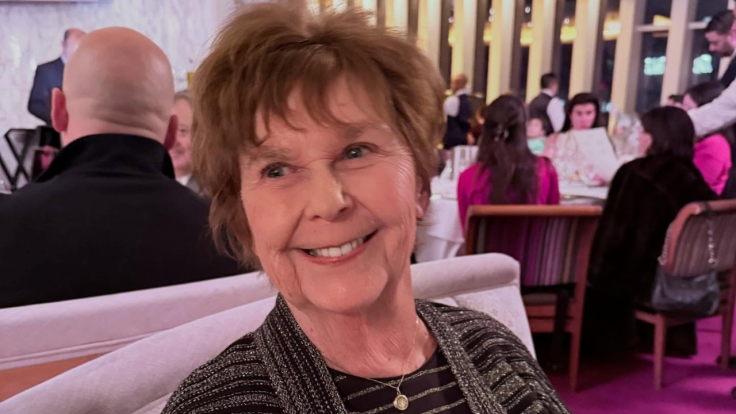
An FBI specialist says blood found outside the home of missing Arizona woman Nancy Guthrie suggests she was carried out of the Catalina Foothills property rather than leaving on her own, offering one of the starkest interpretations yet as the investigation enters its second month. Retired FBI special agent Maureen O'Connell made the assessment on 8 March during an appearance on Brian Entin Investigates', where she argued that the blood pattern told a story about what happened to the 84‑year‑old. Her comments have added a sharp new dimension, and a deeper sense of unease, to the ongoing search for Guthrie, who was last seen at her home on 31 January.
Guthrie disappeared after her son‑in‑law, Tommaso Cioni, dropped her off at her house that afternoon. She was reported missing the next morning when a friend grew concerned after she failed to join an online church service. Since then, the case has struggled to move beyond a handful of physical clues and a major reward put up by the family. Despite weeks of searches, interviews and surveillance reviews, investigators have announced no significant breakthroughs.
What The Blood Pattern May Reveal
O'Connell's view rests on her reading of the blood spatter outside the home. She told the programme she saw no 'voids' – gaps within the pattern where a foot, leg or object would normally interrupt the droplets – an absence she finds difficult to reconcile with the idea that Guthrie simply walked out. Her explanation was clinical but unsettling. Blood droplets form spheres as they fall, and if a person is moving or stepping through a pool or trail of blood, those droplets are disturbed. Here, she said, the droplets appeared round and uninterrupted.
Her interpretation was that the pattern was continuous because Guthrie's body was not making contact with the ground. 'For me, it was in my mind she's wrapped up in something and they're carrying her out,' she said. She repeated the conclusion while discussing the shape of the droplets, stating they were intact and appeared to fall straight down. According to her, that level of uniformity would be unlikely if Guthrie had been upright or in motion.
Nothing in O'Connell's comments amounts to confirmation, and the Pima County Sheriff's Department has not released its own interpretation of the blood pattern. But her analysis offers one of the clearest attempts to explain what investigators found in the early hours of the search. It also underscores how few pieces of concrete evidence have emerged. Much of what is known publicly stems from the first day Guthrie was discovered missing, when deputies noted blood outside the home and signs of possible distress indoors.
A Case Defined By Unanswered Questions
The working theory that Guthrie did not leave willingly has shaped the investigation from the start. Authorities have treated the case as a likely abduction, though they have not publicly identified a suspect. Leads have been sporadic. The sheriff's department has scoured nearby desert trails, asked residents for video footage, and worked with federal agents to analyse physical evidence. Still, no confirmed sightings and no definitive trace of Guthrie have surfaced.
The family, meanwhile, has tried to keep the case in the public eye. A reward of up to $1 million has been offered for information leading to Guthrie's recovery, an unusually large figure that reflects both urgency and despair. Friends, neighbours and volunteers have joined search efforts in the foothills and surrounding areas, often retracing ground already combed by deputies.
O'Connell's remarks will likely add new pressure on investigators to clarify what they believe the blood indicates, even if they remain cautious. The shape, size and location of blood droplets can suggest certain movements, but they cannot reveal motive, direction of travel or who else may have been present. Still, her point about uninterrupted patterns raises unavoidable questions about whether Guthrie was incapacitated before she left the home and whether more than one person might have been involved.

Investigators have urged the public not to assume too much from partial evidence, emphasising that many details remain under analysis. But the longer the case remains unsolved, the more weight each scrap of information carries. As O'Connell put it, the blood pattern may not tell the whole story, but it tells enough to shift the conversation.
Anyone with information is asked to contact the FBI at 1‑800‑CALL‑FBI, reach out to a local FBI office or American consulate, or submit tips online at tips.fbi.gov.