
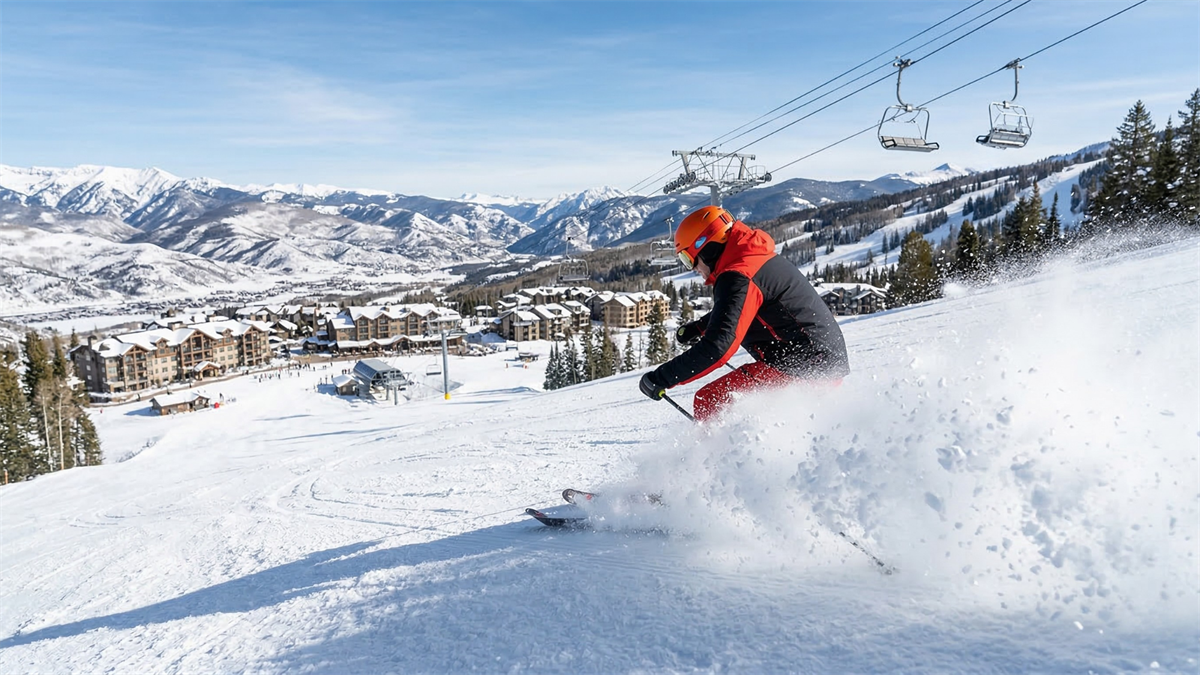
A historically warm winter weighed on ski resort operator Vail Resorts Inc. (NYSE: MTN), resulting in disappointing fiscal year Q2 2026 results and prompting the company to cut its full-year guidance. Shares initially fell after the report was released following the market close on March 9, though they later recovered. Price action was marginally positive the day after release, with prices hovering around $135, on above-average trading volume as investors digested the earnings miss and updated outlook.
Investor sentiment toward the stock remains mixed. Despite the weather-driven setback, analysts still see meaningful upside in the stock, though rising short interest suggests some investors remain skeptical about the company’s near-term outlook.
Warm Winter Hits Earnings and Skier Visits
During the company’s earnings call, Chief Executive Robert Katz said the disappointing quarter and reduced guidance reflect the challenges the company faced this season, which he described as “the most difficult weather environment in the Rockies we have ever seen.”
Snowfall and snowpack were at or near historic lows, he said, surpassing the dismal conditions endured during fiscal 2012, which had previously been considered the worst season in the Rockies. The poor ski conditions led to a 12% decline in visits.
The Colorado-based company, which operates more than 40 mountain resorts, including flagship destinations such as Vail Mountain, Beaver Creek Resort, and Breckenridge Ski Resort, reported earnings of $5.87 per share.
That was down from $6.56 per share a year earlier and fell short of expectations by 18 cents.
Revenue for the quarter totaled $1.08 billion, declining 4.7% year over year and missing estimates by more than $27 million. Because the Rockies generate the lion’s share of Vail’s resort earnings before interest, taxes, depreciation, and amortization (EBITDA), historically low snowfall in the region had a disproportionate impact on the company’s results.
Epic Pass and Diversified Resorts Help Cushion the Blow
In the earnings press release, Katz said that despite the tough backdrop, which he called a “worst-case weather scenario,” the decline in lift revenue was modest, reflecting the strength and stability of the operating model. Strong growth in Vail’s Epic Pass program, which allows skiers to pay upfront for access to multiple resorts, helped provide stability. Pass holders account for roughly 75% of visits each year, helping provide a steadier stream of revenue even during difficult seasons. The company’s expansion into more geographically diverse locations has also helped soften the impact of regional weather conditions.
Due to the ongoing uncertainty around weather conditions, which continue to limit available terrain at some resorts, Vail lowered its fiscal 2026 net income outlook to a range of $144 million to $190 million, down from its previous forecast of $201 million to $276 million. Vail maintained its quarterly dividend of $2.22 per share, saying this year’s decline in cash flow does not reflect the business’s long-term ability to generate cash. The company’s generous dividend may lend some support to the stock, as its roughly 6.6% dividend yield could attract income-focused investors.
Shares Have Struggled Despite Analysts' Expected Upside
Vail’s stock has experienced a steady decline over the past several years. After hitting an all-time high of around $372 in November 2021, shares have fallen sharply. In early February, it dropped to a low of $126, a decline of more than 66% from the peak. Over the past year, shares have dropped more than 11%, compared with gains of more than 10% for the leisure and recreational services industry and more than 18% for the Invesco Leisure and Entertainment ETF (NYSEARCA: PEJ), which tracks 30 United States leisure and entertainment companies. Vail’s stock is currently trading at a price-to-earnings ratio just under 20, which is higher than the industry and broader consumer discretionary sectors' average of around 17.
Analysts appear conflicted on Vail's stock. Of the 13 analysts covering it, four have a Buy rating, eight a Hold, and one a Sell. Following the disappointing results, three analysts lowered their price targets. Barclays cut its target to $138 from $140, Truist Financial lowered its target to $217 from $234, and Stifel Nicolaus reduced its target to $172 from $175. Despite the price revisions, however, the average 12-month price target still suggests meaningful upside. The consensus target of $171 is more than 25% above the current share price of about $133.
Judging by the rise in short interest, some investors appear increasingly skeptical about the company’s near-term outlook. As of Feb. 13, roughly 4.19 million shares were sold short, representing nearly 12% of the public float. That is roughly double the level seen a year ago.
For investors, the outlook for Vail may ultimately hinge on whether the recent weather-driven weakness proves temporary. While rising short interest suggests some skepticism about the stock, analysts still see meaningful upside, which could materialize if visitation normalizes and the company’s pass-based model continues to provide stability. In the meantime, the stock’s high dividend yield could help support the stock during what has proven to be a tough season for the company.
Where Should You Invest $1,000 Right Now?
Before you make your next trade, you'll want to hear this.
MarketBeat keeps track of Wall Street's top-rated and best performing research analysts and the stocks they recommend to their clients on a daily basis.
Our team has identified the five stocks that top analysts are quietly whispering to their clients to buy now before the broader market catches on... and none of the big name stocks were on the list.
They believe these five stocks are the five best companies for investors to buy now...
The article "Warm Winter Hit Vail’s Earnings. What Does It Mean for the Stock?" first appeared on MarketBeat.