These are unprecedented times. Looking away from the news for even a moment can mean missing a society-defining escalation in the Middle East. Yet back in the U.S., not every lawmaker is fully aligned with the war Donald Trump has waged on Iran.
Official reports now state that the U.S., alongside Israel, carried out strikes targeting the inner circle of Iran’s regime, killing 40 senior officials, including Supreme Leader Ali Hosseini Khamenei. Responding to the operation on Truth Social, Trump wrote, “The heavy and pinpoint bombing, however, will continue uninterrupted throughout the week, or as long as necessary to achieve our objective of peace.”
While many congressional Republicans praised the strikes in Tehran, dissent has emerged within the party’s own ranks. Rep. Thomas Massie and Sen. Rand Paul both questioned the decision to proceed without prior congressional authorization. At the same time, some Democrats have vowed to force a vote next week on the president’s war powers.
House Minority Leader Hakeem Jeffries also raised concerns, asking why additional strikes were necessary if last year’s attacks on Iranian bomb facilities were as decisive as previously described. In a statement, according to NBC Jeffries said in part: “Iran is a bad actor and must be aggressively confronted for its human rights violations, nuclear ambitions, support of terrorism and the threat it poses to our allies like Israel and Jordan in the region. However, absent exigent circumstances, the Trump administration must seek authorization for the preemptive use of military force that constitutes an act of war.”
If a war vote materializes, it could be tight. Republicans hold slim majorities in both chambers of Congress, but unlike most legislation, a war powers resolution in the Senate would require only 51 votes. Some Republicans have grown increasingly uneasy with what critics have labeled Trump’s “war for peace” doctrine. Rep. Warren Davidson summed up that concern on X, writing, “No. War requires Congressional authorization.”
The White House has dubbed the campaign “Operation Epic Fury,” with reports suggesting officials hope it will conclude within weeks. Still, the reported death of Iran’s Supreme Leader has created a power vacuum, leaving major questions about succession and regional stability.
Trump has pledged to obliterate Iran’s missile industry and dismantle its nuclear ambitions, while top aides argue the preemptive strike has saved innocent lives. The administration has briefed eight congressional leaders — now known as the “Gang of Eight” — including House Speaker Mike Johnson and Senate Majority Leader John Thune, along with their Democratic counterparts and intelligence committee chairs.
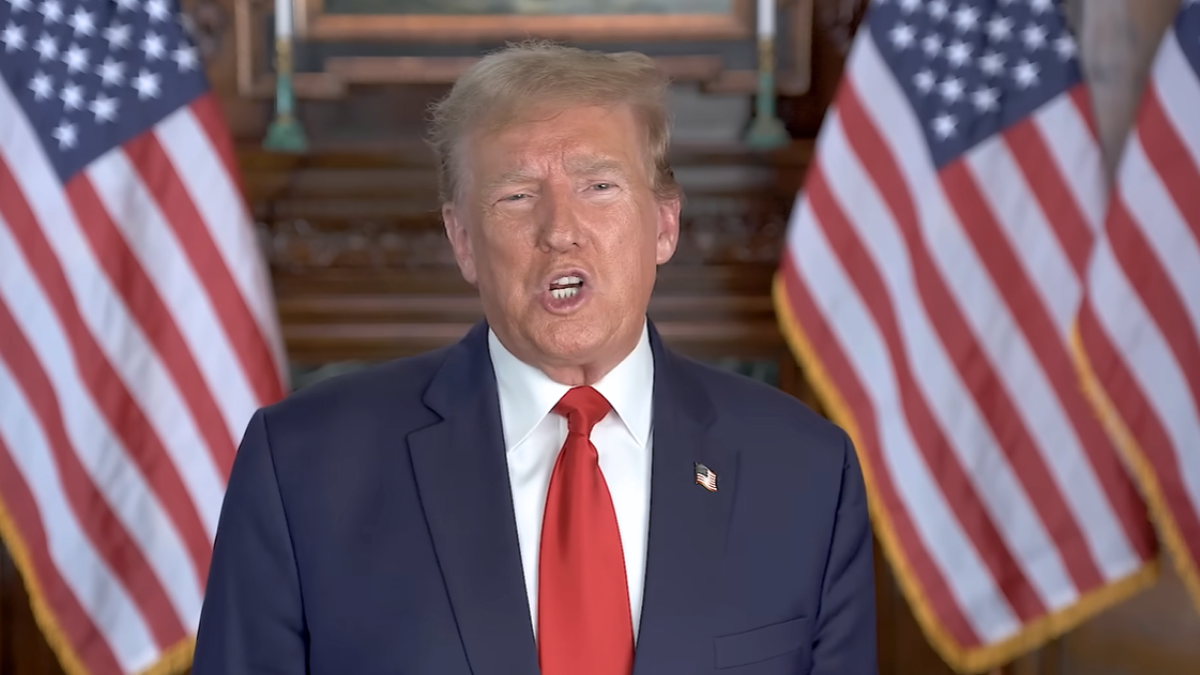
Iranian state media has since issued threats against Trump’s life. He responded on Truth Social, warning that any such attempt would be met with “a force that has never been seen before.”
BREAKING: Trump responds to threats of Iranian retaliation pic.twitter.com/2irc2uHwnm
— The Spectator Index (@spectatorindex) March 1, 2026
Sen. Paul later reinforced his opposition in a statement on X, writing, “As with all war, my first and purest instinct is to wish American soldiers safety and success in their mission. But my oath of office is to the Constitution, so with studied care, I must oppose another Presidential war.”
As yet another preemptive war is begun in the Middle East, John Quincy Adam’s words of wisdom still ring true:
— Rand Paul (@RandPaul) February 28, 2026
“Wherever the standard of freedom and Independence has been or shall be unfurled, there will her heart, her benedictions and her prayers be.”
Like most Americans I…
The situation remains highly volatile and rapidly evolving.