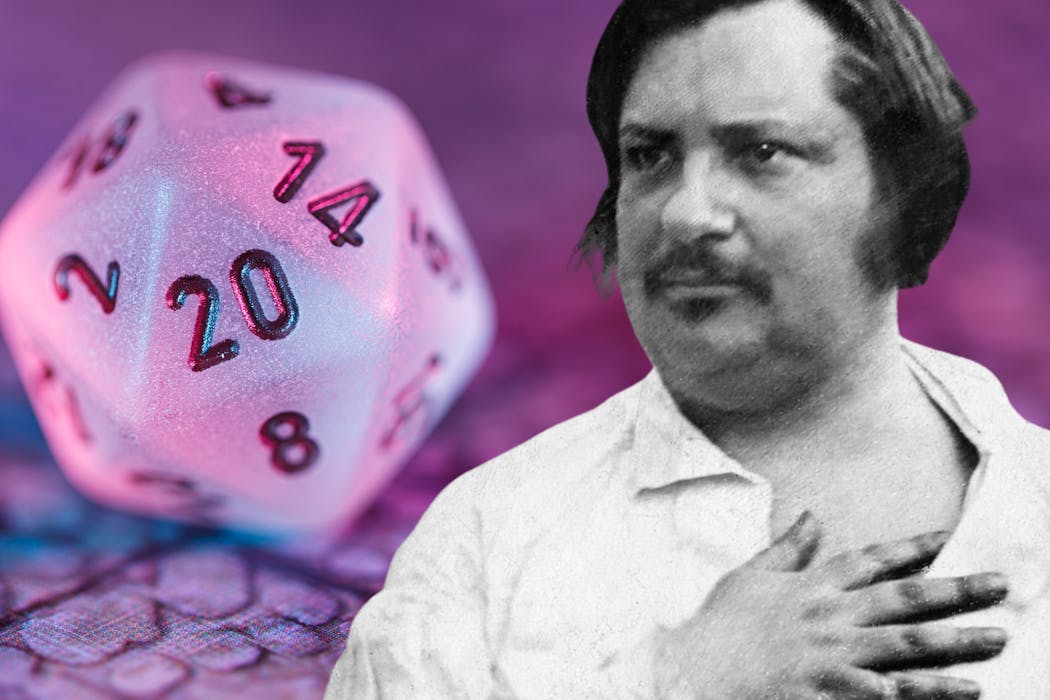
Most people think originality comes from endless freedom. The role playing game Dungeons & Dragons suggests the opposite. It gives players a small number of races, classes and backgrounds and somehow produces characters that feel endlessly distinct. A half-elf paladin might be an immediately recognisable type, yet no two half-elf paladins ever feel the same once play begins. This is because identity in Dungeons & Dragons is not created by escaping structure, but by working through it.
Nineteenth-century readers encountered something strikingly similar in the novels of the French novelist Honoré de Balzac. His vast fictional project, The Human Comedy (1829-1848) is built on a limited repertoire of social “types” that recur as characters across nearly 100 novels and short stories.