
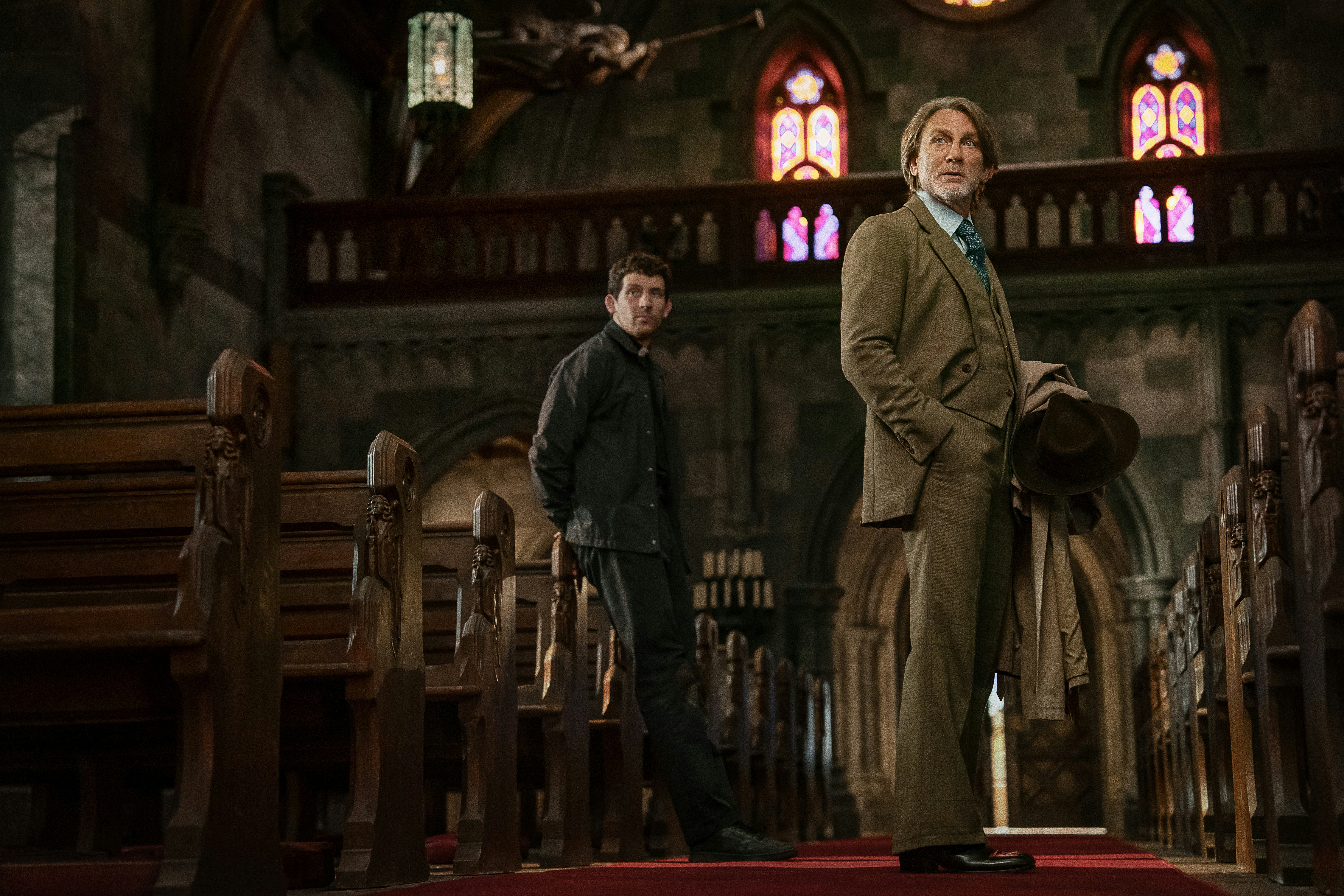
Funny thing about whodunits: they don’t necessarily have a lot of meat on the bone. Yes, their twists often lead us through the kind of mental exercise we could never solve alone, but for the most part, the genre indulges in smoke and mirrors. There’s the illusion of substance, of colorful personality, on the surface — but the act of untangling the thread is often more satisfying than the answers we eventually get.
Such has been the paradox (for this writer, at least) behind Rian Johnson’s Knives Out series. The films themselves have delivered one brilliant murder mystery after the next, providing Johnson with a platform to tackle any issue on his mind — from far-right trolls and vacuous billionaires to the “Fandom Menace” that tore his divisive Star Wars project, The Last Jedi, to ribbons. Thanks to the filmmaker’s crackling, jaunty scripts, packed with the kind of joke-a-minute dialogue most can only dream of writing, the Knives Out saga became an unprecedented delight, with Johnson stepping up as our generation’s own Agatha Christie. But look too closely and the illusion shatters, leaving us lip service about eating the rich and championing truth, no matter the cost.












