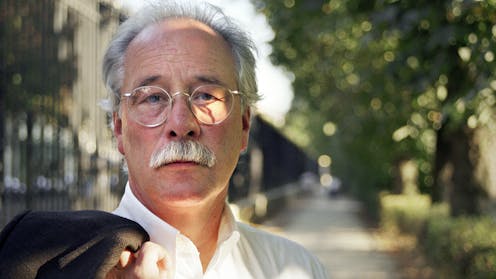
“Author as well as professor,” was how Winfried Georg (“Max”) Sebald styled himself in the note attached to an article he contributed to a 1990 issue of the experimental Austrian journal, Trans-Garde. Sebald had long harboured a desire to be an author and had a clear plan for becoming one. It included both teaching literature and producing scholarship.
Reading his critical essays, Silent Catastrophes, Essays in Austrian Literature, compiled from Sebald’s two earlier volumes Die Beschreibung des Unglücks (1985) and Unheimliche Heimat (1991), it is possible to see how in the context of his academic career this famed author could be described in Roland Barthes’s terms as a scholar of readerly classical works who became an author of writerly experimental texts.