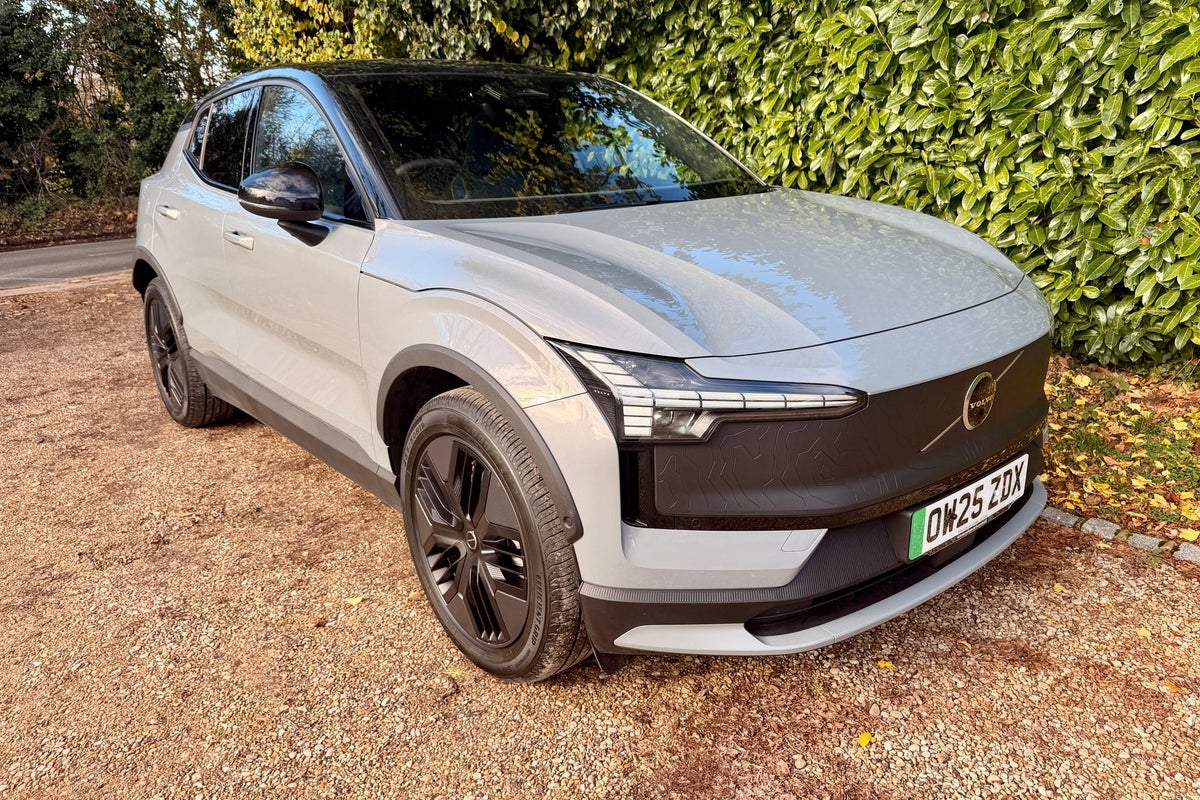
The EX30 is the smallest car Volvo makes. It’s a relatively compact but premium EV, drives well and is smartly designed. Plus, if you spend a bit more money, this model can offer incredible performance and specs for its category. There’s also a new Cross Country version that dials up the SUV look and is even more comfortable and easy to live with.
The Volvo EX30 doesn’t scrimp when it comes to kit and can be loaded up with some premium and advanced features, while returning decent efficiency and packing Google’s intuitive Android Automotive system. However, the lack of a dedicated driver display – plus physical controls for key functions like the wipers and mirror adjustment – can be frustrating, and the real-world range of the smaller battery falls short of 200 miles.

Overall, the EX30 is a seriously impressive EV for those who want a smaller and more affordable car, but with a premium badge on its nose and a sense that it’s built to last. And, of course, it’s a Volvo – so the safety credentials are second to none.
Just make sure you approach the touchscreen controls with an open mind and a willingness to retrain some muscle memory. Keen to know more? Keep reading for my honest review of the EX30.
How I tested

I’ve spent a couple of weeks trialling different versions of the EX30 to get to know the whole model range. I’ve taken it to the shops, on the commute, had the family on board and given all the tech a thorough test.
Read more: This is the comfiest car I’ve ever driven
Volvo EX30

Price range: £33,060 to £47,060
Battery size: 51 kWh or 69 kWh
Maximum claimed range: 296 miles
Miles per kWh: 3.68 miles per kWh
Maximum charging rate: 158 kW
Why we love it
- Premium design
- Strong performance
- Good value
- Comfortable drive
Take note
- Touchscreen frustrations
- Limited rear space
- Short range of smaller battery
Battery, range, charging, performance and drive
There are a number of different versions of the EX30 to pick from. The first has a 51kWh battery and a single motor powering the rear wheels. It produces 269bhp and accelerates to 62mph in 5.7 seconds, while the range is up to 210 miles.
Above this there are two models, both with a larger 69kWh battery pack and the choice of either a single-motor, rear-drive or dual-motor, all-wheel-drive setup. The former has the same 269bhp, but a quicker 0-62mph time of 5.3 seconds and the most range of any EX30, of up to 295 miles. Lastly, the dual-motor EX30 has a somewhat unnecessary 423 horsepower and a 0-62mph time of 3.6 seconds; its range is up to 280 miles. The single-motor car with the bigger battery is our pick of the bunch.
At the top of the range is the Cross Country model, which is expensive, but hugely appealing if you want a premium SUV that’s not too large and is easy to park. It ups the already impressive comfort levels with a slightly raised ride height and some rugged bodywork. I really enjoyed it.
Read more: Volvo promises more plug-in hybrids while its XC60 lives on
All EX30s are great to drive, nicely designed and exude a premium feel at a competitive price. The dual-motor car is incredibly quick for an otherwise understated Volvo.

Interior, practicality and boot space
The five-door, five-seat EX30 is the smallest car Volvo sells, yet the interior still manages to feel spacious and airy thanks to its minimal design. There are lots of clever recycled materials in here and, while priced competitively, the interior still looks and feels of high quality.
Volvo has smartly followed a tight budget on all the places that matter most to save money. For example, the doors are devoid of everything (window and mirror switches, and even the usual door speakers), except the door handle.
The window switches live on the centre armrest, which is no big deal once you’re used to it. But if you like to tweak the door mirrors regularly, you have to dig into the touchscreen system – which is also home to the wipers, fog lights and climate controls. It requires some rewriting of your muscle memory and can become frustrating, especially if you need to quickly adjust the mirrors while parking.
Rear space is decent enough for a relatively small car, and while the flat floor aids legroom, you’ll only want to sit two adults back there most of the time, since the middle seat is cramped. The boot capacity isn’t particularly large at 318 litres (plus an extra 61 litres under the false floor) but is about average for hatchbacks of this size. There’s a small frunk under the bonnet for storing your charge cables.

Technology, stereo and infotainment
There’s no driver display or instrument panel behind the steering wheel. Instead, everything from your speed and gear to emergency icons, local speed limit, navigation, media and settings are all handled by the central touchscreen. It takes some getting used to, but the Android Automotive system is intuitive enough and navigation with integrated Google Maps works particularly well. Google Assistant also does a decent job of handling your spoken requests, so you can ask it to change the cabin temperature instead of tapping the screen.
Read more: Google Gemini AI upgrades to go into millions of old Volvos
It’s not perfect though, and some elements of the user interface are poorly thought out. For example, a graphic showing the proximity of nearby objects and other traffic sometimes blocks the navigation system – so if a cyclist parks in front of you at the traffic lights your navigation is obscured until the parking sensors stop panicking.
Volvo does refresh the software regularly, including an upcoming update to include the new Google Gemini AI assistant in the car, keeping the tech as up-to-date as possible.

As we’ve mentioned, there are no speakers in the doors, but instead a soundbar-style installation below the windscreen works surprisingly well, especially if you go for the optional nine-speaker, 1,040-watt Harman Kardon system. It makes you wonder why car makers haven’t done that before.
Amongst all the clever tech, I really like how the indicator ‘click’ comes from the correct side of the soundbar. So indicate left and the sound comes from the left, while indicating right means – unsurprisingly – that it comes from the right. And a fun fact for you: the indicator sound is sampled from the noise of a twig breaking. How very Volvo.
Read more: BYD Sealion 5 DM-i review
What’s also very Volvo is the level of safety kit you get on board – this is a car that you can trust to keep your family safe.
Prices and running costs
The EX30 starts at £33,030 for the single-motor model with the smaller battery and entry-level Core trim level. This includes a good amount of safety kit, plus adaptive cruise control and all of Google’s services (Maps, Assistant and Play Store). The next trim level is called Plus and increases the price by just £2,100, while adding two-zone climate, a heated steering wheel, extra driver assistance systems and the ability to remotely control the air conditioning when away from the car.
The top trim level, called Ultra, includes the bigger battery and starts at £43,360. It includes a panoramic glass roof, the upgraded stereo, wireless phone charging, a 360-degree camera system, a heat pump, 20-inch wheels, powered front seats and other extras. This essentially turns the EX30 into the sort of premium, feature-packed car you’d expect from Volvo, but it pumps the price up to just over £43,000.
However, at £47,060, there’s the Cross Country model that’s based on the Ultra car, but adds a raised ride height and some rugged body parts to give it more of an off-roader look. And it works. Despite the high price, this is an impressively premium model that drives really nicely. The car is probably quicker than you need, but if you want all the premium build quality and features of a luxury SUV in a smaller package, it works well. I loved it.
Buy now £33060, Volvocars.com
The verdict: Volvo EX30
The EX30 is an easy car to love. At the lower end of the range it impresses for its quality, tech and value. And at the top, it feels like a little luxury car that drives really nicely, focusing on comfort and with a dash of added style. I’m a fan and would heartily recommend the EX30.
Volvo EX30 rivals
FAQs
How long does it take to charge?
The EX30 isn’t the quickest charging EV around, but then its batteries aren’t massive either. You’ll be looking at about 26 to 30 minutes to fill from 10 to 80 per cent at a 150kW public charge station. Plug it into a wallbox charger at home and a fill from almost empty to 100 per cent will take between seven and eight hours.
How much does it cost – is it worth it?
The EX30’s smart design and clever interior packaging make its £33,030 starting price look like great value. But once you’ve selected the bigger battery and been lured in by all the niceties offered by the Ultra trim option, you’re past £40,000. That said, even at such a price the EX30’s premium looks, potent performance and overall Volvo loveliness make it hard to resist. I was particularly impressed by the range-topping Cross Country model despite its £47,000 price tag
Does Volvo replace batteries for free?
Like most manufacturers, Volvo covers its EV batteries with a warranty that lasts for eight years or 100,000 miles, whichever comes first. If the battery fails, or its capacity falls by an unreasonable amount in that time, it will be replaced.
Why you can trust our car reviews
With more than 30 years of experience, Steve Fowler is one of the UK’s best-known automative journalists. Steve has interviewed key industry figures, from Tesla’s Elon Musk to Ford’s Jim Farley, and is a judge for both Germany’s and India’s Car of the Year Awards, as well as being a director of World Car of the Year. When it comes to electric vehicles, Steve reviews all the latest models for The Independent as they launch, from Abarth to Zeekr, and he uses his expert knowledge of car buyers' needs to provide a comprehensive verdict.