Get all your news in one place.
100's of premium titles.
One app.
Start reading
The Independent UK
The Independent UK
Lifestyle
Helen MacNamara

Voices: The government’s in big trouble – here are the 5 things I’d do to fix it

It’s easy to feel gloomy about the state of the world, so, alongside quietly prepping, I’ve been thinking about what I’d have done in my old job if I’d had to contend with the uncertainties caused by war in the Middle East – and the certainty of an oil crisis.

Back when I was deputy cabinet secretary, the question that often bothered me was: what hadn’t we done? What hadn’t we thought of? I never regretted the effort involved in anticipating problems and trying to make them smaller in advance. The first work to do when the winter floods were over was to get ready not to be in the same place the following year – which is why, mid-eurozone crisis, I had five banks for British holidaymakers ready to go on Greek islands. Not needed in the end, but ready nevertheless.
The short answer is that, right now, I would be worried. I am worried. In all likelihood, Whitehall won’t be anything like worried enough.

When my co-host Cleo Watson asked me on our In the Room podcast last week how I’d try to handle this, my first thought was to make the problem bigger – and do the hard work now.

It’s very human to want to think it will all be OK. But hoping and thinking it’s going to be OK is not the job of government. The job of government is to be ready for the worst and to head trouble off at the pass wherever possible.

What’s coming will be a challenge of statecraft. Governing in a sustained crisis is like rubbing your stomach and patting your head at the same time, while also doing algebraic manipulation and managing an unruly two-year-old. Easy! And while there have been plenty of short-term fuel crises, we’ve not faced an energy crisis on this scale since the 1970s. So this has the extra dimension of being novel.

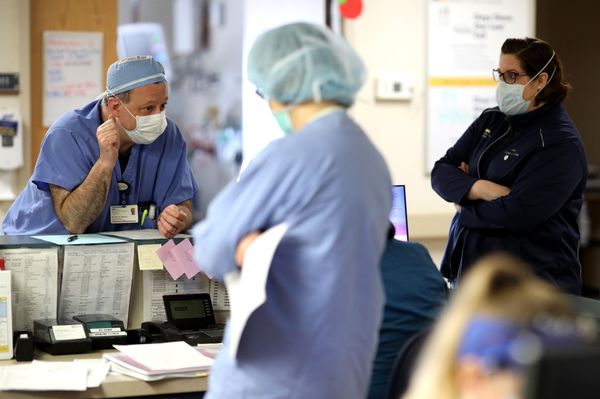
Sometimes in government it’s about being brave enough to stop the things that don’t matter now – or that could wait. When I had to trawl through my emails from the middle of March 2020 to give evidence to the Covid Inquiry, one of the striking things I noticed was the amount of “normal” work that was still being commissioned, and how much even very senior ministers and civil servants assumed that preparing for and responding to the coming disaster would be someone else’s job. Let’s not do that again.

Here are five things that could be done now. It’s not exhaustive, but it’s a start.

One: overdo the preparations, the practising and the checking of the plans that are already in place. The exercise of working together on the planning is worth it, even if the plans themselves aren’t perfect. In spring 2019, the cabinet secretary, Mark Sedwill, forced his reluctant permanent secretaries to do a full exercise on what a no-deal Brexit would mean in practice.

Inevitably, the plans prepared didn’t stand up to what the humans in the room actually did and said when they were sitting together in the Cabinet Office briefing rooms (Cobra suite), arguing about whether food or medicine should take priority. But there was time to adapt the plans, and while we didn’t have to cope with a no-deal Brexit, those exercises turned out to be incredibly useful learning for 2020. The same is true now. Civil servants know their ministers and know each other – they should practise a full-system crisis with a backdrop of fuel scarcity. It won’t be a waste of time, even in the best-case scenario.

Two: don’t assume we can cope with disruption because we just lived through Covid. It might be harder. This disruption will have a different character, and people will respond differently precisely because of the Covid experience. We’re not the same population in 2026 as we were in 2020. I’m not sure any of us has really got to grips with the scarring from the pandemic, and we don’t have the same reserves we once had in any sense – financially across the board and in terms of individual and societal resilience. We are poorer, sadder, more anxious and less trusting.

Three: do what you can now. This is so obvious, and yet still hard to put into practice. There are hundreds of things the government can do to make what is coming less bad. Take farming. The price of diesel has more than doubled; fertiliser is around 50 per cent more expensive, in part because supplies are disrupted around the Strait of Hormuz. This changes the basic economics of planting crops. Across the country, in farmhouse kitchens, decisions are being made about what, how much and whether to plant. Farmers don’t have to do any of it. A fallow year might be better than risking a big loss. Supporting farmers to plant more now is far cheaper than trying to fix sky-high prices in the winter. The same goes for keeping industrial production going: it is vastly cheaper to keep things running than to let them shut down and have to restart.

Four: find opportunities to support the UK economy. For instance, targeted government support for places that want to develop their tourism income is one of the easier paths to growth. Air travel is going to be much more expensive; holidays will cost more. Many of our coastal communities are deprived, yet they are attractive places to visit in the summer and could be so much nicer with only a little bit more money. Done well, regeneration and rejuvenation builds communities as well as economies. Win-win.

Five: literally fix the roof. Some of the poorest and most vulnerable people in our country live in the worst accommodation. Take Awaab’s Law, which came into force last autumn and forces social housing landlords to fix problems with mould and health hazards in their tenancies. Awaab Ishak was a two-year-old who died because of mould in the flat he lived in –in London, one of the most prosperous cities in the world. In a world where the worst is possible, so is the best. We have the gift of the summer months. Building supplies that are in stock now are likely to be the cheapest they will be for some time. Rather than wait for complaints, social housing landlords should ensure their properties have adequate insulation and ventilation. It’s not just the right thing to do, but the economically sound one: tenants are less likely to get sick, and buildings will last longer.

Sometimes it’s about taking advantage of the crisis to do the right thing anyway.

Helen MacNamara is a former deputy cabinet secretary and co-hosts The Independent’s politics podcast, ‘In the Room’, with Cleo Watson, a former deputy chief of staff to Boris Johnson. New episodes come out every Friday on Apple Podcasts, Spotify and YouTube

Sign up to read this article
Read news from 100's of titles, curated specifically for you.
Already a member? Sign in here
Related Stories
Top stories on inkl right now
One subscription that gives you access to news from hundreds of sites
Already a member? Sign in here
Our Picks
Fourteen days free
Download the app
One app. One membership.
100+ trusted global sources.