
Hybrid motorcycles are no longer theoretical. Kawasaki already proved that with the Ninja 7 Hybrid and Z7 Hybrid, both of which combine a 451cc parallel-twin with an electric traction motor and a 48-volt battery. They can even creep around in EV mode.
But up and coming Chinese manufacturer Voge has now shown something at CIMA 2026 that takes the idea in a slightly different direction, and weirdly enough, it’s something the car industry has been doing for the longest time.

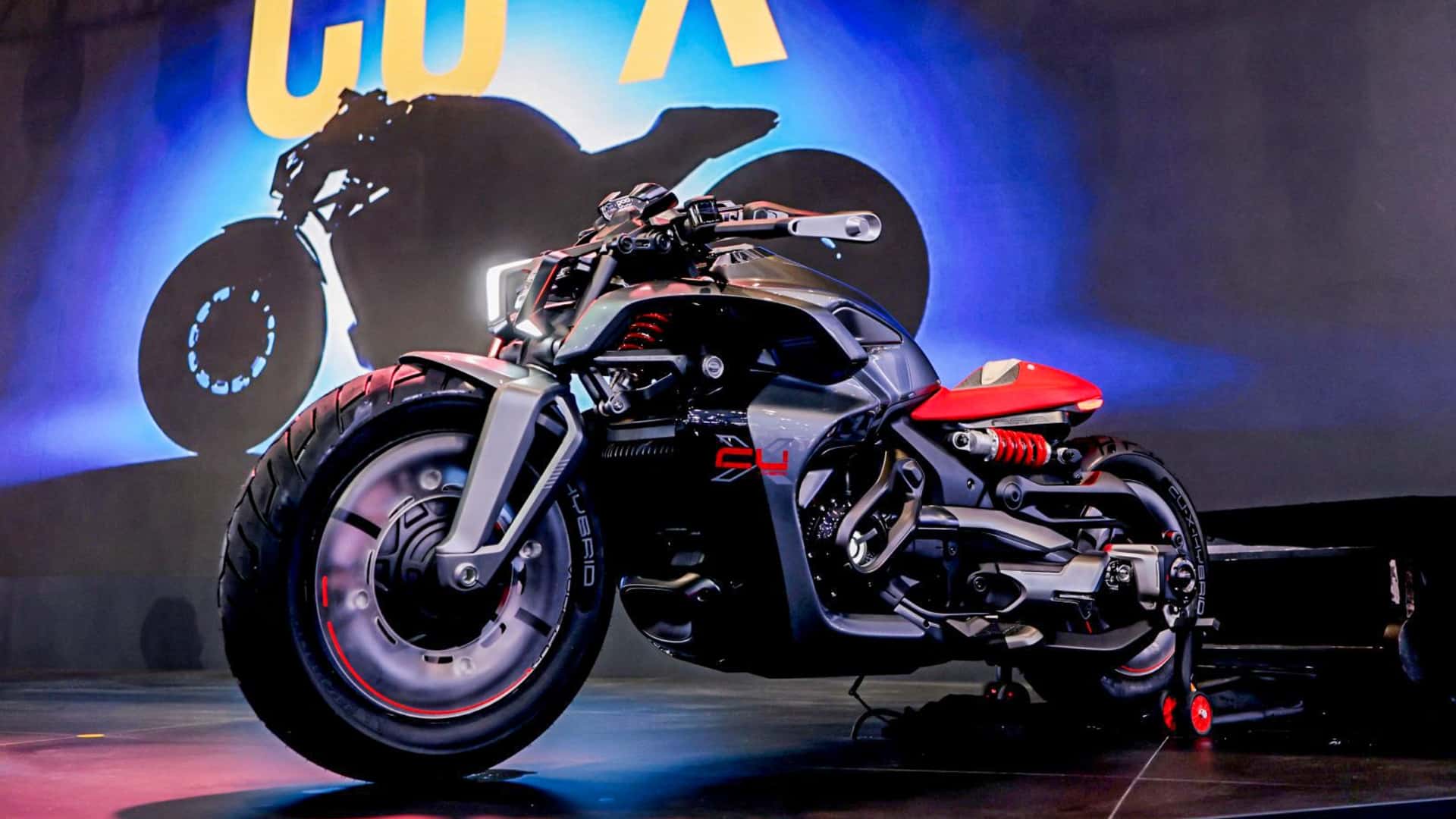
Meet the Voge CU-X Hybrid Concept, a futuristic cruiser that looks like something straight out of the set of some Star Wars spinoff. The design is interesting enough, with its solid-looking front wheel, J.Juan brakes, twin rear shocks, and fairly aggressive stance. But the styling isn’t really the important part here. What matters is that Voge describes the CU-X as a plug-in hybrid.
View this post on Instagram
That distinction matters. Kawasaki’s Ninja 7 Hybrid is a conventional hybrid in the automotive sense. Its battery gets charged while you ride through the engine’s generator and regenerative braking, and Kawasaki explicitly says you don’t need to plug it in. The CU-X, assuming Voge’s description translates into a production-ready system, would add external charging into the equation. Charge it at home, use electric power where it makes sense, then lean on gasoline when the battery runs low.
Cars figured this trick out a long time ago. Plug-in hybrids have existed for years because they offer a pretty obvious compromise between EV efficiency and gasoline convenience. You don’t need a gigantic battery for every mile you’ll ever ride, but you can still cover shorter trips without firing up the engine. For motorcycles, where battery size, packaging, weight, and range remain massive headaches, that logic arguably makes even more sense.
There are still a lot of unanswered questions, though. Voge hasn’t published the CU-X’s engine displacement, battery capacity, electric-only range, charging speed, motor output, or even a clear explanation of how the hybrid system works mechanically. And for now, this is still a concept, not something you’ll be financing at your local dealer next week.
Still, the idea is more interesting than simply calling this another hybrid motorcycle. Kawasaki has already shown that gas and electric propulsion can coexist on two wheels. Voge’s contribution is potentially adding the missing plug. And if that eventually reaches production, motorcycles may finally get their own version of something cars figured out about 15 years ago: electrification doesn’t necessarily have to mean choosing between a gas tank and a charging cable.