
Get all your news in one place.
100’s of premium titles.
One app.
Start reading
Forbes
Forbes
Science
Jamie Carter, Contributor

Venus At Its Brightest In 2022 While The Moon Reveals Uranus: What To Watch For In The Night Sky This Week

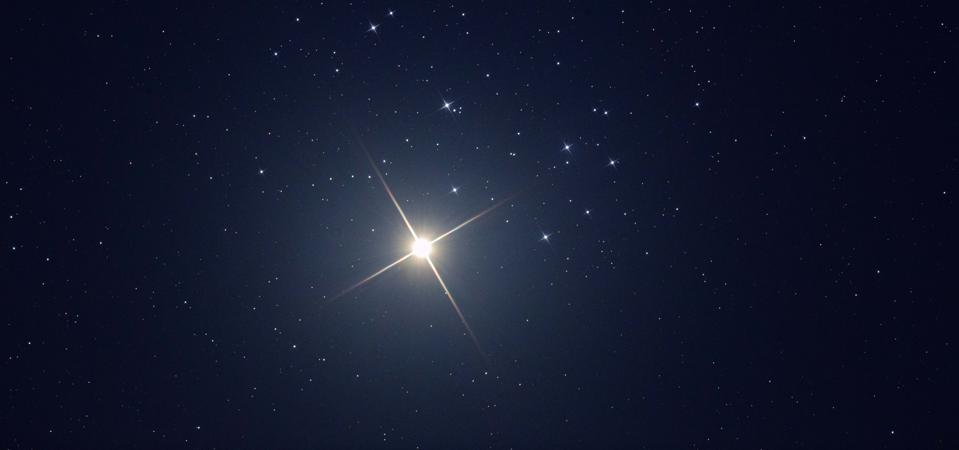
BEIJING, CHINA - APRIL 3, 2020 - Venus embraces the Pleiades, and 444 light-years apart they meet every eight years. Beijing, China, April 3, 2020. - PHOTOGRAPH BY Costfoto / Barcroft Studios / Future Publishing (Photo credit should read Costfoto/Barcroft Media via Getty Images) Barcroft Media via Getty Images

What To Watch For In The Night Sky This Week

Each Monday I pick out the northern hemisphere’s celestial highlights (mid-northern latitudes) for the week ahead, but be sure to check my main feed for more in-depth articles on stargazing, astronomy, eclipses and more.

What To Watch For In The Night Sky This Week: February 7-13, 2022

With the Moon waxing into its First Quarter phase this week becomes less about pure dark sky stargazing and more about watching our satellite and the planets. This weeks gives you a chance to see Uranus, then Venus, though you’ll need to be up early to glimpse the latter.
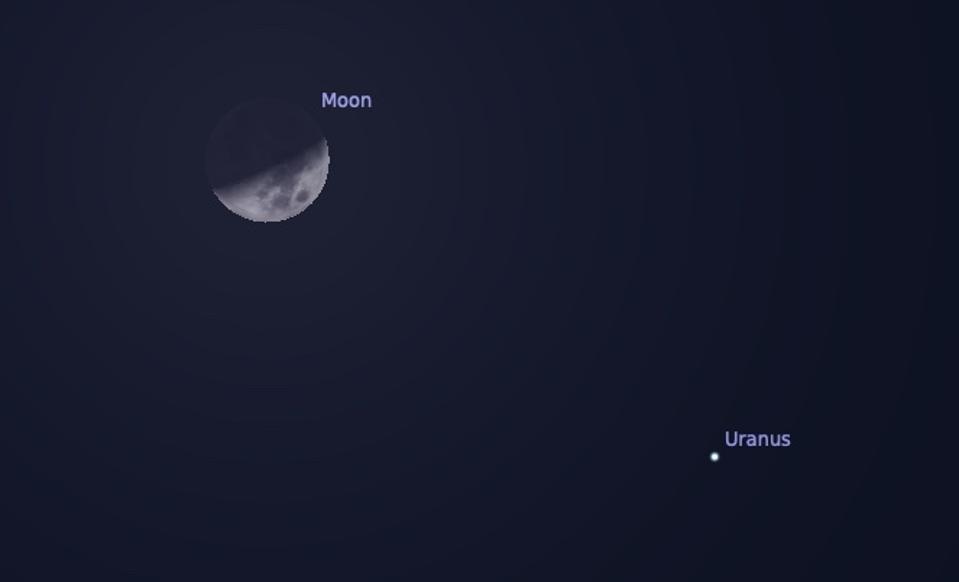
On Monday, February 7, 2022 Uranus will be close to the Moon. This is the view you'll get through a pair of 10x50 binoculars. Stellarium

Monday, February 7, 2022: Moon and Uranus

If you’ve never seen the seventh planet from the Sun tonight gives you a great chance. Uranus is very close to the 44%-lit waxing crescent Moon, and if you have a pair of binoculars you can likely get them both in the same field of view.

Tuesday, February 8, 2022: α-Centaurid meteor shower

This one’s nothing to get excited about. With only about six shooting stars predicted to occur during its peak in the early hours of this morning, the α-Centaurid meteor shower aren’t worth staying up for per se, but if you are out stargazing do expect a few fireballs.

Wednesday, February 9, 2022: Venus at greatest brightness

No sooner had it appeared in the pre-dawn sky to become a “morning Star” but the planet Venus reaches its brightest in 2022. Earths’s “Evil Twin” planet will shine at magnitude -4.6, which is brighter than anything other than the Moon and, of course, the Sun.
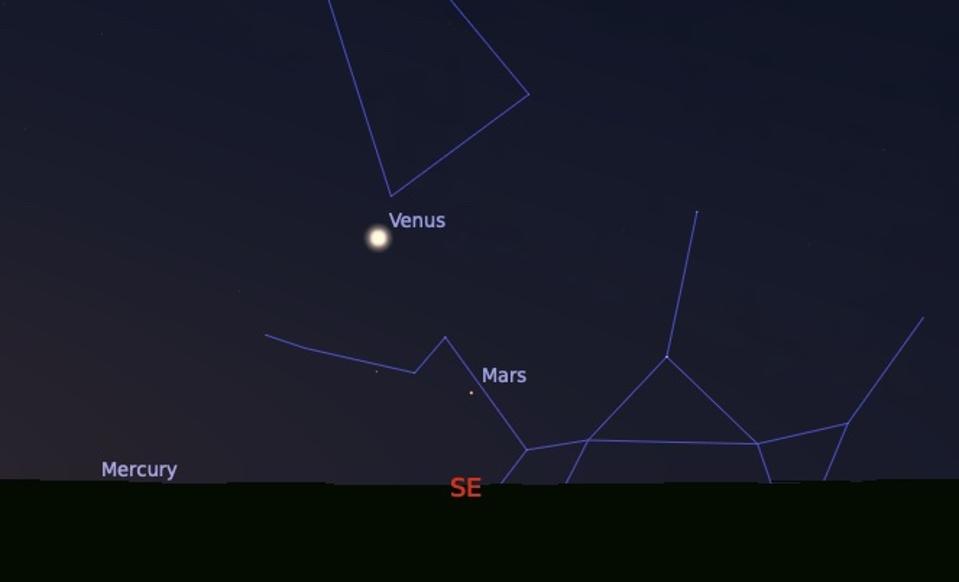
Saturday, February 12, 2022: Mars and Venus meet Stellarium

Saturday, February 12, 2022: Mars and Venus meet

You’re going to have to get up early for this one but it should be worth it. Look to the eastern horizon about an hour before dawn and you’ll see a very bright—though only 1%-illuminated—planet Venus about 6º from the red planet Mars. It’s not a super-close conjunction but it should be a lovely sight nonetheless.

Sunday, February 13, 2022: Venus at highest altitude in morning sky

Having just been at its brightest Venus this morning gets highest above the horizon as seen from the northern hemisphere. So if you’re driving to work this morning roughly to the east look out for it shining in your direct line of view—or in your rear view mirror as you drive roughly west.
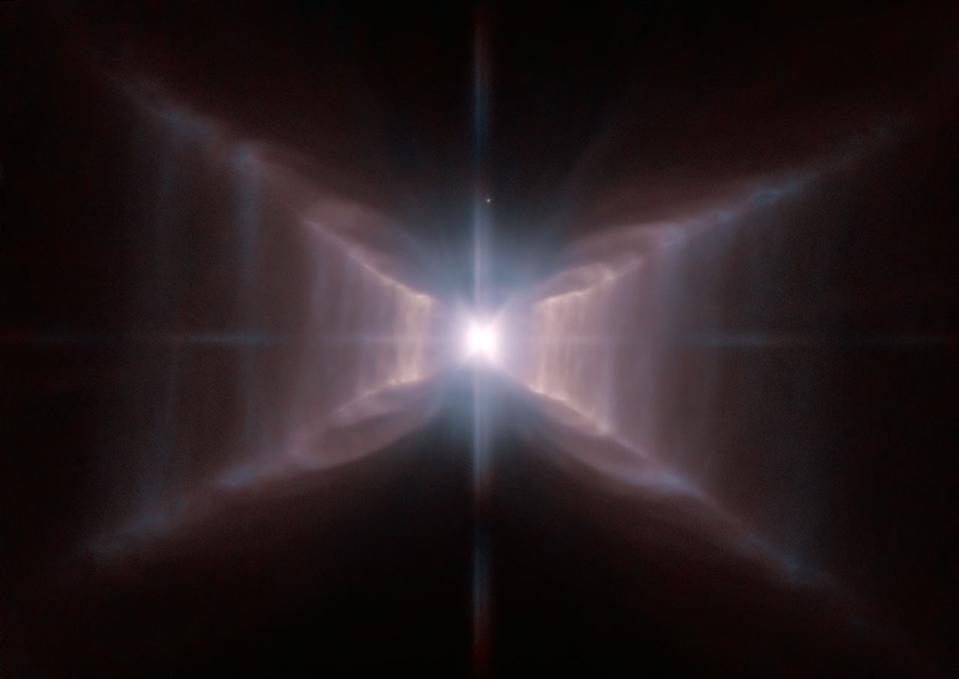
The star HD 44179 is surrounded by an extraordinary structure known as the Red Rectangle. It acquired its moniker because of its shape and its apparent colour when seen in early images from Earth. This strikingly detailed new Hubble image reveals how, when seen from space, the nebula, rather than being rectangular, is shaped like an X with additional complex structures of spaced lines of glowing gas, a little like the rungs of a ladder. The star at the centre is similar to the Sun, but at the end of its lifetime, pumping out gas and other material to make the nebula, and giving it the distinctive shape. It also appears that the star is a close binary that is surrounded by a dense torus of dust — both of which may help to explain the very curious shape. Precisely how the central engine of this remarkable and unique object spun the gossamer threads of nebulosity remains mysterious. It is likely that precessing jets of material played a role. The Red Rectangle is an unusual example of what is known as a proto-planetary nebula. These are old stars, on their way to becoming planetary nebulae. Once the expulsion of mass is complete a very hot white dwarf star will remain and its brilliant ultraviolet radiation will cause the surrounding gas to glow. The Red Rectangle is found about 2 300 light-years away in the constellation Monoceros (the Unicorn). The High Resolution Channel of the NASA/ESA Hubble Space Telescope’s Advanced Camera for Surveys captured this view of HD 44179 and the surrounding Red Rectangle nebula — the sharpest view so far. Red light from glowing Hydrogen was captured through the F658N filter and coloured red. Orange-red light over a wider range of wavelengths through a F625W filter was coloured blue. The field of view is about 25 by 20 arcseconds. ESA/Hubble and NASA

Star of the week: HD 44179’s ‘Red Rectangle’

About 2,300 light-years distant in the constellation Monoceros, the Unicorn, is the Red Rectangle, a nebula of glowing gas that’s being ejected by—and surrounds—the dying Sun-like star HD 44179. However, this image from the Hubble Space Telescope reveals it to be an X-shape.

Wishing you clear skies and wide eyes.

Sign up to read this article
Read news from 100’s of titles, curated specifically for you.
Already a member? Sign in here
Related Stories
Top stories on inkl right now
One subscription that gives you access to news from hundreds of sites
Already a member? Sign in here
Our Picks
Fourteen days free
Download the app
One app. One membership.
100+ trusted global sources.