Get all your news in one place.
100's of premium titles.
One app.
Start reading
Latin Times
Latin Times
World
Alicia Civita

Venezuelan Political Prisoners Left Sleeping Outdoors, Trapped in Damaged Cells After Earthquakes, Families Warn

A week has passed since the devastating earthquakes that struck Venezuela on June 24, with a death toll climbing above 2,000 and over 50,000 missing, families of political prisoners say another humanitarian emergency is unfolding behind prison walls.

Relatives and human rights advocates are warning that dozens of political prisoners held at two of Venezuela's most notorious prisons, Ramo Verde and El Rodeo I, remain at risk after the 7.2 and 7.5 magnitude earthquakes damaged prison infrastructure and exposed what they describe as dangerous living conditions.
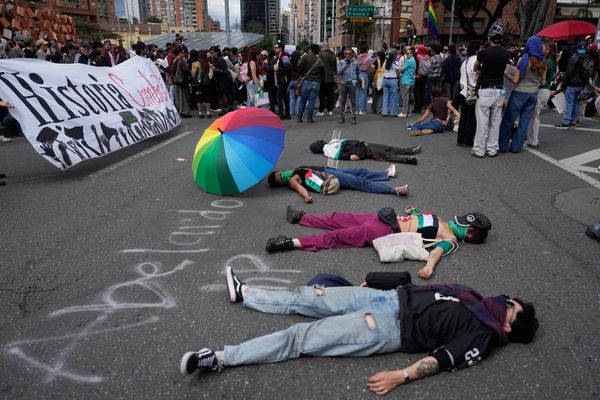
In an urgent alert issued this week, the Committee for the Freedom of Political Prisoners (CLIPPVE) called for immediate humanitarian measures, independent inspections and the release of political prisoners, particularly those with serious medical conditions.

"The vulnerability of detainees has dramatically increased following the earthquakes," the organization said in a report published by Fair Planet. "Keeping citizens imprisoned under these conditions raises the risk of an avoidable humanitarian tragedy."

Damage at Ramo Verde

According to CLIPPVE, relatives of inmates at the National Center for Military Defendants (CENAPROMIL), commonly known as Ramo Verde, reported that the prison's fifth floor sustained significant structural damage during the earthquakes.

Fearing additional aftershocks, political prisoners have abandoned the damaged building and are now sleeping on the prison's outdoor sports courts.

"The prison population is currently spending the night on the uncovered courts because they fear further collapses," the committee said.

The organization said prisoners urgently need mattresses, tents, food and other basic supplies. Although detainees have access to cooking equipment, many reportedly refuse to enter food preparation areas because they fear damaged structures could collapse.

Ramo Verde has long housed military officers, opposition figures and civilians accused of crimes against the state. Over the past decade, it has held some of Venezuela's highest-profile political prisoners, including opposition leader Leopoldo López before his house arrest and eventual exile.

Families Describe Fear Inside El Rodeo I

The situation at El Rodeo I, another prison currently holding dozens of political detainees arrested following Venezuela's disputed 2024 presidential election, appears equally concerning.

According to CLIPPVE, inmates believe remaining outdoors would be safer because of continued aftershocks. However, they allege authorities have refused to move them from their cells despite concerns about structural damage.

"The political prisoners say they would feel safer sleeping on the sports court and have requested permission to remain there, but authorities have refused to transfer them," the committee said.

Families also made another troubling allegation.

During the earthquakes, they claim prison guards abandoned the facility while leaving inmates locked inside their cells.

"The relatives denounce a serious failure to provide assistance," the committee said. "The guards abandoned the prison during the earthquake and left those deprived of liberty locked inside, at their own mercy."

Communication Breakdown

Outside El Rodeo I, families who have maintained a protest camp for months say they continue receiving little information about their loved ones.

According to the committee, members of Venezuela's Maximum Security Prison Service (SESMA) told relatives only that "the situation was under control," without providing engineering reports on the buildings or detailed updates about the health of detainees.

"This opacity demonstrates a total failure in institutional communication and deprives families of reliable information during a national emergency," the statement reads.

The committee further alleges that disagreements between SESMA officials and officers from Venezuela's General Directorate of Military Counterintelligence (DGCIM) have delayed decisions inside the prison.

According to relatives, the institutional dispute has left families without a clear authority to contact while increasing uncertainty about conditions inside the facility.

Hundreds Still Behind Bars

The prison alert comes as Venezuela continues to hold hundreds of people whom international organizations classify as political prisoners.

According to Foro Penal, one of the country's leading human rights organizations, there were more than 900 political prisoners in Venezuela before the change in government earlier this year. While hundreds have since been released, the organization reported in its latest update that more than 300 people remain imprisoned for political reasons, including civilians, military personnel, journalists and activists.

Organizations including Amnesty International, Human Rights Watch and the UN Independent International Fact-Finding Mission on Venezuela have repeatedly documented arbitrary detentions, torture, enforced disappearances and denial of due process inside Venezuela's detention system.

Many of the remaining prisoners are held in facilities such as El Rodeo I and Ramo Verde.

Calls for Independent Inspections

CLIPPVE is urging authorities to allow independent structural assessments by civil protection experts to determine whether the prisons remain safe after the earthquakes.

It is also requesting immediate humanitarian assistance, including food, clean water, temporary shelter and medical care for detainees.

"The transformation of the prison regime is urgently needed to guarantee humane conditions," the committee said, noting that inmates continue to endure overcrowding, unsanitary conditions and severe restrictions on family contact.

According to relatives, visits at El Rodeo I are still limited to 15 minutes, conducted through a glass partition. Although authorities recently allowed prisoners to receive one phone call for Father's Day and permitted pillows to enter the prison after nearly two years of prohibition, families say those changes fall far short of addressing the conditions inside.

The committee also renewed its appeal to international human rights bodies, including the United Nations, the Inter-American Commission on Human Rights and the International Committee of the Red Cross, to inspect the prisons and verify the wellbeing of detainees.

As aftershocks continue to rattle parts of northern Venezuela, relatives say their greatest fear is no longer political persecution alone.

It is that the next tremor could strike prisons already weakened by years of neglect, turning a detention crisis into another deadly chapter of the country's earthquake disaster.

Sign up to read this article
Read news from 100's of titles, curated specifically for you.
Already a member? Sign in here
Related Stories
Top stories on inkl right now
One subscription that gives you access to news from hundreds of sites
Already a member? Sign in here
Our Picks
Fourteen days free
Download the app
One app. One membership.
100+ trusted global sources.