Get all your news in one place.
100’s of premium titles.
One app.
Start reading
International Business Times UK
World
Chelsie Napiza

Venezuela's Vast Oil Reserves Put UK Under Pressure as US Strike Sparks 'Imperialism' Claims

World powers now face a geopolitical fault-line after an overnight escalation in Venezuela that has not only rocked Caracas but is reshaping dialogue in London and beyond about resource security, sovereignty and 21st-century foreign intervention.

In the early hours of Jan. 3, 2026, multiple loud explosions and aircraft sounds reverberated across Venezuela's capital, Caracas, and other regions, followed by reports of a large-scale United States strike that captured President Nicolás Maduro and his wife, Cilia Flores, according to US President Donald Trump's announcement.
The unprecedented action, the most direct US military intervention in Latin America since the 1989 Panama invasion, has renewed intense debate over whether Washington's motives were primarily strategic, including control over Venezuela's vast oil reserves, and is leaving allies like the United Kingdom under pressure to clarify their stance.

US Strike and Immediate Reactions

Shortly before 02:00 local time on Saturday, residents and journalists in Caracas reported hearing at least seven powerful explosions along with low-flying aircraft, followed by widespread power outages in southern parts of the city near major military bases. Healthcare facilities and civilian areas experienced disrupted services amidst the chaos.

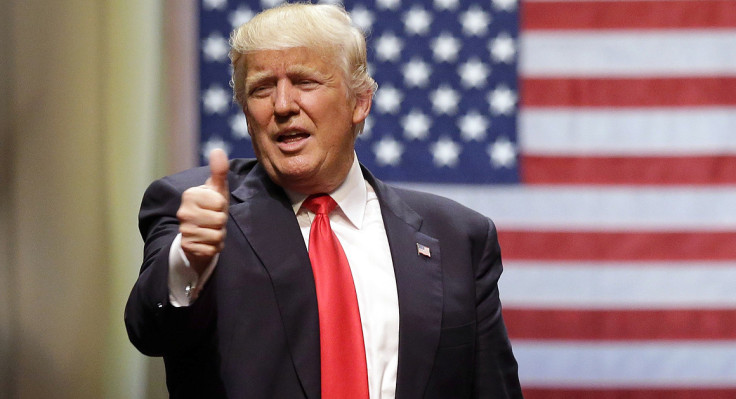
President Trump took to his social media platform to assert that the United States had successfully carried out a 'large scale strike' in Venezuela, capturing Maduro and his wife and flying them out of the country. The operation, he claimed, was coordinated with US law enforcement and aimed at bringing Maduro to justice on criminal charges.

However, details regarding legal authorisation, congressional consultation and the precise nature of those charges remain unclear. US officials have cited allegations of Maduro running a 'narco-state', an assertion fiercely denied by Caracas.

In contrast, the Venezuelan government condemned the incursion as a blatant violation of sovereignty, accusing Washington of 'military aggression' and calling upon citizens to resist what it labelled an imperialist assault. Caracas declared a national emergency and mobilised defence forces.

The UK government has yet to issue a detailed formal response, but pressure is mounting in Westminster for a clear position amid concerns about legality under international law and wider strategic implications for global oil markets.

Venezuela's Oil Wealth and Strategic Importance

Central to the debate over the US action is Venezuela's status as an oil giant. The South American country holds the world's largest proven crude oil reserves, with an estimated 303 billion barrels of recoverable crude, roughly 17–20% of global reserves, concentrated largely in the Orinoco Belt.

Despite this vast potential, Venezuela's oil output has plummeted over more than a decade due to political instability, mismanagement at state-run Petróleos de Venezuela S.A. (PDVSA), and longstanding international sanctions. Production, which once topped several million barrels per day in the early 2000s, had fallen to under one million barrels per day before recent fluctuations, limiting Venezuela's current influence on daily global crude supply despite its theoretical reserve size.

The reserve's composition features mostly heavy and extra-heavy crude, which requires specialised refining capacity. These grades often trade at a discount compared with lighter crude but remain strategically valuable, especially for refineries designed to process heavier crudes.

For Washington and its allies, the question of access to and control over these resources adds a layer of complexity to the geopolitical calculus. Historically, US energy security has hinged on diversified supply, and while the United States has significantly expanded domestic production, heavy crude continues to be a critical feedstock for certain refiners.

UK and Global Diplomatic Challenges

The UK, balancing its own energy security considerations with commitments to international law and human rights, now finds itself navigating a diplomatic quandary.

London has traditionally upheld the principles of state sovereignty and multilateral conflict resolution, yet also aligns with Washington on broader security issues. In recent parliamentary discussions, several MPs have urged Prime Minister Rishi Sunak to clarify whether the UK views the US action as lawful and whether intelligence sharing or logistical support was involved.

Experts warn that silence or ambiguity could erode British credibility on the international stage, especially among Global South partners wary of Western military interventions.

As the Organisation of Petroleum Exporting Countries (OPEC) and other energy stakeholders assess the implications of potential regime change in Caracas, the UK's stance could influence both diplomatic alliances and energy market dynamics.

Sign up to read this article
Read news from 100’s of titles, curated specifically for you.
Already a member? Sign in here
Related Stories
Top stories on inkl right now
One subscription that gives you access to news from hundreds of sites
Already a member? Sign in here
Our Picks
Fourteen days free
Download the app
One app. One membership.
100+ trusted global sources.