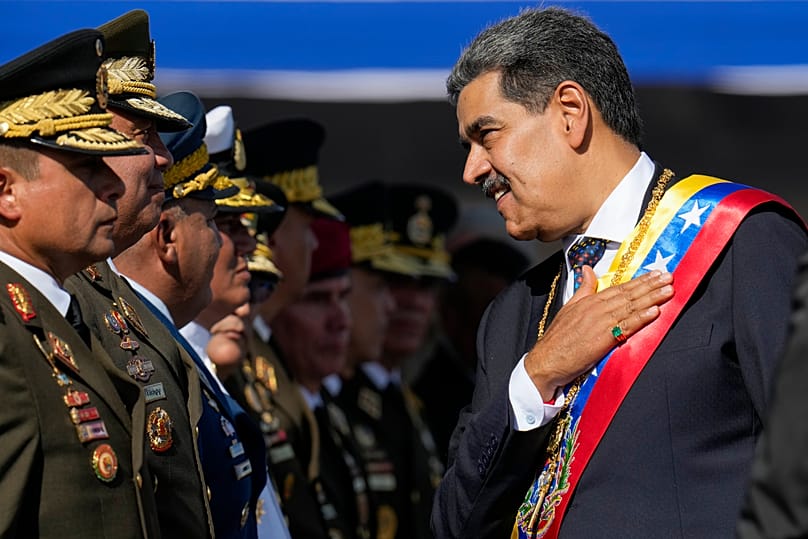
Venezuela's Nicolás Maduro pleaded not guilty to drugs charges in his first appearance in a US court on Monday, just days after being seized in Caracas in a shock US military operation.
"I am innocent. I am not guilty of anything that is mentioned here," he told judge Alvin Hellerstein.
"I am a decent man, the president of my country."
Maduro appeared alongside his wife Cilia Flores who also entered a not guilty plea on similar charges, telling the court she was "completely innocent."
According to court records, Maduro has retained attorney Barry Joel Pollack, arguably best known for representing Wikileaks founder Julian Assange.
The judge ordered both to remain behind bars and set a new hearing date of 17 March.
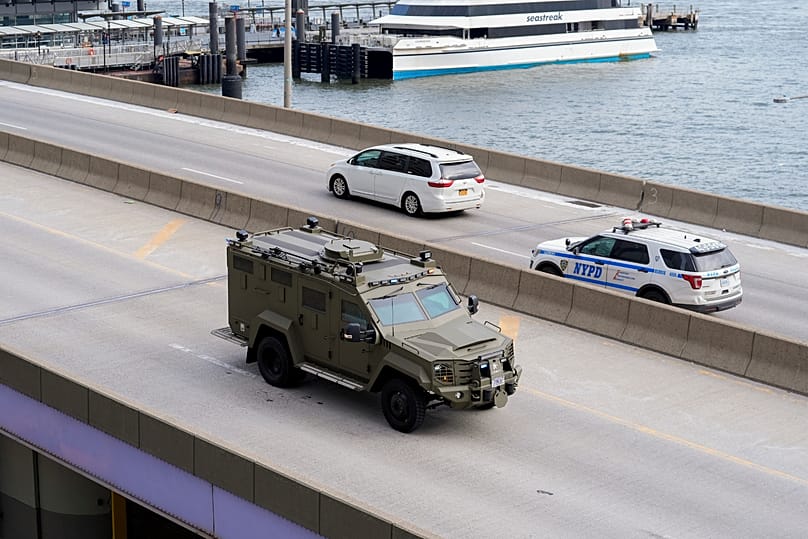
A 25-page indictment made public on Saturday accuses Maduro and others of working with drug cartels to facilitate the shipment of thousands of tonnes of cocaine into the US. They could face life in prison if convicted.
He and his spouse have been under US sanctions for years, making it illegal for any US citizen to take money from them without first securing a licence from the Treasury Department.
While the indictment against Maduro says Venezuelan officials worked directly with the Tren de Aragua gang, a US intelligence assessment published in April, drawing on input from the intelligence community's 18 agencies, found no coordination between Tren de Aragua and the Caracas regime.
Among other things, the indictment also accuses Maduro and his wife of ordering kidnappings, beatings and murders of those who owed them drug money or undermined their drug trafficking operation.
That included a local drug boss' killing in Caracas, the indictment said.
Maduro's wife is also accused of accepting hundreds of thousands of dollars in bribes in 2007 to arrange a meeting between "a large-scale drug trafficker" and the director of Venezuela’s National Anti-Drug Office, resulting in additional monthly bribes, with some of the money going to Maduro's wife, according to the indictment.
As a criminal defendant in the US legal system, Maduro will have the same rights as any other person accused of a crime, including the right to a trial by a jury of regular New Yorkers.
Maduro's lawyers are expected to contest the legality of his arrest, arguing that he is immune from prosecution as a sovereign head of state.
Panamanian strongman Manuel Noriega unsuccessfully used the same defence after the US captured him in a similar military invasion in 1990.
But the US does not recognise Maduro as Venezuela's legitimate head of state, particularly following the much-disputed 2024 presidential election.
Venezuela's new interim president, Maduro's Vice President Delcy Rodríguez, has demanded that the US return Maduro, who has denied any involvement in drug trafficking.
However, late on Sunday she also struck a more conciliatory tone in a social media post, inviting collaboration with Trump and "respectful relations" with the US.
Before his capture, Maduro and his allies claimed US actions were part of a bid to control Venezuela’s rich oil and mineral resources.
The US seized Maduro and his wife in a military operation on Saturday, capturing them in their heavily fortified home.
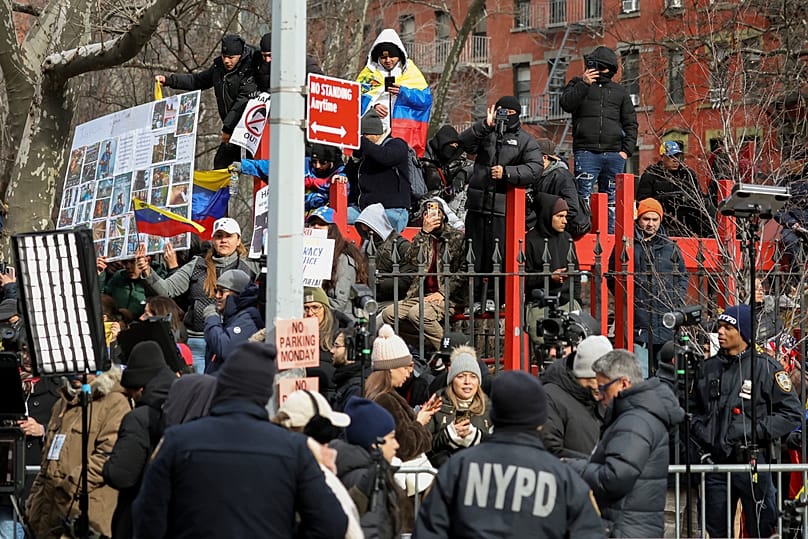
Trump said the US would "run" Venezuela temporarily, but Secretary of State Marco Rubio said on Sunday that it would not govern the country day-to-day, other than enforcing an existing "oil quarantine".
Trump suggested on Sunday that he wants to extend Washington's power further into the western hemisphere.
Speaking aboard Air Force One, he called Colombia's President Gustavo Petro "a sick man who likes making cocaine and selling it to the United States. And he's not going to be doing it very long."
He called on Venezuela's Rodríguez to provide "total access" to her country, or else face consequences.