Get all your news in one place.
100's of premium titles.
One app.
Start reading
Latin Times
Latin Times
World

Venezuela After the Earthquakes: Solidarity Among Neighbors and Deep Gratitude for International Rescue Workers

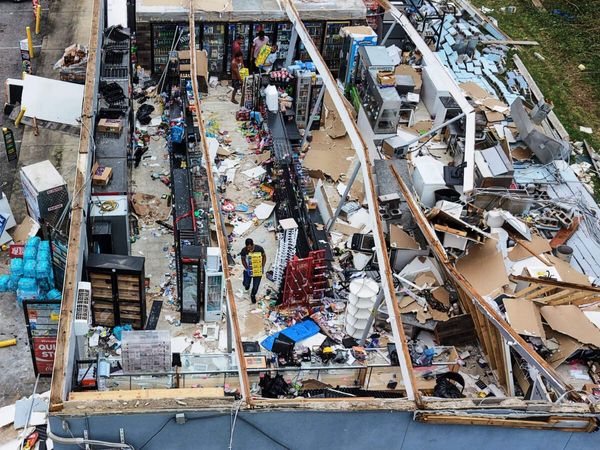
CARACAS—Just days after a pair of earthquakes rocked northern Venezuela, claiming the lives of over 2,000 people according to official reports, the wave of solidarity that engulfed the country has only grown, as citizens organize to supply everything from water, food, clothes, and blankets to thousands of people whose homes were destroyed.

From the first hours after the tragedy, Venezuelans, who have been living for years with dire economic instability under the Chavista regime, took to the streets to organize grassroots relief efforts for their fellow citizens wary of when government and international aid will arrive.
Initially, Jorge Rodríguez, president of the National Assembly, said that at least 17 countries have committed to sending aid to Venezuela, including the Dominican Republic, El Salvador, Colombia, Mexico, Chile, Ecuador, Spain, Germany, Switzerland, Qatar, as well as the United Nations. A week after the earthquakes, 27 countries and 40 search-and-rescue teams have helped, with some teams already returning home.

Acting President Delcy Rodríguez's government has reported 2,595 dead as of this week and over 12,400 injured, with the United Nations and the International Rescue Committee estimating that as many as 50,000 people remain missing. The country has recorded more than 860 aftershocks since the initial quakes.

On highways around the capital, Caracas, long lines of cars still bearing signs reading "humanitarian aid" or flying the tricolor Venezuelan flag moved along slowly, some carrying aid cargo. Across the city, collection centers sprung up in parks and squares, including at the Central University of Venezuela (UCV), the country's oldest university.

At the site, students organized to receive donated clothing, non-perishable food, water, and other supplies to later distribute to those in need. Rosa Cucunuba, vice president of the Federation of University Centers at the UCV, told Latin Times that the process for providing support is quite simple.

"We're keeping a record of people's ID numbers and what they're donating. At the Institute of Tropical Medicine, they're sorting all the medical supplies, and the clothing is here in the plaza, where we sort it into children's, women's, and men's categories."

She said that what those affected need most is water, bedsheets, flashlights, batteries, and tools like picks to help clear debris.

"We're all pitching in," said Cucunuba about the relief effort, which involves more than 150 volunteers.

University professor Ámbar González told Latin Times that volunteers are prioritizing medicines, food, vitamins, and baby clothes. But they also need boxes or tarps to pack the aid.

The professor described how proud she feels about the outpouring of help from citizens as well as students.

"I'm proud of my students; I have a large number of students and faculty members here, but in the end, it doesn't matter where you're from—what matters is joining hands to support one another in this situation," said González.

A 10 minute drive East, at the iconic Caracas Sphere sculpture (Esfera de Soto), volunteers were also bustling about sorting supplies, stacking boxes, and continuing deliveries to hospitals and affected areas like La Guaira.

The region was hardest hit and remains heavily militarized, with authorities still searching for survivors buried under the rubble more than a week later.

Tomás Monasterios, who lives at the Residencia Ilona building in the seaside city of La Guaira (the capital of La Guaira state), hasn't been able to reach his relatives and fears the worst.

"My relatives were here at the Residencia Ilona; the building collapsed, and after that we lost contact with them. They were on the third floor," he told Latin Times, adding that firefighters were still searching for them.

Monasterios arrived after his family to La Guaira, and wasn't inside the building when the quakes struck. He said his aunt and two cousins are among the missing. "There are no signs of life," he added. The search efforts had been delayed, he said, because they lack proper tools. The structure was partially damaged and rescuers fear it could collapse at any moment.

International news organizations have reported spectacular rescues, as neighbors in Venezuela share big and smaller victories in terrible conditions. Some of the families have started to bury their dead, while many more are still searching, but the feeling in Venezuela is that they are not alone. Today, with thousands still missing and over 6 million people displaced, according to U.N. estimates, that solidarity wave keeps growing.

A Venezuelan flag is seen painted on a damaged wall amid the rubble of a collapsed building following earthquakes in Caraballeda, La Guaira state, Venezuela, on June 26, 2026. (Credit: Via Getty Images)
Sign up to read this article
Read news from 100's of titles, curated specifically for you.
Already a member? Sign in here
Related Stories
Top stories on inkl right now
One subscription that gives you access to news from hundreds of sites
Already a member? Sign in here
Our Picks
Fourteen days free
Download the app
One app. One membership.
100+ trusted global sources.