Get all your news in one place.
100's of premium titles.
One app.
Start reading
Medical Daily
Medical Daily
Elena Vega

Vaccinated People Rarely Spread Measles, but 70 of 890 Did in a Review of 33 Reports

A review of 33 published and unpublished outbreak reports has quantified something health departments have long treated as a footnote: vaccinated people who catch measles can sometimes pass it on. Across the pooled reports, 70 of 890 vaccinated patients, or 7.9 percent, transmitted the virus to someone else, producing 237 secondary cases in total.

The analysis, led by researchers at Public Health Ontario and published in the journal Expert Review of Vaccines, is not an argument against vaccination. More than 92 percent of the vaccinated patients in the pooled data infected no one at all, and two doses of the measles, mumps, and rubella vaccine remain about 97 percent effective at preventing infection in the first place. The finding is about outbreak investigation, not about whether the shot works.
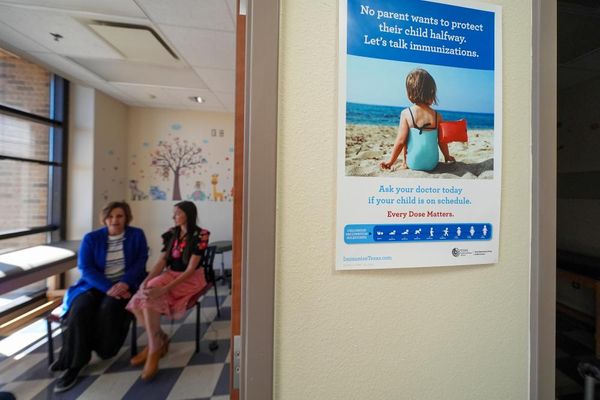
For families in the counties currently absorbing case introductions, the practical consequence is narrow but real. A relative who is fully vaccinated and develops an unusually mild rash illness after a known exposure is not automatically in the clear, and the question is worth raising with a clinician rather than dismissed on the basis of a vaccination record.


The Numbers Behind the Review, and Their Limits

The authors wrote that transmissions from vaccinated cases, while relatively uncommon, must be considered in public health investigations because they can contribute to outbreaks, as summarized by CIDRAP. Of the 70 transmitters, 22 people, or 31 percent, had received two documented doses.

Several limits belong in the same breath as those figures. This was a review and meta-analysis rather than a single controlled study, and it pooled reports of varying quality, including material published outside traditional journals. Reports of outbreaks in which vaccinated patients infected nobody are less likely to be written up and published in the first place, which tends to inflate the apparent share of transmitters in any pooled sample.

An earlier systematic review in Emerging Infectious Diseases approached the question from a narrower angle. Across 14 studies, 11 of 109 patients with documented secondary vaccination failure, about 10 percent, transmitted the virus, producing 23 further cases and an effective reproduction number estimated at 0.063, with a confidence interval running from 0 to 0.5. For context, measles in a susceptible population has a basic reproduction number of 12 to 18. The authors of that review concluded that outbreak resources should still be prioritized toward unvaccinated people, and they flagged the same publication bias problem.

The two reviews are not measuring quite the same thing. The larger review counted all vaccinated patients, while the earlier one counted only patients with laboratory-confirmed secondary vaccination failure, so the percentages should not be compared directly.

Both describe the same underlying phenomenon: immunity built by the vaccine gradually wanes and is not topped up, because the virus no longer circulates widely enough to provide a natural boost. That form of waning is estimated to occur in 2 to 10 percent of vaccinated people, typically 6 to 26 years after the last dose.


Milder Illness Is the Reason These Cases Get Missed

Among the 19 transmitters with symptom information available, the most common features were rash in 16 people, fever in 11, and cough in 11. Most vaccinated people who spread the virus had a milder and shorter illness than unvaccinated patients. Coughing, breathing, and talking were the likely routes of spread.

That milder presentation is the operational problem. Measles case finding depends heavily on clinicians recognizing a distinctive syndrome: high fever, cough, runny nose, red, watery eyes, then a rash starting on the head and moving down. A vaccinated adult with a low-grade fever and a faint rash may never be tested, may not be told to isolate, and may not appear on a contact list.

The contagious window compounds it. A person with measles can transmit from four days before the rash appears through four days after, which means the most infectious days often precede the moment anyone suspects measles at all. In a school or a clinic waiting room, that lag is the whole problem, because the virus stays airborne for up to two hours after an infected person leaves the space and roughly 90 percent of susceptible people exposed to it become infected. Public Health Ontario's clinical guidance makes the same point about prompt isolation of suspected cases.


Households in Outbreak Counties Face a Different Calculation

Nothing here changes routine vaccination advice. Two doses remain the recommendation; one dose is about 93 percent effective, and communities generally need roughly 95 percent coverage to interrupt transmission. According to the CDC's measles surveillance data, 94 percent of confirmed cases this year have been outbreak-associated, and the overwhelming majority of patients nationally have been unvaccinated or of unknown status.

What changes is the threshold for asking a question? In a county with active transmission, a vaccinated household member with a rash and fever after a known exposure has a reason to call a clinician and mention measles specifically, and to call ahead rather than walk into a waiting room. That is a small behavioral difference with an outsized effect on how many people get exposed next. Federal guidance on postexposure measles vaccination also notes that anyone under monitoring who develops symptoms should call before visiting a clinic or emergency department.

People at highest risk from any introduction remain unchanged: infants too young for the first dose, people who cannot be vaccinated for medical reasons, those with weakened immune systems, and pregnant people. Adults uncertain of their own status can ask a clinician about records or antibody testing rather than assuming.

Trouble breathing, seizures, severe dehydration, or sudden confusion warrant urgent evaluation regardless of vaccination history. Mild symptoms warrant a phone call first, as the goal is to avoid seeding an emergency department waiting room.


The Investigation Question That Remains Open

What neither review settles is how often this actually happens in a modern outbreak with good genomic surveillance, because the underlying reports span decades and very different investigative standards. The pooled percentages describe published reports, not a defined population, and they should not be read as a per-person transmission risk for any individual.

State and local health departments lead measles investigations in the United States, and whether they formally change how they classify and follow vaccinated contacts is a decision that has not been announced anywhere, as reflected in MedicalDaily's coverage of the latest weekly increase. Households do not need to wait for one, since the useful action is simply to mention a known exposure when calling a clinician.

Key Questions Answered

Does this mean the measles vaccine does not work? No. Two doses are about 97 percent effective at preventing measles. In the pooled reports, more than 92 percent of vaccinated patients who caught measles infected nobody.

How many people were involved? Across 33 reports, 70 of 890 vaccinated patients transmitted the virus, causing 237 secondary cases. Twenty-two of the transmitters had two documented doses.

Why would a vaccinated person catch measles at all? Most often through secondary vaccination failure, a gradual waning of vaccine-induced immunity that is no longer boosted by exposure to circulating virus.

Are the symptoms different? Usually milder and shorter. Rash, fever, and cough were the most common features reported among transmitters, which is part of why these cases are harder to identify.

Should I get an extra dose? Not on the basis of this review. The recommendation remains two doses. People in outbreak areas, travelers, and health care workers can ask a clinician whether their situation warrants checking immunity.

Who is still most at risk in an outbreak? Infants too young for the first dose, people who cannot be vaccinated for medical reasons, people with weakened immune systems, and pregnant people.

What should I do if I was exposed and develop symptoms? Call a clinician or the emergency department before arriving, mention the exposure, and ask whether testing is appropriate. Seek urgent care for trouble breathing, seizures, severe dehydration, or confusion.

Sign up to read this article
Read news from 100's of titles, curated specifically for you.
Already a member? Sign in here
Related Stories
Top stories on inkl right now
One subscription that gives you access to news from hundreds of sites
Already a member? Sign in here
Our Picks
Fourteen days free
Download the app
One app. One membership.
100+ trusted global sources.