Get all your news in one place.
100's of premium titles.
One app.
Start reading
The Conversation
The Conversation
Environment
Akshaya Jha, Associate Professor of Economics and Public Policy, Carnegie Mellon University

Utilities rely on dirty ‘peaker’ plants when power demand surges, but there are alternatives

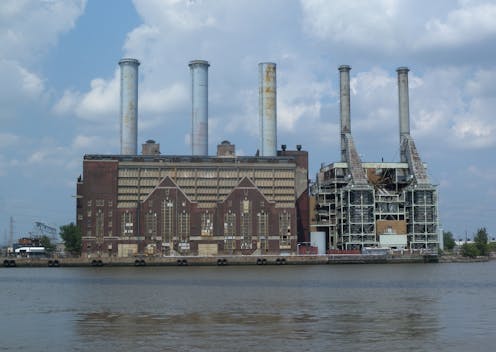
Kearny Generating Station, a former coal-fired baseload power plant, now a gas-fired peaker, on the Hackensack River in New Jersey. Jim Henderson/Wikipedia, CC BY

The U.S. is nearing the end of one of its hottest summers on record. Across the nation, heat waves have driven peak electricity demand on some days to levels far exceeding seasonal averages.

Grid operators rely on so-called “peaker” plants to ensure they will have enough supply to meet these demand surges. Peaker units can start up quickly and at relatively low cost, but they typically burn more fuel per unit of electricity produced than other types of fossil fuel units.

Sign up to read this article
Read news from 100's of titles, curated specifically for you.
Already a member? Sign in here
Related Stories
Top stories on inkl right now
One subscription that gives you access to news from hundreds of sites
Already a member? Sign in here
Our Picks
Fourteen days free
Download the app
One app. One membership.
100+ trusted global sources.