
For many amateur golfers, improving their short game can be a real challenge. Whether they struggle to find the time to practice, or prefer to focus on other areas of the game, the pursuit of wedge wizardry is often a matter of accessing the right golf tips.
With many aspects to consider, like how to use the bounce on your wedges and how to spin the golf ball, the best course of action is to seek the advice of a short game expert. Luckily for you, we have done just that.
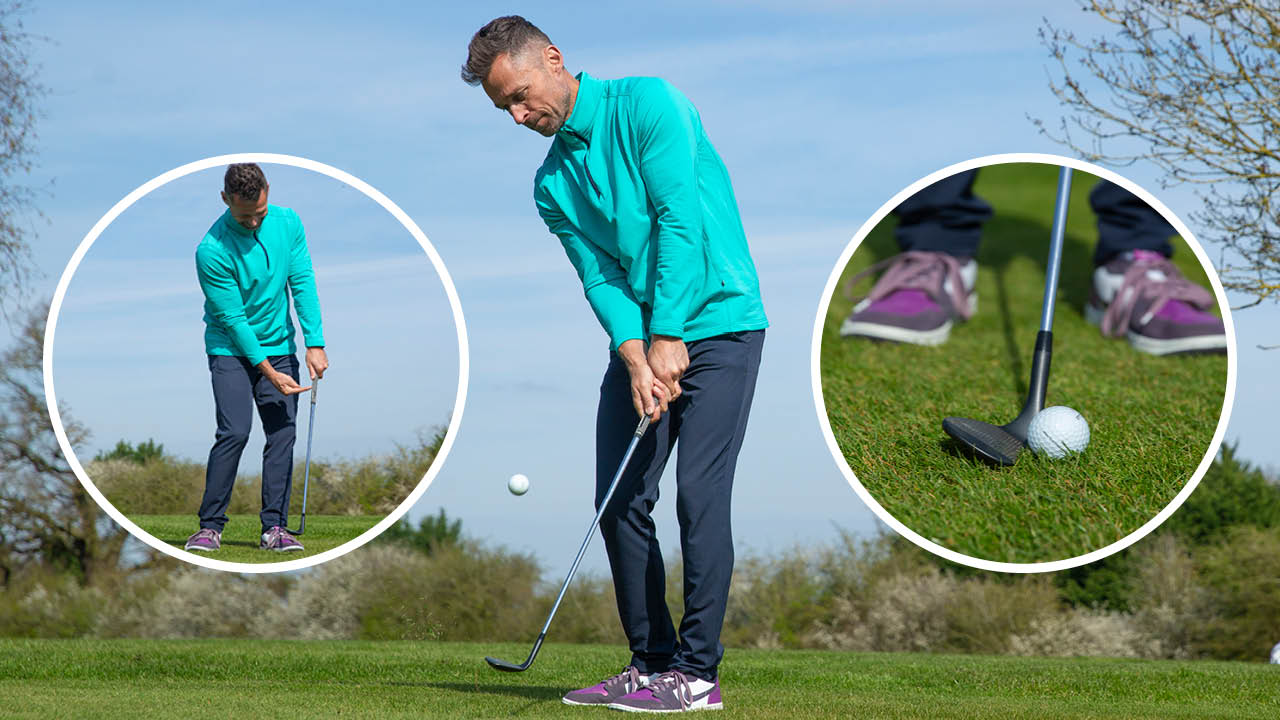
In this video and article, PGA Tour coach and short game expert James Ridyard talks us through the best ways to utilise bounce on your wedges in a bid to make you a formidable force around the greens...
What Is Bounce On A Wedge?
Put simply, the 'bounce' is the angle at which the leading edge sits above the ground at address. By controlling the bounce, and ensuring the club doesn't dig too far into the ground at impact, you have a much better chance of controlling your ball flight, spin and ultimately reaching your preferred target.
How Can I Use The Bounce On My Wedge?
Let's dive straight into one of the most important aspects for bounce, which is shaft lean. Most golfers assume that if you add shaft lean to your wedge at address, you won't be accessing the bounce. That is, in fact, only true if the face is square or slightly closed to target.
If you are someone who delivers the ball with a square clubface, and the forward lean number is more than the bounce angle, that is going to hurt your end result.

Conversely, if you play the club with a slightly open face, it is possible to put forward lean on the club and increase the bounce angle.
In the video above, you can see I have demonstrated this shot with a lot of forward lean but left no marks on the ground where I made contact with the ball, as the club hasn't dug into the ground at all.

How Can I Strike My Wedges More Consistently?
The first hurdle to get over mentally is that it doesn't have to be perfect, as long as you can build in some margin for error. As a short game coach, I have no real issue with someone making contact with the ground behind the golf ball. That may surprise a lot of people, but it's usually their negative experience of hitting ground first that fuels that angst.
However, if you deliver the club effectively you can build in some margin for error, and while this won't be the most sexy low spin you have ever seen, it will be on the green and in a good position.

The key aspect to this is controlling the depth of your swing (low point), and considering the swing as more of an up and down motion as opposed to forward and back.
If my club is going to make contact 3 inches below the turf, it doesn't matter how much bounce I have – it isn't going to save me. Essentially, what we need to do in order to avoid this is raise the low point of the swing up.
The simplest way to achieve this would be to have the butt of the grip start to rise more through impact. This will help to raise the low point, meaning the contact zone on the ground can be a little bit further behind the ball to utilise the bounce.