
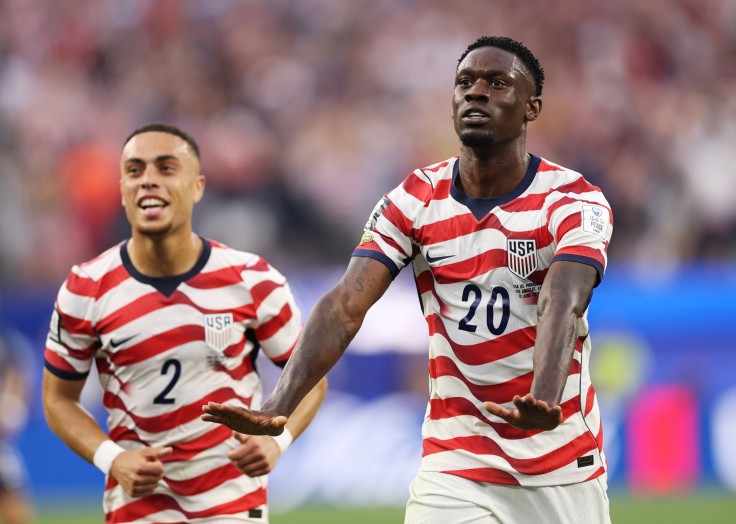
For the first time in more than three decades, a men's World Cup match kicked off on American soil, and the United States made the moment count. The U.S. men's national team delivered a commanding 4-1 win over Paraguay in their Group D opener on Friday at Los Angeles Stadium, announcing themselves as genuine contenders in front of a roaring home crowd.
Two goals from striker Folarin Balogun, an own goal by Paraguay's Damián Bobadilla, and a late strike from Gio Reyna gave the U.S. a result that was a record for the men's program, which had never scored more than three goals in a single World Cup game. The 2022 squad, by comparison, managed just three goals across its entire four-game run in Qatar — a contrast that captures how far this group has traveled.

What the U.S. got right: ruthlessness from the first whistle
The first half was as one-sided as the scoreline suggests. By the break, the U.S. led 3-0 — Balogun had his two goals inside a 20-minute window, Pulisic had tormented the Paraguayan defense up and down the wing, and the visitors had barely tested Matt Freese, mustering only a pair of shots before halftime.
The opener came early. In the seventh minute, Pulisic and Weston McKennie combined on the left flank to force an own goal off Paraguay's Damián Bobadilla. The pressure never relented. In the 31st minute, Antonee Robinson found Pulisic with an incisive ball down the flank; Pulisic cut it back to Balogun, who slotted it home with force. Then came the moment of real quality: just before halftime, Malik Tillman played a through ball, Balogun spun his defender and finessed the ball into the top-left corner with his weaker left foot.
This is the throughline that separated Friday from the USMNT of old. Never before had the USMNT dominated every facet of a game at the World Cup — and they did it from the opening whistle. The U.S. controlled the ball, controlled territory and turned chances into goals rather than squandering them — a recurring failing in Qatar.
How this differed from the USMNT's usual approach
Under Pochettino, the U.S. is leaning into a higher-intensity, front-foot identity. The Argentine coach builds his teams to press hard and feed their best attackers, and on Friday that meant Pulisic operating as the central reference point with Tillman and Balogun, while both wingbacks pushed high to add width. Historically, the U.S. has been at its best as a reactive, counter-attacking, defensively organized side that grinds out narrow results. Friday flipped that script: the U.S. was the aggressor, dictating play through midfield and committing numbers forward. One Yahoo tracker logged possession as high as 63-37 in the Americans' favor in the run of play, while BBC's full-match figures settled at a still-dominant 55.9% to 44.1%.
The forward who makes this style viable is Balogun. He is unlike any striker the U.S. team has had before — a true penalty-box finisher who lets the wide creators play to a focal point, rather than the U.S. relying on midfield runners arriving late.
The weakness fans should watch for: the second-half lapse
The U.S. lost its grip after the break, and the warning signs returned once Pochettino started rotating his bench. Paraguay finally found a way through when Julio Enciso slipped Maurício in for a tidy finish — an uncomfortable reminder that this defense has looked shaky throughout the year.
The pattern is worth flagging for the next opponent: when the U.S. rotates its lineup and drops its intensity, the back line can be caught out. The U.S. back line looked caught off-guard on Paraguay's goal, which began with goalkeeper Orlando Gill and ended at Maurício's feet. Better attacking sides — and Group D rivals like Turkey — will note that the U.S. is most vulnerable in transition during the 15-minute window after substitutions, when shape and communication slip. The U.S. also failed to put the game fully to bed when it had chances: Tillman had the chance to push the lead back to three but fluffed a presentable opening from close range.
There is one more storyline to monitor: Pulisic was brilliant in the first half but came off at halftime, with the team later describing it as precautionary after a kick to the left calf. His fitness is the single biggest variable in the U.S. ceiling.
Who will score the goals for the U.S.?
On Friday's evidence, the answer is Balogun first and foremost — the Monaco striker now looks like the focal point of the attack and a genuine Golden Boot dark horse. Pulisic remains the chief creator and a threat in his own right, and Reyna's stoppage-time strike was a reminder of the firepower on the bench. Expect the goals to flow through that Balogun-Pulisic axis, with Tillman, Reyna and Ricardo Pepi as secondary scoring threats. If Pulisic's calf is an issue, more creative load shifts to Tillman and the attacking wingbacks.
How U.S. soccer differs from Europe and South America
The American game has its own flavor, and Friday illustrated it. Where many European sides prize positional control and patient build-up, and South American teams lean on individual flair, technical security in tight spaces and street-honed game management, the U.S. style is built on athleticism, vertical directness and relentless pressing — turning the field into a track meet. Paraguay's identity is classically South American in a different register: physical, defensively stubborn and pragmatic. This was Paraguay's first World Cup appearance since reaching the quarterfinals in 2010, and they had arrived in the U.S. with a miserly defensive record — only 10 goals allowed over 18 qualifying matches. The U.S. simply moved faster than Paraguay could reset, and that speed-and-space approach is the closest thing American soccer has to a national signature.







