Get all your news in one place.
100’s of premium titles.
One app.
Start reading
The Guardian - UK
The Guardian - UK
World
Jakub Krupa

Nato chief Rutte: ‘Keep on dreaming’ if you think Europe could defend itself without US – as it happened

Nato’s Mark Rutte speaks at Davos
Nato’s Mark Rutte speaks at Davos Photograph: Markus Schreiber/AP

Closing summary

… and on that note, it’s a wrap for today!

  • Nato secretary general Mark Rutte told EU lawmakers that if they think that Europe can defend itself without the US, they should “keep on dreaming” (16:47), as he repeatedly defended the need for a close working relationship with the US president, Donald Trump, despite recent public clashes over Greenland and the role of Nato allies in Afghanistan.

  • In his first longer public outing since last week’s talks with Trump on the margins of the World Economic Forum in Davos, Rutte said there were two separate work streams looking at resolving tensions over Greenland (16:37), saying Nato would have a role in figuring out a way to strengthen the Arctic security.

  • Rutte also acknowledged there were “very sensitive” issues to be resolved around Russian demands regarding Ukraine’s territory, but he insisted only Kyiv could make these decisions on what, if anything, can be accepted as a compromise.

  • Nato chief also insisted that the US “greatly appreciates” all allied contributions to its “war on terror” in Afghanistan (16:42), despite Trump’s recent comments causing an uproar in Europe (10:51).

Elsewhere,

  • Ukrainian president Volodymyr Zelenskyy has said the trilateral talks with US and Russia “covered a range of important issues,” but conceded that “complex political matters … remain unresolved,” hinting at further talks later this week (14:22) as the country struggles to deal with the impact of recent Russian strikes on its energy infrastructure (14:08, 15:18).

  • The 27 EU countries have given their final approval to fully ban Russian liquefied natural gas imports by 1 January 2027, and Russian pipeline gas by 30 September 2027 (10:36), despite Hungary and Slovakia’s fierce opposition to the move, with the former threatening with a legal action (14:32).

  • The European Commission has launched an investigation into Elon Musk’s X over manipulated sexually explicit images and possible child sexual abuse material spread by the platform’s AI Grok feature (12:05, 12:14, 12:47).

  • India and the European Union have reportedly concluded negotiations on a long-coveted trade deal, which could be announced as early as Tuesday (14:43).

  • Meanwhile, the European Parliament has put off until next week a decision on whether to resume its work on the European Union’s trade deal with the United States, Reuters reported.

And that’s all from me, Jakub Krupa, for today.

If you have any tips, comments or suggestions, email me at jakub.krupa@theguardian.com.

I am also on Bluesky at @jakubkrupa.bsky.social and on X at @jakubkrupa.

Updated

Rutte ends on a warning that Ukraine’s interception rates against Russian drones has come down, as the country doesn’t have enough interceptors to fight back and work.

He urges EU lawmakers to help him make the case for some leaders who sit on a large pile of interceptors – though he refuses to name them in an open session - to help Ukraine.

“This is the difference between life and death, day in, day out, and how we protect the crucial energy infrastructure,” he says.

He ends by joking that he answered most questions, but he found one or two “too difficult” to answer on the spot.

And that’s it from him.
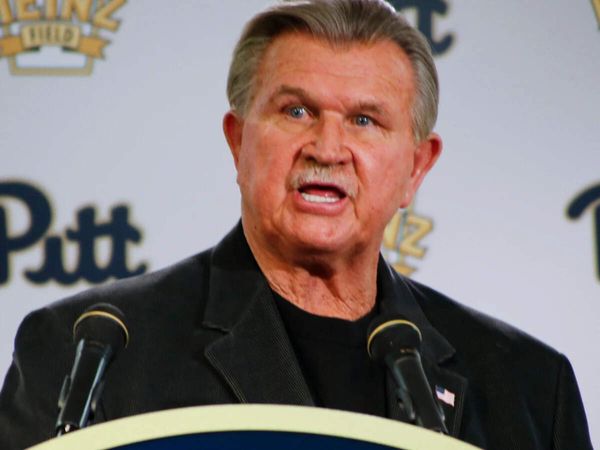
Rutte declines to comment on the US “board of peace.”

He then backs various regional arrangements that deepen security and defence cooperation on smaller scale, such as E3, E5 or Bucharest Nine.

Touching upon other topics, he briefly discusses Iran and the security in the Balkans.

If you think Europe could defend itself, 'keep on dreaming,' Nato's Rutte tells EU lawmakers

Rutte also tells EU lawmakers that if they think the EU or Europe as whole can defend itself without the US, they should “keep on dreaming”.

He says Europe’s defence spending would then have to go massively up to 10%, with further need to buy own nuclear capability and spend “billions and billions of euros.”

He also says Europe needs the US and similarly the US needs Nato.

He adds that even as US priorities evolve, there will “always be a very strong conventional US presence in Europe.”

Updated

Nato's Rutte defends his praise of Trump over push to increase Europe's defence spending

Rutte also again defends his relationship with Trump.

He says:

“Hey, listen, if somebody is doing good stuff and President Trump is doing a lot of good stuff, I believe, I know I’m irritating a lot of you again, but I think so because, as I said also in Davos, the 2% reached by all, Nato countries, … at the end of 2025, would never, ever, ever have happened without Trump.”

He adds that Spain, Italy, Belgium and Canada would have not moved to increase their defence spending without Trump, “no way.”

He says Trump had “one big irritant” over Europe’s lower defence spending in comparison, but insists that is “gone” with new commitment from allies.

He also says he doesn’t mind Trump publishing his private text messages before Davos.

Nato's Rutte says US 'greatly appreciates' all allied efforts, despite Trump's comments

Rutte also stresses the importance of the allied contribution to Afghanistan, in contrast to Trump’s comments last week.

He notes the US president’s change of tone over the weekend, and says that he knows that “America greatly appreciates all the efforts being made in Afghanistan” and acknowledges the sacrifice from other countries.

Rutte points to 'very sensitive' territory talks in Ukraine peace process

Turning to Ukraine, Rutte points to Zelenskyy’s recent comments that the US security guarantees are “close to being agreed upon.”

He acknowledges that there is a big outstanding and “very sensitive” issue on territory with Russia, and he says that only Ukraine can make any decision on what, if anything, they can accept in a way of compromise.

He notes Ukraine would want to join Nato, but points out that some member states remain opposed and so “politically, it’s practically not on the cards,” at least for now.

He flatly denies that the US tried to leverage its promise of security guarantees for Ukraine in talks with Nato on Greenland.

And he welcomes the French move to seize a suspected shadow fleet tanker in a hit to Russia’s model of funding its war against Ukraine.

He also talks about a potential European alternative to Nato without the US, warning that it would be complicated and dismisses it by saying “Putin would love it.”

Updated

Two work streams agreed as way forward on Greenland, Nato's Rutte says

Rutte says he had numerous phone calls with other European leaders on Greenland last week, as they discussed what’s next, with two main “work streams” emerging.

The first one is to focus on Nato’s collective activities to step up the security in the Arctic and protect the region from Russia and China specifically – both in terms of military, but also in terms of protecting the Greenlandic economy.

The second work stream is more on Danish-Greenlandic-US relations, he says, pointing to a recent meeting between Danish and Greenlandic officials with US vice-president JD Vance and US state secretary Marco Rubio.

He says he won’t be that much involved in this, as he doesn’t have a mandate to go and negotiate on behalf on Denmark.

More broadly, he defends Trump (jokingly saying that he does that “just to irritate you”) saying that the US president does have a point on the Arctic security and more needs to be done there.

Updated

Turns out it was just 25 questions.

Rutte begins his answer by saying he’s not sure if he can answer them all.

Obviously.

Let’s see what he says.

It appears that Rutte will have 15 minutes at the very end of the session to respond to roughly 34298734 questions that could each make a great PhD dissertation.

Hope he’s making good notes.

Updated

We have now moved to Q&A and Rutte gets asked a number of questions about Russia’s threats that it would consider any western troops in Ukraine to be legitimate targets for strikes, about the US presence in Greenland, the broader Arctic security, and his response to Trump’s comments on allied presence in Afghanistan.

The way the European Parliament’s hearings are structured, he will only get to respond to them en masse at some point (much) later, so, frankly, he will get to do with them whatever he wants and the questions he will answer may be very difficult to the ones actually asked.

I’ll bring you the key lines from his response here.

Updated

Rutte warns Ukraine is facing 'harshest winter' as he urges lawmakers to show flexibility on use of EU funds

Rutte begins by talking about the Russian aggression on Ukraine.

He says it is “the harshest winter” for Ukrainians for over a decade, highlighting the worsening issues caused by Russian attacks on critical infrastructure in Kyiv and other cities.

Rutte says that the US-led peace talks are on-going, crediting the US leadership for the initiative, but also mentions the EU-led Coalition of the Willing and its work on security guarantees.

He says the aim should be to get to a peace deal or a long-term ceasefire, “and let’s pray we have it as soon as possible,” and then make sure that Russia’s Vladimir Putin “never, never” attacks Ukraine again.

He then says that Nato continues to support Ukraine with US military equipment worth billions of dollars coming through the Prioritised Ukraine Requirements List, or PURL, mechanism and smaller, national initiatives.

He also urges EU lawmakers to not be “overly restrictive” on how €90bn of EU loan on security will be used by imposing any “buy EU” conditions that would restrict Kyiv’s ability to get what’s needed or spend the assigned budgets. “I encourage you to keep Ukraine’s needs first in focus,” he says.

Rutte repeats his general warning that Ukraine’s security “I think we all know …is also our security.”

He then moves on to discuss Nato’s revised GDP defence spending targets and Europe’s broader security partnerships.

Updated

Nato's Rutte about to speak in European parliament

Nato’s secretary general Mark Rutte is about to appear in front of the European parliament’s defence and foreign committees.

Expect questions on Ukraine, Trump, Greenland and the Arctic security, and Nato’s future.

I will keep an eye on this and bring you the key lines here.

Updated

Czechs raise over €5.4m to fund generators, heaters for Ukraine

A Czech grassroots fundraising effort has managed to raise more than €5.4m to buy generators, heaters and batteries for Ukraine, responding to dramatic warnings from Ukrainian authorities over the prolonger impact of recent Russian strikes on critical infrastructure amid freezing temperatures.

The “Gift for Putin” group has seen over 74,000 donors donate more than 131 millions of Czech crowns – or €5.4m – to help fund energy supplies in just five days since the call has been launched.

The group has been running similar fundraisers for Ukraine since the 2022 full-scale Russian invasion on Ukraine, in the past looking to raise money to buy a Blackhawk helicopter, among other things, Reuters reported.

Updated

India, EU reportedly conclude talks on new trade deal

India and the European Union have concluded negotiations on a long-coveted trade deal, the South Asian country’s trade secretary said on Monday, an accord both sides hailed as historic as they contend with strained US ties, Reuters reported.

The announcement comes as top EU officials, European Commission president Ursula von der Leyen and European Council president António Costa are in Delhi for talks. Earlier today, they attended a parade celebrating India’s Republic Day.

“It will be a balanced, forward-looking deal for better economic integration with the EU. The deal will propel trade and investment between both sides,” said India’s trade secretary Rajesh Agrawal.

EU trade commissioner Maroš Šefčovič said earlier today that the deal was “very close,” with the two sides “checking their final numbers,” Euronews reported, as he referred to the agreement as the “mother of all deals” as it looks to open a market of 1.4 billion people for European exports and services.

The agreement could be formally announced tomorrow, and Reuters reported the deal is expected to be signed after further legal checks.

Hungary to challenge EU's plans to phase out Russian energy imports

Hungarian foreign minister Péter Szijjártó has said that Hungary will challenge the EU’s REPowerEU plan phasing out Russian energy imports (10:36), arguing that energy policy falls under national jurisdiction.

He said:

We will use every legal means to have it annulled. The REPowerEU plan is based on a legal trick, presenting a sanctions measure as a trade policy decision in order to avoid unanimity. This goes completely against the EU’s own rules.

The Treaties are clear: decisions on the energy mix are a national competence. Banning Hungary from buying oil and gas from Russia goes against our national interest and would significantly increase energy costs for Hungarian families.”

UAE negotiations over Ukraine covered 'important issues,' but 'complex political matters remain unresolved,' Zelenskyy says, hinting at more talks to come

Ukraine’s Zelenskyy has also issued a brief update on the trilateral talks with Russia and US over the weekend.

In a post on social media, he said the talks “covered a range of important issues – primarily military, essential to bringing the war to an end.”

But he added that “complex political matters that remain unresolved were also discussed.”

Preparations are now underway for new trilateral meetings this week,” he stressed.

Energy, heat situation remains 'extremely challenging,' Ukraine's Zelenskyy says

Ukrainian president Volodymyr Zelenskyy has said that the situation in Kyiv remained “extremely challenging” as the country battles energy outages after recent Russian attacks on the Ukraine’s critical infrastructure.

Zelenskyy said that more than 1,200 apartment buildings in the capital remained without heating, despite temperatures well below 0 Celsius.

“Together with local authorities and government officials, we discussed how to help as swiftly as possible. For now, the timelines that have been mentioned cannot be considered satisfactory — we must act faster,” he said.

The president also added that “a significant number of people” in Kyiv needed “immediate” support to help with the extreme temperatures.

Zelenskyy said the instructed the government to look into “urgently procuring everything that is genuinely needed right now for alternative electricity generation and heat supply” for Kyiv.

Updated

10 countries commit to build 100GW wind power grid in North Sea

Business reporter

The UK and nine other European countries have agreed to build an offshore wind power grid in the North Sea in a landmark pact to turn the ageing oil basin into a “clean energy reservoir”.

The countries will build windfarms at sea that directly connect to multiple nations through high-voltage subsea cables, under plans that are expected to provide 100GW of offshore wind power, or enough electricity capacity to power 143m homes.

The commitment is set out in the “Hamburg declaration” signed on Monday by energy ministers from the UK, Belgium, Denmark, France, Germany, Iceland, Ireland, Luxembourg, the Netherlands and Norway.

The pact comes less than a week after the US president, Donald Trump, criticised the UK’s plans to phase out production of North Sea oil and gas, and complained about European wind power.

Italian journalists threatened by ICE agents while filming on US tensions

in Rome

Two journalists from the Italian state broadcaster, Rai, were threatened by ICE agents in Minneapolis while filming for a report on the rising tensions in the US under Donald Trump’s administration, sparking a political backlash in Italy.

In a video posted on the Instagram account and the website of the news show, In Mezz’Ora, journalists Laura Cappon and Daniele Babbo are in a car with anti-ICE activists who are following a jeep with agents on board as they search the city for people to detain.

Upon realising their vehicle is being followed, the ICE agents stop the jeep and approach the car with the two journalists inside. Despite identifying themselves as being from the press, the ICE agents threaten to break the car window and drag the passengers out if they continue keep following and recording.

The woman driving the car refuses to pull down the window while repeatedly saying “we’re not doing anything wrong”. Others can be seen filming the encounter on the street before the agents get into their vehicle and drive away.

Politicians from Italian opposition parties have urged the government of Italy’s far-right prime minister, Giorgia Meloni, who is ideologically aligned with Trump, to protect its citizens and condemn the intimidation.

“Two Italian journalists have also been threatened by Trump’s political police,” said Peppe Provenzano, a politician with the centre-left Democratic party. “Our deepest sympathy and solidarity goes out to them. If the Meloni government has any national pride, we ask it to formally protest and distance itself once and for all. We also ask it to clarify how it intends to protect our fellow citizens who live and work in places where ICE is operating from this climate of intimidation and violence.”

He added:

“Seeing America reduced to this state by Trump’s thugs, sowing chaos, terror and death in the streets, while being covered up by the Trump administration, is truly dismaying.”

For more updates on the situation in the US:

Germany criticises Russia's 'stubborn insistence' on maximalist territorial demands

Separately, Germany’s foreign minister Johann Wadephul denounced Russia’s “stubborn insistence on the crucial territorial issue” after talks between Russian, Ukrainian and US envoys in Abu Dhabi over the weekend, AFP reported.

“What I am hearing and reading today, including from the negotiations in the United Arab Emirates, is only Russia’s stubborn insistence on the crucial territorial issue,” Wadephul said in Riga. “And if there is no flexibility here, I fear that the negotiations may still take a long time or may not be successful at this stage.”

EU 'in contact' with Ukrainian, US delegations after talks with Russia in UAE

The commission has also confirmed that it has been in touch with the Ukrainian and the American delegations “before and after” their talks with Russia in the UAE over the weekend.

It has also said that it sees Ukraine’s future EU membership as part of its economic security guarantees after any peace settlement with Russia, but said that there was no specific agreed date for that to happen and it would be for the European Council to determine.

EU dismisses suggestions of targeting US companies, undermining free speech as it launches new Grok probe

The European Commission got also asked about the regular US criticism that it is “targeting” US big tech companies and that, in doing so, it undermines free speech.

Digital spokesperson Regnier replied:

“Again, we don’t target any company … based of its origin.

Now on your censorship point: I think if anyone dares to compare freedom of expression with child sexual abuse material or freedom of expression with undressing women digitally without their consent, then they are not fully aligned with Europe or absolutely not aligned with Europe. We don’t even live on the same planet.

And I said it already: I cannot believe that we’re even debating this in 2026 from the commission’s podium. This has nothing to do with freedom of expression or with censorship.”

European Commission declines to comment on 'US internal matter' of Minneapolis killing

The European Commission has declined to comment on the current situation in the US after the fatal shooting of Alex Pretti in Minneapolis.

The EU’s foreign affairs spokesperson Anitta Hipper said:

No comments to be made on this US internal matter. But, of course, we deplore any loss of innocent lives.”

After reporters picked up the use of the word “innocent” in her sentence, she backtracked on the comment, and said:

“I have said innocent lives, but it’s not for us to judge, innocent or not innocent. Any life lost, we deplore it, in general, and it is, of course, for the justice system in the US to establish the facts.”

Confirming the probe at the European Commission’s daily midday briefing, EU’s digital spokesperson Thomas Regnier has been very clear about the strength of the EU’s anger with the output seen on X.

He said:

“We have seen non-consensual deepfakes of women, and we have seen child sexual abuse material. In Europe, no company will make money by violating our fundamental rights. One will argue that has limited this to premium subscribers. Let’s be very clear: child sexual abuse material is not a premium privilege because such output has no place in Europe and we need to protect our citizens from potential future harms.

This is why this investigation into Grok will allow us to look deeper into the matter to protect our women, our children and our citizens.”

EU opens new probe into Elon Musk's X over manipulated sexually explicit images

in Brussels

The European Commission has launched an investigation into Elon Musk’s X over manipulated sexually explicit images and possible child sexual abuse material spread by the platform’s AI Grok feature.

The formal inquiry launched on Monday also extends an ongoing investigation into X’s recommender systems, algorithms which help internet users discover new content.

Sparking international outrage, the Grok chatbot allowed users to digitally strip women and children and put them into provocative poses. Grok AI generated around 3m sexualised images in less than two weeks, including 23,000 that appeared to depict children, according to researchers at the Center for Countering Digital Hate.

The commission said its new investigation “will assess whether the company properly assessed and mitigated risks” with Grok’s functionalities in the EU, including risks on the sharing of illegal content such as manipulated sexually explicit images and “content that may amount to child sex abuse material”.

The investigation is launched under the EU’s digital services act, relatively new legislation intended to protect internet users from a wide range of internet harms.

Speaking to reporters, an official said the European Commission had not been convinced by mitigating measures put in place by X to remedy the issue. EU officials are investigating whether X has systems to mitigate risks properly.

Announcing the investigation, Henna Virkkunen, the European Commission’s top official for tech sovereignty, security and democracy, said:

“Non-consensual sexual deepfakes of women and children are a violent, unacceptable form of degradation. With this investigation, we will determine whether X has met its legal obligations under the DSA, or whether it treated rights of European citizens – including those of women and children – as collateral damage of its service.”

Regina Doherty, an Irish MEP, said she welcomed the formal investigation: “When credible reports emerge of AI systems being used in ways that harm women and children, it is essential that EU law is examined and enforced without delay,” Doherty said.

In response to the investigation, the company provided a link to a statement published on 14 January: “We remain committed to making X a safe platform for everyone and continue to have zero tolerance for any forms of child sexual exploitation, non-consensual nudity, and unwanted sexual content.”

Updated

Why Germany is racing to rebuild its army? - podcast

And since we’re on the subject of the German army, it’s worth listening to this podcast with our Berlin correspondent Kate Connolly on the vast military expansion under way in Germany and the geopolitical landscape that prompted it.

Speaking to Annie Kelly, Kate discusses the current rearmament and recruitment campaigns, the political and economic pitfalls the German government faces, and the wider question of national identity that Germany is grappling with.

Not so long ago, to be a German soldier dressed in German uniform was quite a difficult role to embody. I mean, you could be going down the street and you could be spat on, or you could have names called at you.

“I’ve recently seen people get into conversation with soldiers, which I hadn’t seen in the past, [and] more recently, somebody going up to a soldier and actually getting him into conversation about his role, and at the end of the conversation, thanking him.

Updated

Senior EU leaders continue to criticise Trump for 'disrespecful' Afghanistan comments

Meanwhile, German defence minister Boris Pistorius has called on U.S. President Donald Trump to apologise for remarks suggesting that America’s Nato allies in Afghanistan avoided frontline service, Reuters reported.

Over the weekend, Trump appeared to partially backtrack on his comments, pointedly praising UK soldiers, but did not offer any apology to other US Nato allies, who were prominently involved in Afghanistan, including Canada, France, Italy, Germany, Poland and Denmark.

It’s just not right and it’s disrespectful to talk about the dead of your allies in that way. They all stood there, at the side of the United States. To claim something else today is simply not true,” Pistorius told a talkshow on Germany’s ARD public broadcaster late on Sunday.

He said he would bring the issue up when he next speaks to US defence secretary, Pete Hegseth.

Over the weekend, numerous other continental leaders also raised their concerns about Trump’s remarks.

Italian prime minister Giorgia Meloni noted Trump’s comments with “astonishment,” saying that “our nation has borne a cost that cannot be disputed,” with 53 killed and more than 700 injured in the line of duty.

“For this reason, statements that minimise the contribution of Nato countries in Afghanistan are unacceptable, especially if they come from an allied nation,” she said, adding: “friendship requires respect, a fundamental condition for continuing to ensure the solidarity at the heart of the Atlantic alliance.”

Retired chief of Danish defence Knud Bartels, who served as the chair of Nato’s military committee between 2012 and 2015, also criticised Trump’s “unfounded disregard” for Danish solders, saying the US president’s comments were “an insult to the families of the soldiers killed in action in Afghanistan,” causing “inexcusable pain.”

Czech Republic’s president Petr Pavel, a retired Nato general, also pointedly said he wanted to “recall the deployment and sacrifices” of allied forces in Afghanistan.

Estonian prime minister Kristen Michel also noted that “Estonia has never wavered in answering the call of our US allies.”

EU countries sign off on Russian LNG, pipeline gas ban

The 27 EU countries have given their final approval to fully ban Russian liquefied natural gas imports by 1 January 2027, and Russian pipeline gas by 30 September 2027.

The European Council’s press release this morning added that “the ban will start to apply six weeks after the regulation enters into force,” but added:

“Existing contracts will have a transition period. This stepwise approach will limit the impact on prices and markets. A full ban will take effect for LNG imports from the beginning of 2027 and for pipeline gas imports from autumn 2027.”

The council added that “before authorising entry of gas imports into the Union, EU countries will verify the country where gas was produced.”

Reuters noted that the ban was designed to be approved by a reinforced majority of countries, allowing it to overcome opposition from Hungary and Slovakia, who remain heavily reliant on Russian energy imports and want to maintain close ties with Moscow.

Explaining the need for the policy, the European Council said:

Following Russia’s war of aggression against Ukraine and the use of energy as a weapon, EU leaders agreed, in the Versailles Declaration of March 2022, to phase out dependence on Russian fossil fuels as soon as possible.

Consequently, gas and oil imports from Russia to the EU have both decreased significantly in recent years. However, while imports of oil have dropped to below 3% in 2025 as a result of the current sanctions regime, Russian gas still accounts for an estimated 13% of EU imports in 2025, worth over €15bn annually. This leaves the EU exposed to significant risks in terms of its trade and energy security.”

Finland warns about Russia's continuing hybrid activities in region

Separately, Finland’s military intelligence has warned about the continuing hybrid activity by Russia and the worsening security situation in the Baltic, with Russia “preparing to strengthen its military presence in the vicinity of the Finnish border” when its resources allow for that.

In its annual review, published late last week, the intelligence service warned that Russia continues its “aggressive anti-western activities,” with “antagonism towards the west … also … more pronounced in the Baltic Sea region,” with a number of “hybrid” operations which it wants to be “deniable or difficult to link to Russia.”

It specifically warned about “intelligence, espionage and sabotage threats” against Finland and other countries, although it noted that “it is likely that Russia does not see Finland as a primary target.”

In another example, it pointed to a Russian-built Indian Talwar II class frigate sailing to the Gulf of Bothnia, the northernmost arm of the Baltic Sea, noting “it is extremely rare for foreign warships” to go there. “Even though the vessel was Indian, the activities serve Russian interests in testing Finnish and Swedish reaction,” it said.

In particular, Russia continues to “aggressively” protect its shadow fleet, including through the jamming of navigation systems, “increasing the risk of the intentional or unintentional escalation and accidents,” it said.

It also added that Moscow “will likely persist in its ambitions to damage the undersea infrastructure of the Baltic Sea.”

The report also stressed the impact of the on-going Russian invasion of Ukraine for the region’s security, saying that Moscow “has successfully used negotiations to postpone western countermeasures,” which means “it is highly likely it will continue the war.”

Finland steps up maritime surveillance with EU, Baltics to protect critical undersea infrastructure

Meanwhile, Finland’s Border Guard is setting up a maritime surveillance centre together with other Baltic Sea states and the European Commission for the protection of critical undersea infrastructure in the Gulf of Finland, Reuters reported.

“Competent authorities must have the capability and the authority to intervene in situations occurring in the territorial sea and the exclusive economic zone,” it said in a statement.

The Baltic Sea region is on high alert after a string of power cable, telecom link and gas pipeline outages since Russia invaded Ukraine in 2022, and Nato has increased its Baltic Sea presence with frigates, aircraft and naval drones.

Morning opening: The week after the week before

Ukraine’s Volodymyr Zelenskyy said the negotiations with the US over a security guarantees agreement were “100%” done and the deal was just waiting to be signed, as Russia has praised the trilateral talks with Ukraine and the US over the weekend as held in “constructive spirit.”

“It would be a mistake to expect any significant results from the initial contacts … But the very fact that these contacts have begun in a constructive spirit can be viewed positively. However, there is significant work ahead,” Kremlin spokesperson Dmitry Peskov told journalists.

As is often with these things, nothing is agreed until everything is agreed. The talks will continue next weekend.

Meanwhile, we are expecting a bit of a debrief after last week’s series of crises, as we will get to see Nato’s secretary general Mark Rutte giving evidence at the European parliament later today, trying to offer a bit more detail on his talks with Donald Trump on Greenland and plans for the security of the Arctic.

Separately, the parliament’s trade committee will consider if it wants to progress with the implementation of the EU-US trade agreement so painfully negotiated last summer, or wait just a bit longer to see if Trump’s change of heart on tariffs and Greenland will stick.

Separately, the EU is also expected to say a bit more about its investment plans for Greenland as part of stepping up its presence there. Jozef Síkela, the European commissioner for partnerships, is in Denmark today.

Lots for us to cover.

It’s Monday, 26 January 2026, it’s Jakub Krupa here, and this is Europe Live.

Good morning.

Sign up to read this article
Read news from 100’s of titles, curated specifically for you.
Already a member? Sign in here
Related Stories
Top stories on inkl right now
Our Picks
Fourteen days free
Download the app
One app. One membership.
100+ trusted global sources.