Get all your news in one place.
100’s of premium titles.
One app.
Start reading
Radio France Internationale
World
RFI

US territorial ambitions in Denmark: from the Danish West Indies to Greenland

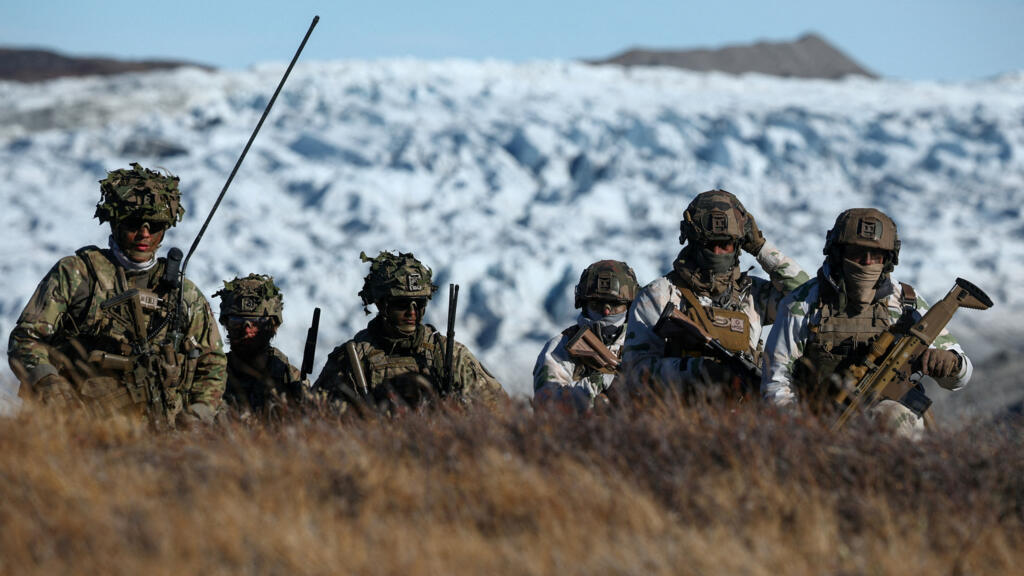
Members of the Danish armed forces practice looking for potential threats during a military drill as Danish, Swedish and Norwegian home guard units together with Danish, German and French troops take part in joint military drills in Kangerlussuaq, Greenland, September 17, 2025. © Guglielmo Mangiapane / Reuters

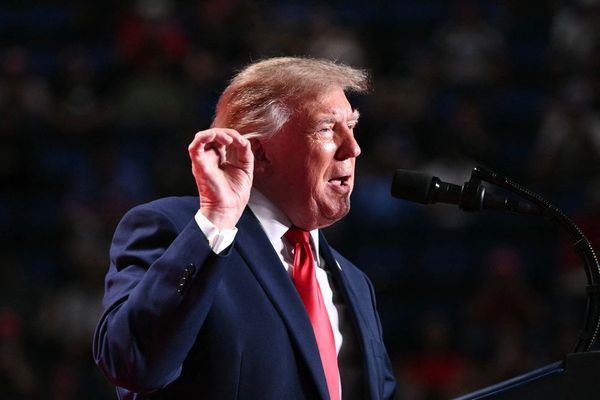
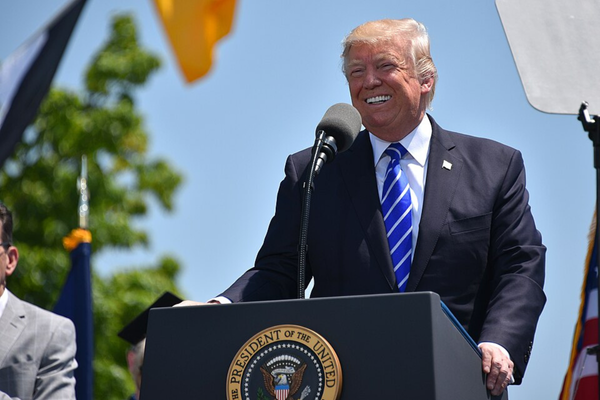
President Donald Trump’s renewed insistence that the United States should "get Greenland" has reopened a diplomatic wound between Washington and Copenhagen, reviving memories of the only time the US successfully purchased Danish territory: the 1917 acquisition of the Danish West Indies.

Denmark’s Prime Minister Mette Frederiksen responded bluntly on Sunday after Trump said he "absolutely" needed Greenland for US national security.

Calling Denmark a "historically close ally", she warned Washington against questioning the territorial integrity of a NATO partner and stressed that Greenland "is not for sale".

"I have to say this very clearly to the United States: it is absolutely absurd to say that the United States should take control of Greenland," Frederiksen said in a statement late Sunday.

She called on Washington to stop "threatening its historical ally".

Greenland’s leaders went further, describing Trump’s language as disrespectful and disconnected from reality.

Meanwhile, France on Monday expressed its "solidarity" with Denmark with French foreign ministry spokesman Pascal Confavreux saying that "borders cannot be changed by force. Greenland belongs to the Greenlanders and the Danes, and it is up to them to decide what to do with it."

EU backs Denmark’s territorial integrity after Trump appoints Greenland envoy

It’s not the first time that the US has tried to take over Danish territory.

In March 1917, the United States purchased the Caribbean islands of Saint Thomas, Saint John and (formerly French colony) Saint Croix, known as the "Danish West Indies," from Denmark for $25 million in gold. The territory is now known as the "US Virgin Islands."

Frederiksstad on Saint Croix, 1848, by Jens Thielsen Locher (1825–1869.) © Wikimedia Commons

The deal was the product of half a century of failed negotiations, finally concluded under the pressure of the First World War.

With the Panama Canal opening in 1914, US officials were determined to secure Caribbean sea lanes. They feared that Germany might seize the Danish islands, located just east of Puerto Rico, and use them as naval bases, threatening American shipping and hemispheric security.

For Denmark, the colonies had long ceased to be profitable. The abolition of slavery in 1848 had undermined the sugar economy, and the islands had become a financial and administrative burden.

Previous attempts to sell them had failed – blocked first by the US Senate in 1867, then by the Danish parliament in 1902 – despite strong local support for American rule.

US recognised Danish sovereignty over Greenland

In 1916 the balance of power changed. As war engulfed Europe, US diplomats made it clear that not acquiring the Danish islands carried risks.

Secretary of State Robert Lansing warned that Washington might occupy the islands to prevent German use if Denmark did not agree to sell. Neutral and vulnerable, Copenhagen conceded.

Surprise win for Greenland's opposition in election dominated by Trump threats

The transaction, finalised on 31 March 1917, is still marked as "Transfer Day" in the US Virgin Islands.

But there was a parallel diplomatic bargain: the United States formally "recognised Denmark’s right to extend its political and economic interests over the entirety of Greenland."

This declaration, signed by then Secretary of State Robert Lansing, was part of the Convention between the US and Denmark for cession of the Danish West Indies and helped secure Denmark’s sovereignty over the Arctic island for more than a century.

USA's declaration on Danish sovereignty of Greenland, 1916 © Danish national archives

But with the onset of the Cold War, policy makers in Washington realised the strategic importance of Greenland, and continued their attempts to acquire the island.

In 1946, then President Harry Truman's administration made a secret offer to purchase Greenland from Denmark for $100 million in gold, plus rights to an Alaskan oil field. Secretary of State James Byrnes presented the offer to Danish Foreign Minister Gustav Rasmussen on 14 December 1946.

Truman's advisers saw Greenland as an essential strategic defence position against Soviet bombers that might fly over the Arctic Circle toward North America.

The Danish foreign minister was shocked by the proposal and rejected it, but ultimately the US gained access to Greenland through NATO membership in 1949 and a bilateral defence agreement (that specifically stated the "full respect for the sovereignty of each Party") without the need to purchase it.

A map from the 27 January 1947 issue of Time Magazine, illustrating the strategic advantage to the US of acquiring Greenland. © Wikimedia Commons

The offer was revealed in 1991 when declassified documents were discovered.

In 1955, the Joint Chiefs of Staff proposed to President Eisenhower that the nation try again to purchase Greenland, but the State Department responded that the time had passed for such a plan.

According to diplomatic documents preserved in the US National Archives, there were discussions about acquiring Greenland took place on multiple occasions: in 1867, 1910, 1946, 1955, 2019 (under Trump I), and now 2025.

But the political context has fundamentally changed since 1917. Denmark is no longer an exposed neutral state but a NATO member embedded in European security structures.

Greenland itself enjoys extensive self-rule, with control over domestic affairs and a growing sense of national identity rooted in a history of Danish colonial domination.

Public opinion reflects that shift. An Axios poll taken in June 2025 revealed that some 85 percent of Greenlanders "don’t want to join the US." Other polls consistently show similar opposition to US avances. Greenland’s leaders have rejected Trump’s comments outright, insisting that the island’s future can only be decided by its own population.

Sign up to read this article
Read news from 100’s of titles, curated specifically for you.
Already a member? Sign in here
Related Stories
Top stories on inkl right now
One subscription that gives you access to news from hundreds of sites
Already a member? Sign in here
Our Picks
Fourteen days free
Download the app
One app. One membership.
100+ trusted global sources.