Get all your news in one place.
100’s of premium titles.
One app.
Start reading
The Guardian - US
The Guardian - US
World
Lauren Gambino and agencies

US supreme court to decide on legality of Trump birthright citizenship order

a flag next to a building
The US supreme court in Washington. Photograph: Bloomberg/Getty Images

The US supreme court agreed on Friday to decide the legality of Donald Trump’s order to heavily restrict the right to birthright citizenship, the long-held constitutional principle that individuals born on US soil are automatically United States citizens.

The justices will hear the president’s request to uphold his executive order on birthright citizenship, issued just hours after Trump took office for his second term and immediately blocked from taking effect.

The order was a contentious part of the administration’s far-reaching immigration crackdown – and a step that would transform the interpretation of a 19th-century constitutional provision.

Multiple judges across the country filed injunctions blocking the order, finding it violates or probably violates the constitution, federal statute and US supreme court precedent.

Trump then took to the supreme court to fight the injunctions. In a major decision in June, the court ruled that lower courts were exceeding their given authority by issuing injunctions that became effective nationally. But it did not address the legality of the birthright citizenship ban itself.

The justices on Friday announced they would take up a justice department appeal of a lower court’s ruling that blocked Trump’s executive order telling US government agencies not to recognize citizenship of children born in the US if neither parent is an American citizen or legal permanent resident.

The lower court ruled that Trump’s policy violated the constitution’s 14th amendment and a federal law codifying birthright citizenship rights in a class-action lawsuit by parents and children whose citizenship is threatened by the directive.

The case, Trump v Barbara, will be argued in the spring, with a ruling expected by early summer. The Barbara case comes from New Hampshire, where a federal judge in July blocked the citizenship order in a class-action lawsuit led by the American Civil Liberties Union (ACLU) on behalf of children and their parents who would be affected by Trump’s order.

“No president can change the 14th Amendment’s fundamental promise of citizenship,” Cecillia Wang, the ACLU’s national legal director said in a statement. “For over 150 years, it has been the law and our national tradition that everyone born on US soil is a citizen from birth. The federal courts have unanimously held that President Trump’s executive order is contrary to the constitution, a supreme court decision from 1898, and a law enacted by Congress. We look forward to putting this issue to rest once and for all in the supreme court this term.”

But Trump has sought to unravel the long-settled view that the 14th amendment, ratified after the civil war to ensure citizenship for freed Black Americans, guarantees citizenship for babies born in the US. The amendment states that “all persons born or naturalized in the United States, and subject to the jurisdiction thereof, are citizens of the United States.”

Adopting a once-fringe legal theory pushed by hardline anti-immigration activists, the Trump administration has argued that the common understanding of the amendment is wrong and claims that it has become a powerful incentive for illegal immigration.

“The citizenship clause of the [14th] Amendment was adopted to grant citizenship to newly freed slaves and their children – not to the children of temporary visitors or illegal aliens,” John Sauer, the US solicitor general, wrote in urging the high court to consider the case.

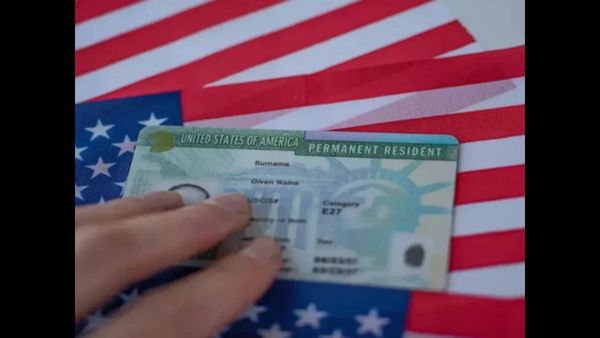
If allowed to take effect, Trump’s order would deny automatic citizenship to children born in the US if their parents are undocumented immigrants or are residing in the country under temporary legal status, such as student visas and work visas.

If allowed to stand, tens of thousands of children born in the US each year would no longer qualify for US citizenship. These children would also become ineligible for many government programs that support low-income families, including food aid and subsidized health insurance. Newborns who need intensive care at the hospital would no longer be eligible for Medicaid.

The US is among roughly 30 countries, including Canada and Mexico, that grant automatic citizenship to nearly all people born on their soil.

The Associated Press contributed reporting

Sign up to read this article
Read news from 100’s of titles, curated specifically for you.
Already a member? Sign in here
Related Stories
Top stories on inkl right now
One subscription that gives you access to news from hundreds of sites
Already a member? Sign in here
Our Picks
Fourteen days free
Download the app
One app. One membership.
100+ trusted global sources.