Get all your news in one place.
100's of premium titles.
One app.
Start reading
The Independent UK
The Independent UK
National
Safiyah Riddle

US on track to have historically low number of homicides in 2026

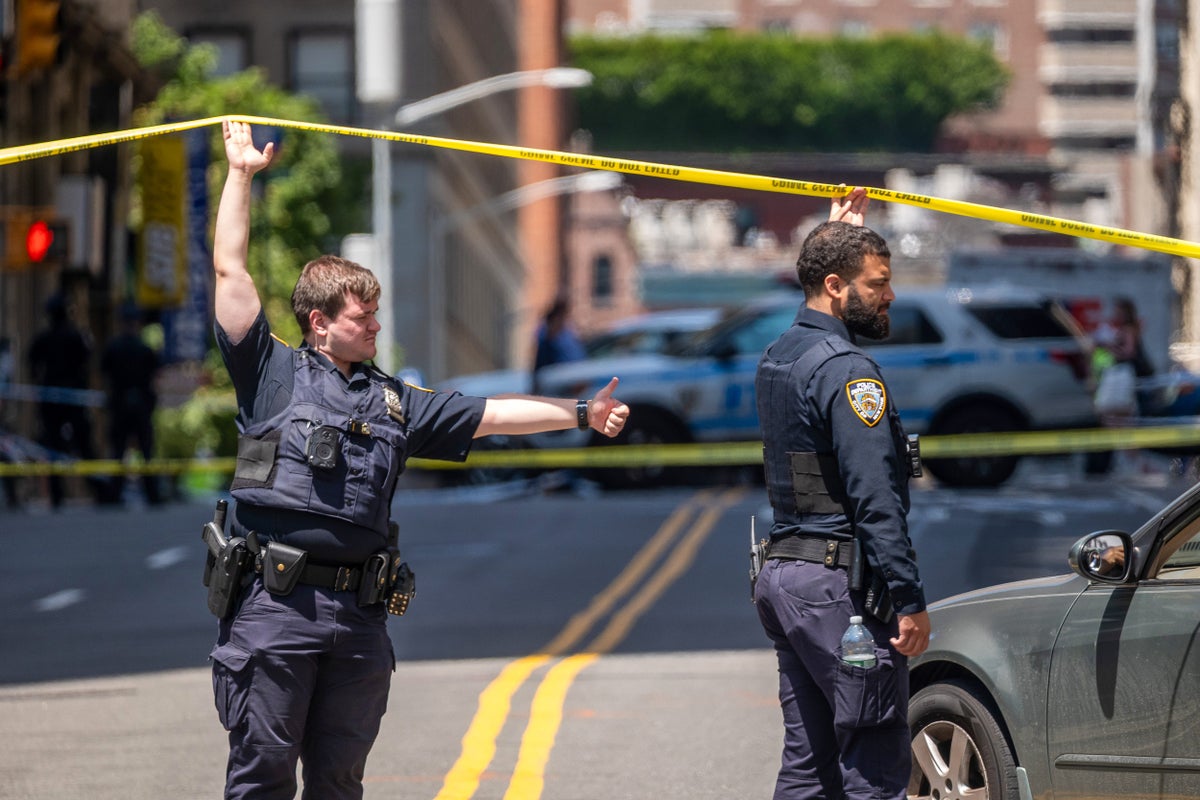
There are many factors that could impact why a location sees increases or decreases in certain crimes when another doesn't - (Getty Images)

Homicide rates across 30 major American cities have seen an 18% decrease this year compared to the same period in 2025, translating to approximately 215 fewer killings, according to a new report from the independent Council on Criminal Justice.

Should this positive trend continue, the nation could see its annual homicide rate fall to the lowest levels in over a century once final figures are compiled at year-end.

The report, released on Thursday, tracked 13 distinct crime categories, revealing declines in nine of them. These included significant drops in carjackings, residential burglaries and aggravated assaults. However, the study noted slight increases in shoplifting, domestic violence incidents, sexual assaults and drug offenses during the same 2025-2026 period.

Experts suggest these broadly positive shifts are surpassing expectations, pushing crime rates below baseline levels observed before 2020 and the Covid-19 pandemic, which had triggered historic surges in violence. While both Democrats and Republicans nationwide have sought to claim credit for these improvements in a competitive midterm election year, the report indicates that these trends are consistent across cities with diverse political leadership.

Adam Gelb, president and CEO of the Council on Criminal Justice, a nonpartisan think tank focused on criminal justice policy and research, stated that this suggests the most significant contributing factors are operating nationwide rather than being tied to specific local public safety initiatives.

Beyond the overall reduction in violent crime, the report also highlighted a 23% drop in the lethality of crimes committed, measured by the proportion of serious violent crimes that result in fatalities (Getty Images)

"Murder and other crime rates are falling across the map in cities with different political leadership, different housing and economic conditions, different policing and prosecution and violence reduction strategies and different levels of federal enforcement activity," Gelb said.

Beyond the overall reduction in violent crime, the report also highlighted a 23% drop in the lethality of crimes committed, measured by the proportion of serious violent crimes that result in fatalities. Non-violent crimes also largely declined, with residential burglaries falling 13% year-over-year and a substantial 50% decrease compared to pre-pandemic levels in 2019. Shoplifting, however, bucked this trend with a 5% increase, and while drug offenses saw a small rise, they remained below pre-pandemic figures.

Despite the widespread improvements, roughly a third of the 30 sampled cities experienced an increase in deadly violence from the first half of 2025 to the same period in 2026. This included Norfolk, Virginia, which saw a 64% rise in homicides, and San Francisco, with a 55% increase. A smaller number of cities, specifically Norfolk, Austin, Pittsburgh, and Minneapolis, recorded more homicides in 2026 than in the corresponding period in 2019.

John Roman, director of the Center on Public Safety and Justice at the National Opinion Research Center from the University of Chicago, said various factors can influence why certain locations see crime increases or decreases. Roman noted that conservative politicians affiliated with President Donald Trump might attribute success to intensified immigration crackdowns and National Guard deployments in cities like Los Angeles and Memphis. In contrast, liberal politicians might point to President Joe Biden's public safety legislation, which strengthened background checks on firearm sales.

Ultimately, Roman argued, the most compelling explanations transcend specific administrations. These include a decrease in drug usage, leading to fewer purchases from illegal markets often linked to violence, and an influx of federal funding for localities post-pandemic, which was invested in social programming. These programs, Roman added, frequently funded positions like teachers and social workers who primarily engage with "young people who are the highest risk of violence and victimization."

While both Gelb and Roman agreed there isn't a single cause for the decline, Gelb emphasized the importance of studying these outcomes for future insights and celebrating the current success.

"This is one of the most significant public safety developments in decades. It means lives are being saved, families are spared trauma and communities are regaining stability," Gelb said.

Sign up to read this article
Read news from 100's of titles, curated specifically for you.
Already a member? Sign in here
Related Stories
Top stories on inkl right now
One subscription that gives you access to news from hundreds of sites
Already a member? Sign in here
Our Picks
Fourteen days free
Download the app
One app. One membership.
100+ trusted global sources.