Get all your news in one place.
100's of premium titles.
One app.
Start reading
The Economic Times
The Economic Times
Anupam Nagar

US Market: Fed's Warsh points to AI investment, geopolitical risks for higher yields

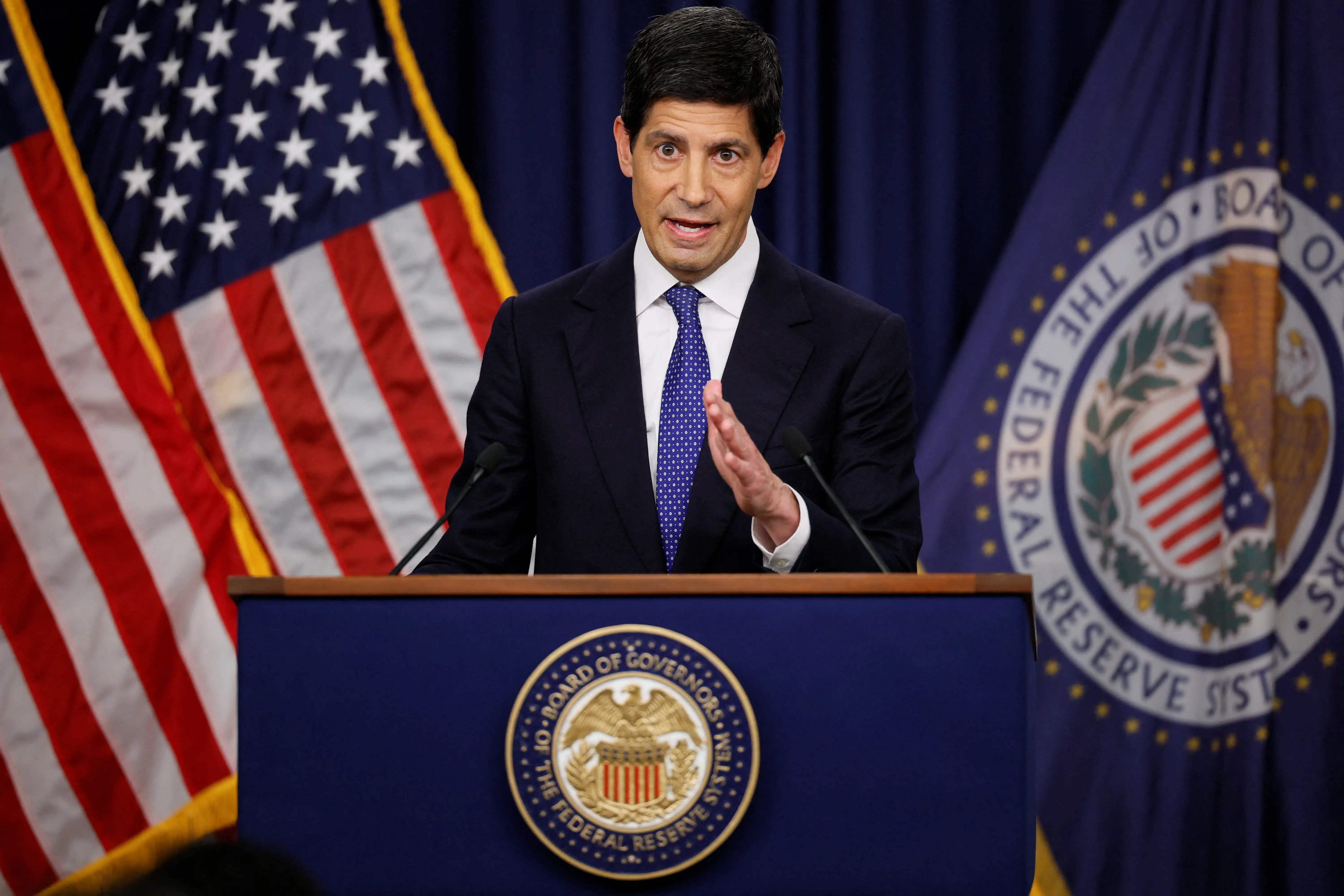
Federal Reserve Chair Kevin Warsh said rising bond yields were being driven primarily by economic strength, heavy capital investment and geopolitical uncertainty, rather than concerns about the central bank's ability to control inflation.

According to Reuters, Warsh said the surge in capital expenditure, particularly by large technology companies and hyperscalers investing heavily in artificial intelligence and data centers, was increasing competition for capital and pushing up borrowing costs.
Also Read | US Fed chair Kevin Warsh explains why the Federal Reserve raised interest rates

Warsh also pointed to geopolitical tensions around the world as another factor behind higher long-term yields. He said markets were responding not only to movements in commodity prices but also to the broader costs of turning raw materials into products that reach consumers.

The comments echoed remarks earlier this month from New York Federal Reserve President John Williams, who attributed higher yields to the strength of the U.S. economy and the investment boom in AI, data centers and technology.

Notably, Warsh did not identify concerns about persistent inflation or doubts over the Fed's ability to bring inflation back to its 2% target as major drivers of higher yields. He also did not cite concerns over the sustainability of U.S. government deficits, even as federal debt has surpassed $40 trillion.

Higher Treasury yields had been a key focus for financial markets ahead of the Fed's latest policy meeting. Policymakers unanimously raised the central bank's benchmark overnight interest rate by 25 basis points to a range of 3.75% to 4%.

Also Read | Global Market Today: Asian stocks tick higher as markets weigh further Fed hikes

Markets had increasingly anticipated a rate hike after Warsh's comments at the Federal Reserve Bank of Kansas City's annual Jackson Hole conference in late August. At the time, he indicated that the Fed would act to ensure inflation returns to its 2% target.

Warsh said market pricing did not force the Fed into raising rates. Some investors had worried that leaving rates unchanged could trigger an even sharper rise in bond yields.

According to Reuters, Warsh said policymakers would continue to observe financial-market signals but emphasized that the rate decision remained the Fed's own responsibility.

Sign up to read this article
Read news from 100's of titles, curated specifically for you.
Already a member? Sign in here
Related Stories
Top stories on inkl right now
One subscription that gives you access to news from hundreds of sites
Already a member? Sign in here
Our Picks
Fourteen days free
Download the app
One app. One membership.
100+ trusted global sources.