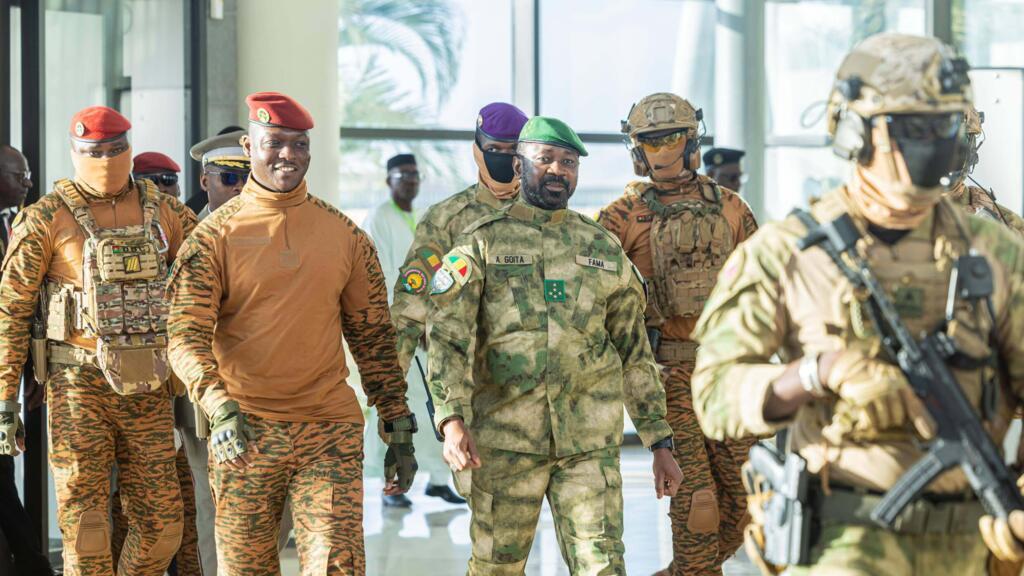
Nick Checker, head of the US State Department’s Bureau of African Affairs, visited Mali on Monday, calling for renewed economic and security cooperation between Washington and Bamako.
Nick Checker, the newly appointed head of the US State Department's Bureau of African Affairs, arrived in Bamako on Monday for an official visit, where Foreign Minister Abdoulaye Diop welcomed him.

The leaders focused their discussions on two main issues: resuming bilateral cooperation, particularly in the fight against terrorism, and strengthening economic and trade relations between Mali and the United States.
Trade, not aid
Diop told news agencies that no official statement would be issued concerning Checker's visit, but it coincides with US President Donald Trump's pivot to a "trade, not aid" foreign policy approach.
Trump has slashed foreign assistance, including dismantling the US Agency for International Development (USAID).
Mali is known to be mineral-rich, with substantial reserves in gold, lithium and uranium.
According to the official statement from Malian authorities, both sides view the reactivation of their relations as a "win-win" partnership.
Mali’s economy near standstill amid JNIM fuel attacks
Fighting jihadism
Checker emphasised his country's respect for Mali's sovereignty, and added that the American desire to revitalise bilateral cooperation with Bamako came without any form of interference.
A diplomat at the US embassy in Bamako told news agencies on condition of anonymity that the "United States sees how the jihadists are settling in the Sahel" and wants to prevent escalations.
A Malian diplomat, also on condition of anonymity, said that Washington's envoy had "come to make an offer of services to AES countries [Alliance of Sahel States, comprising Mali, Niger and Burkina Faso] to see under what conditions the United States can get involved in the fight against jihadists in the Sahel".
Niger faces multiple crises three months after military coup
"Among the conditions of US involvement are the return to constitutional order and the end of the Africa Corps contract," the Malian diplomat said.
Mali has been gripped by a security crisis since 2012, fuelled notably by violence pitting the military against groups affiliated with Al-Qaeda and the Islamic State group, and the actions of criminal gangs.
The visit also comes at a time when Russia is exerting greater influence in the region, including supplying mercenaries from its Africa Corps to help combat jihadists.
Mali, Burkina Faso and Niger have cultivated closer relations with Russia since their military leaders took power in a series of coups between 2020 and 2023, cutting ties with the West.
France halts counter-terrorism cooperation with Mali after diplomat's arrest
Resuming security cooperation
The US Bureau of African Affairs, which is part of the State Department, said last week it also planned to consult other governments in the region, including military-run Burkina Faso and Niger, "on shared security and economic interests".
While welcoming this approach, Malian Foreign Minister Diop nevertheless emphasised that this dynamic would have to take into account the regional context, and in particular the establishment of the Alliance of Sahel States.
US security cooperation with the three countries had been curtailed since the coups, but last month, the deputy commander of US Africa Command (Africom), Lieutenant General John Brennan, told French news service AFP that Washington wanted to collaborate further.
"We have actually shared information with some of them to attack key terrorist targets," Brennan said.
"We still talk to our military partners across the Sahel states, even though it's not official."
(with newswires)