Get all your news in one place.
100's of premium titles.
One app.
Start reading
International Business Times UK
Politics
Francis Louie C. Añiga

US-Iran War Talks Hang in Balance as Qatar Seeks Seven-Day Deal To Reopen Hormuz

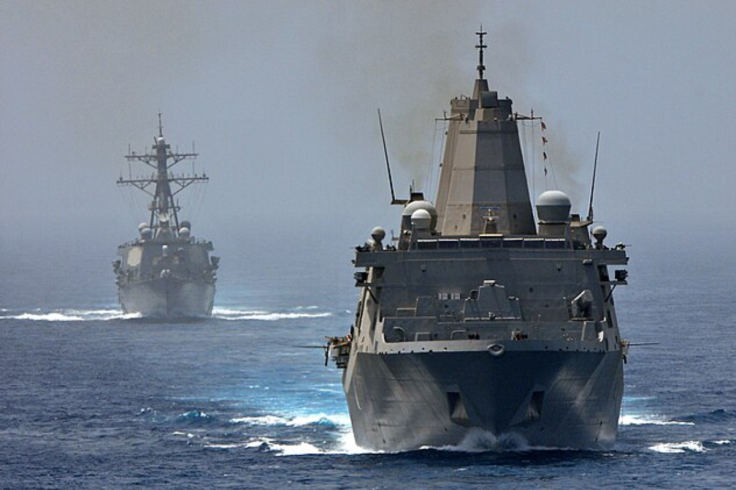
Qatar is racing to salvage amended seven‑day US–Iran war talks in New York, with a proposed deal over the Strait of Hormuz now tugging directly on global oil prices and diplomatic nerves (Credit: Official Navy Page/WikiMedia Commons)

Qatari mediators are expected to hold separate talks in New York with Iran's Foreign Minister Abbas Araqchi and US officials on Monday or Tuesday, in an attempt to advance a seven-day proposal that could halt hostilities and reopen the Strait of Hormuz.

Iran's semi-official ISNA news agency confirmed that Mr Araqchi would meet the mediators on Monday morning, New York time, to 'examine the latest proposals and views regarding the current situation'.

It was not clear who would represent Washington in the talks. Esmaeil Baghaei, the Iranian foreign ministry spokesman, told state media on Monday that Mr Araqchi's stay had not been extended and that he would return to Tehran as planned, but made no comment on the talks with the mediators.

The latest push follows Iran's presentation of a seven‑day proposal on the sidelines of the UN General Assembly last week, according to an official briefed on the negotiations who spoke on condition of anonymity. The proposal would seek to link a temporary halt in hostilities with steps aimed at reopening the strategically important waterway.

What Tehran Wants in the US-Iran War Talks

The plan would bundle a ceasefire in Iran and Lebanon, the unfreezing of billions of dollars in Iranian assets, an end to US oil sanctions and the lifting of the US blockade on Iranian ports into a single, time-bound package, officials briefed on it said. In return, Tehran would reopen the Strait of Hormuz and resume talks on its nuclear programme.

Mr Araqchi has said any move to reopen the strait depends on Tehran's conditions being met and that 'only a negotiated solution' can end the stand-off. A source close to the Iranian delegation told the IRNA news agency that Tehran had no plans for direct talks with the US in New York and was using Qatar to relay messages.

Donald Trump told reporters on Saturday that he had rejected the proposal, arguing that Tehran wanted a rapid agreement because of the economic pressure it was under. On Sunday evening, however, the US president told Axios that he still expected American negotiators to hold further talks with intermediaries this week.

Mr Araqchi said on Sunday that mediators had not 'formally conveyed' any US refusal and that Tehran was waiting for a definitive answer before deciding its next steps. The gap between the sides remains wide, with Iran seeking to link the reopening of Hormuz to its conditions while US officials have continued to emphasise nuclear issues.

Oil Prices Track Every Twist in US-Iran War Diplomacy

Brent crude was around $105 a barrel on Monday, while US West Texas Intermediate was near $93, with prices easing from earlier gains as news of the Qatari mediation effort emerged. Prices had earlier jumped by more than $4 a barrel after Mr Trump's public rejection of the proposal, before easing as the prospect of further talks emerged.

Preliminary data from analytics firm Kpler showed crude exports from key Middle East producers rebounded in September to about 12.8 million barrels per day, the highest since the war began, helped by a recovery in shipments through Hormuz.

Giovanni Staunovo, an analyst at UBS, said flows through the strait remained below pre-conflict levels, keeping the market 'undersupplied'.

About a fifth of the world's oil supply passed through the Strait of Hormuz before the conflict, highlighting the importance of the waterway to global energy markets. Flows through the strait have remained below pre-conflict levels as diplomatic efforts continue.

Separately, the White House is weighing regulatory relief to expand sales of red-dyed diesel to ease fuel prices, which have risen because of conflicts in the Middle East and Ukraine and export bans in Russia and China.

Officials are also reviewing curbing US diesel exports, a move traders say could push refiners to process less crude and widen the price gap between US and global benchmarks.

Sign up to read this article
Read news from 100's of titles, curated specifically for you.
Already a member? Sign in here
Related Stories
Top stories on inkl right now
One subscription that gives you access to news from hundreds of sites
Already a member? Sign in here
Our Picks
Fourteen days free
Download the app
One app. One membership.
100+ trusted global sources.