Get all your news in one place.
100's of premium titles.
One app.
Start reading
The Independent UK
The Independent UK
James C. Reynolds

U.S.-Iran war in numbers: Thousands dead, billions spent, and the global economy in crisis

The U.S.-Israeli war with Iran has thrown the region into chaos, killing thousands of people, costing billions of dollars, and sending energy prices to their highest levels since the invasion of Ukraine.

As the conflict enters its second month, more than 4,500 people have lost their lives, according to reports from more than a dozen countries dragged into the war since February 28.

Still, there are no signs of the war winding down, as Tehran continues to choke global trade with its grip on the Strait of Hormuz and the U.S. reportedly prepares to send an additional 10,000 troops to the region.

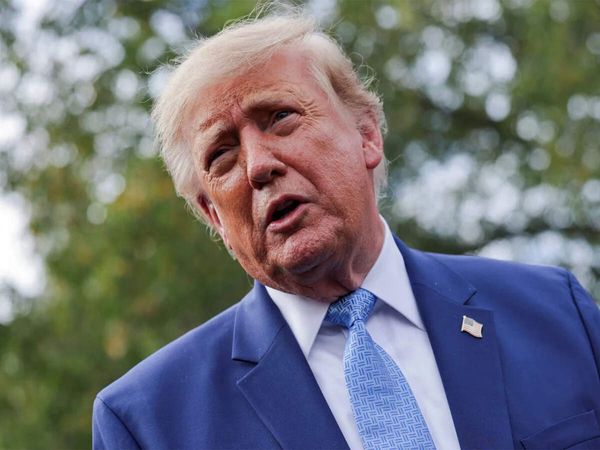
Donald Trump tried to force Iran’s hand with a threat to “obliterate” Iran’s power plants if it did not reopen the strait within 48 hours. That deadline was extended to five days on Monday, and then by another 10 days on Thursday.

“Talks are ongoing and, despite erroneous statements to the contrary by the Fake News Media, and others, they are going very well,” he said, as Iran’s Revolutionary Guards said the strait was closed and threatened to enact “harsh measures” against anyone attempting to pass through it.

An explosion erupts following strikes near Azadi Tower in Tehran on March 7 (AFP/Getty)

British foreign secretary Yvette Cooper warned on Friday that Iran “cannot hold the global economy hostage” with its selective blockade of the strait, and echoed concerns that Russia is supporting Iran against the U.S. and Israel.

With the war still rapidly escalating after a month, The Independent tallies the ballooning costs of the conflict in the Middle East.

The growing scale of the conflict

In the first 24 hours of the war, U.S. forces struck over 1,000 targets in Iran, according to U.S. Central Command, while the Israeli Air Force struck a further 750. After two weeks, the coalition forces claimed to have carried out attacks on 15,000 targets between them.

The rate of fire has settled to around 300-500 targets per day since day 10, according to analysis by the Center for Strategic & International Studies. The U.S. was averaging 375 hits each day by the start of this week, but there is still no sign of an end to the strikes.

In the latest briefing on Thursday, U.S. Defense Secretary Pete Hegseth said the military had sunk more than 150 Iranian naval vessels and destroyed more than 10,000 targets, including underground facilities and buildings vital to the regime’s defense industrial base.

The Washington Post reported on Friday that the U.S. had fired more than 850 Tomahawk missiles, each costing $3.5 million, in the last four weeks, which has concerned some Pentagon officials.

The 82nd Airborne Division (pictured in Afghanistan in 2009) will be deployed to the region as the war continues to escalate (Getty)

Elaine McCusker, a former Pentagon budget official, estimates that battle damage and replacement of losses over the first three weeks of the war will cost the U.S. between $1.4 billion and $2.9 billion.

Kuwait mistakenly shot down three F-15E Strike Eagles, together worth around $100 million when new, on March 1, and a F-35A worth $82.5 million had to make an emergency landing on March 19. The $13 billion USS Gerald R Ford aircraft carrier suffered a fire on March 12 and had to return to Greece for repairs.

The Pentagon told The Independent this week that it was sending paratroopers to Centcom’s area of responsibility.

U.S. media reported that between 1,000 and 2,000 troops could deploy. The Wall Street Journal reported on Thursday that Trump was considering sending up to 10,000 additional ground troops to the region, citing Defense Department officials.

An excavator clears rubble from destroyed residential buildings in northern Tehran on March 23 (AFP/Getty)

Iran has pounded its neighbours hosting U.S. bases with missiles and drones since the conflict erupted. The U.S. says Tehran launched more than 500 missiles and over 2,000 uncrewed aircraft in the first 100 hours of the war before cutting back.

Bahrain, Kuwait, Saudi Arabia and the U.A.E. together detected or intercepted 232 unmanned aircraft and 194 missiles on day 1, versus just 52 aircraft and eight missiles on day 23.

A month on, 16 countries are now involved in the clashes — Azerbaijan, Bahrain, Cyprus, Iran, Iraq, Israel, Jordan, Kuwait, Lebanon, Oman, Qatar, Saudi Arabia, Syria, Turkey, the U.A.E. and the U.S. — although many more have been affected by strikes on international shipping, or forced to defend foreign bases from attack.

Iran’s military has vowed to fight on “until complete victory,” despite its losses. A spokesperson said this week: “Iran’s powerful armed forces are proud, victorious and steadfast in defending Iran’s integrity, and this path will continue until complete victory.”

Defense Secretary Pete Hegseth (pictured with Donald Trump on March 26) says the U.S. is delivering unprecedented damage to the Iranian regime (Getty)

The human cost of the war

Some 3,300 people have already been killed in Iran, rights group HRANA reported this week.

Among them were 1,464 civilians, including at least 217 children. Maria Martinez, IFRC head of delegation for Iran, said that 3 percent of the population of Iran is internally displaced.

Iranians are still grieving the deaths of some 175 people, mostly schoolgirls, killed in a missile attack on an elementary school in southern Iran on the first day of the war. A preliminary investigation is said to have blamed a “mistake” by the U.S. military, though a full explanation is still pending.

The conflict has also seen a spike in arrests in Iran, according to monitors. Norway-based rights group Hengaw reported on Thursday that at least 1,700 people have been arrested in a wartime crackdown. Three people were executed in mid-March for their alleged roles in recent demonstrations.

A displaced girl holds a baby as other children stand at tents sheltering people who fled Israeli airstrikes in Dahiyeh, Lebanon (AP)

The war has also reopened clashes between Israel and Hezbollah, displacing hundreds of thousands of people in Lebanon. Nearly 1,100 people have been killed in Israeli strikes since March 2, including at least 121 children, according to the Lebanese authorities.

Gabriel Karlsson, the British Red Cross’s Middle East country cluster manager, told The Independent that more than a million people have been displaced by the conflict so far, up from the 700,000 reported on March 11.

“We are looking at hundreds of thousands of people who have no means to go back to see what happened to their houses, to their homes, to their livelihoods, living in shelters ... This is not only about a specific group or community. They come from all walks of life and all kinds of backgrounds.”

In the first week alone, the Lebanese Red Cross delivered 19,888 blankets, 7,533 mattresses, 2,920 hygiene kits and 75,766 food and water parcels to those in need. Karlsson said the situation had seen the mobilisation of all available resources, as the scale of the humanitarian catastrophe was eclipsing what they had seen in past crises, such as the Iraq war and the civil war in Syria.

U.N. officials revealed on Friday that more than 370,000 children have been forced from their homes in Lebanon in just three weeks. Israeli forces have told people to leave their homes across around 15 percent of the country, including the entire south.

The International Federation of Red Cross and Red Crescent Societies (IFRC) reported on March 11 that a Red Cross volunteer paramedic, Youssef Assaf, died from wounds sustained while doing humanitarian work in Lebanon.

Smoke rises from the site of an Israeli airstrike on the eastern outskirts of Tyre, southern Lebanon, on Tuesday (AFP/Getty)

Global impact on oil and gas

Iran has sought to pressure the U.S. and Israel to end the conflict with an effective closure of the Strait of Hormuz, a vital waterway that normally facilitates the transport of about one-fifth of global oil and liquified natural gas supplies.

Iran has now made deals with a few countries to allow safe transit, but the pinch continues to force up global oil prices.

A barrel of oil that cost $72 on February 27 now costs between $90 and $100. Brent Crude was trading at $107 a barrel on Thursday, up 50 percent from February 28. Prices peaked at $120 a barrel on March 9.

Analysis by the RAC Foundation published this week found that motorists in the U.K. have paid an additional £307 million ($407 million) for petrol and diesel since the conflict erupted.

Trump has argued that when the price of oil goes up, the U.S. “makes a lot of money.” But U.S. producers operating in the Middle East will also be exposed to disruption from the war.

Impact on the economy

Pentagon officials told lawmakers that the first six days of the conflict had cost the U.S. $11.3bn, as the opening hours of the war saw the U.S. blitz Iran with expensive long-range missiles.

The Center for American Progress, a liberal advocacy group based in the U.S., forecast that by the end of this week, the war could have cost $25bn in total. The U.N. estimates that the U.S. is spending around $1bn per day on the war.

Global growth could be dragged below 2 percent this year as headline inflation rises past 4 percent, according to projections of more severe scenarios by Citi analysts.

As flights to and from the Middle East were disrupted, The Independent reported that the conflict was costing the travel industry £450 million per day — around £20 million every hour.

In the U.S., Goldman Sachs estimates that the oil-price shock will cost the economy 10,000 jobs per month through to the end of the year, mostly hurting restaurants, hotels and retail stores.

Who is benefiting from the war?

Since the war began, Russia has benefited from an extra $150 million a day thanks to the rise in oil prices, according to the Financial Times.

Moscow could be on track for its biggest year of fuel revenues since 2022. Norway and Canada, which have huge deposits of oil, could also gain from the price spike.

Iran has warned of further attacks on ships passing through the Strait of Hormuz (AP)

Defense firms will also benefit from large orders of weapons. The Pentagon announced that Lockheed will quadruple production of the Precision Strike missile for the U.S.

Market analysts observed this week that traders had bet hundreds of millions of dollars on oil contracts just minutes before Trump said the U.S. would postpone strikes against Iranian energy infrastructure, sparking questions about whether bets may have been placed with prior knowledge of the sensitive policy decision.

According to Bloomberg, at least 6 million barrels of Brent and West Texas Intermediate were suddenly sold in a two-minute window on Monday, some 10 minutes before Trump’s announcement. The White House denied that any profiteering took place.

Sign up to read this article
Read news from 100's of titles, curated specifically for you.
Already a member? Sign in here
Related Stories
Top stories on inkl right now
One subscription that gives you access to news from hundreds of sites
Already a member? Sign in here
Our Picks
Fourteen days free
Download the app
One app. One membership.
100+ trusted global sources.