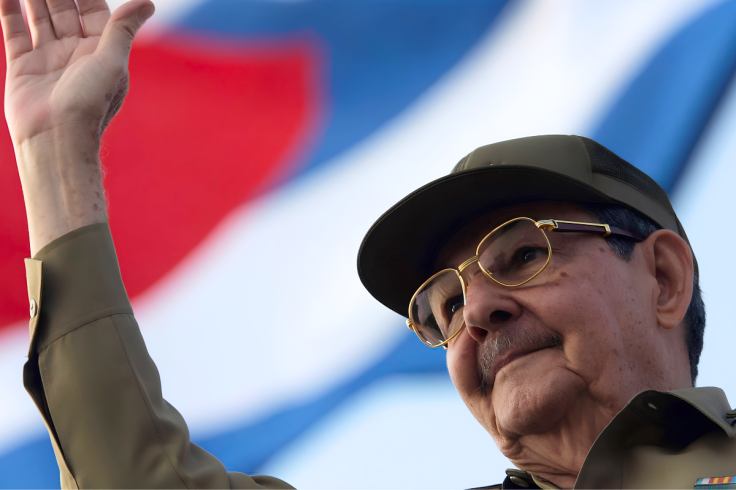
The US Department of Justice has indicted former Cuban President Raúl Castro on murder and conspiracy charges for his alleged role in ordering the 1996 shootdown of two unarmed civilian planes that killed four men, three of them American citizens.

Charges Unsealed on Cuban Independence Day
Acting Attorney General Todd Blanche announced the charges on 20 May at Miami's Freedom Tower, a landmark often called 'the Ellis Island of the South' for its historical role as a processing centre for Cuban refugees. The indictment, originally returned by a grand jury on 23 April, was unsealed on the date marking Cuba's declaration of independence from Spain in 1902. Blanche declined to explain the timing.
Castro, 94, faces one count of conspiracy to kill US nationals, four counts of murder, and two counts of destruction of aircraft. Five co-defendants were also named, all former Cuban military pilots who allegedly fired the missiles. They include Lorenzo Alberto Perez-Perez, Emilio José Palacio Blanco, José Fidel Gual Barzaga, Raul Simanca Cardenas, and Luis Raul Gonzalez-Pardo Rodriguez.
'For the first time in nearly 70 years, senior leadership of the Cuban regime has been charged in this country for acts of violence resulting in the deaths of American citizens,' Blanche said.
How Cuba's Spy Ring Set the Trap
On 24 February 1996, three Cessna planes carrying volunteers from Brothers to the Rescue, a Miami-based Cuban exile group that flew humanitarian search missions over the Florida Straits, departed from Opa-locka Airport. Cuban MiG-29 fighter jets fired air-to-air missiles at two of the aircraft in international airspace, killing Carlos Costa, Armando Alejandre Jr., Mario de la Peña, and Pablo Morales. A third plane, carrying the group's founder, José Basulto, escaped.
But the attack didn't happen without preparation. The indictment describes an extensive infiltration effort by Cuban intelligence known as Operation Scorpion, part of a broader spy ring called the Wasp Network. Among the agents was Juan Pablo Roque, a Cuban double agent who had posed as a defector and joined Brothers to the Rescue. Roque allegedly gave the FBI false information that the group would not be flying that weekend. Cuban intelligence officials also instructed Roque and one other person not to fly with the group on the day of the shootdown, ensuring their own agents wouldn't be on the doomed planes.
Several members of the spy ring were arrested in 1998 and convicted in federal court. Ringleader Gerardo Hernandez received a life sentence for murder conspiracy tied to the attack.
Why It Took 30 Years
Federal prosecutors in Miami had prepared a potential indictment targeting the Castro brothers in the years after the shootdown, but the charges were never filed. Geopolitical calculations, diplomatic thaws, and shifting administrations repeatedly shelved the case. The push to reopen the investigation gained momentum in early 2026 when Florida's Cuban-American congressional delegation formally urged President Donald Trump to direct the DOJ to act.
What Comes Next for US-Cuba Tensions
The indictment gives the US a legal framework for a potential capture operation, similar to the special operations raid in Venezuela that deposed former President Nicolás Maduro. But with the White House already consumed by the ongoing conflict with Iran, former diplomats and those close to the administration don't expect imminent military action against Cuba.
Havana has dismissed the charges. Cuban President Miguel Díaz-Canel called the indictment 'political theatre,' and Cuba's Foreign Ministry labelled the allegations 'illegitimate and illegal.' Whether Castro, who turns 95 next month, will ever see the inside of a US courtroom remains far from certain. But for the families of the four men killed over the Florida Straits three decades ago, the indictment marks the first official step toward accountability that many had been told would never come.