Get all your news in one place.
100's of premium titles.
One app.
Start reading
Bangkok Post
Bangkok Post
World

US charges former Cuban president with murder

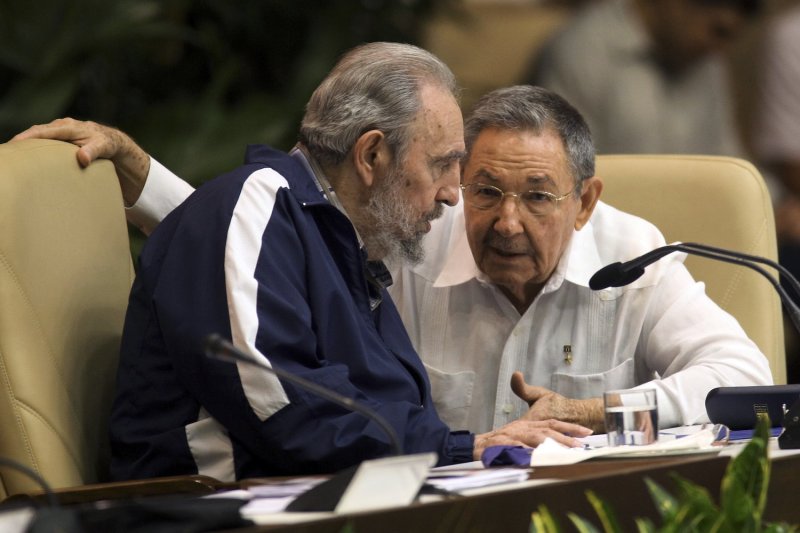
Raul Castro (right), then president of Cuba, confers with his brother Fidel during the Sixth Congress of the Communist Party of Cuba in Havana on April 19, 2011. (Photo: Jose Goitia/The New York Times)

The US Justice Department on Wednesday unsealed an indictment against Raul Castro, the 94-year-old former president of Cuba, charging him with murder and a conspiracy to kill US citizens stemming from the fatal downing 30 years ago of two planes.

The indictment, issued in US District Court in Miami, was an extraordinary escalation of the Trump administration’s multifaceted pressure campaign against Cuba’s communist government. It also accused five others involved in the downing of the planes.
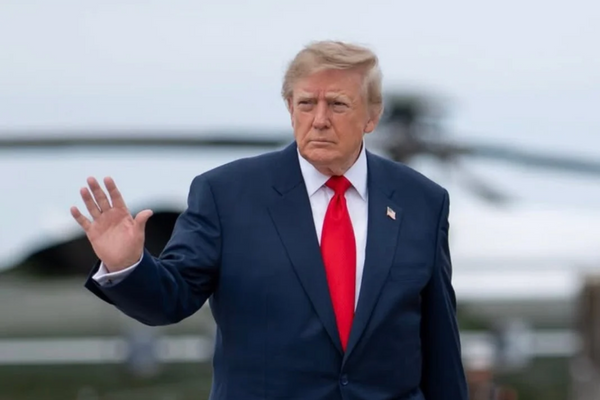
The charges, which were built on an earlier case first filed in 2003, lay the grounds for potential action by the US military to remove Raul Castro from the country. US Special Operations forces used an indictment against Nicolás Maduro, the former leader of Venezuela, to swoop into Caracas in a brazen operation in January and capture him.

The indictment was announced at a news conference in Miami by acting Attorney General Todd Blanche and Jason A Reding Quiñones, the US attorney for the Southern District of Florida.

They accused Castro and others, including former Cuban pilots, of killing four people who died when the Cuban military shot down two planes in 1996 run by Brothers to the Rescue, a Cuban exile group that used aircraft to look for Cubans fleeing the country by sea.

Fidel Castro took responsibility for downing the planes shortly after they were shot down, claiming that the organisation had dropped anti-regime leaflets over Havana in earlier flights.

“My message today is clear,” Blanche said. “The United States and President Trump does not — and will not — forget its citizens.”

Echoing that theme, Quiñones said that Cuba’s communist government had acted with impunity for decades but that the indictment would finally hold some of its leaders accountable.

“Those who kill Americans,” he said, “cannot simply wait out American justice.”

When asked by reporters if the indictment was a prelude to US military action in Cuba, Blanche said that decision was up to President Trump and his foreign policy team.

In the 30 years since the planes were downed, Cuban American lawmakers, exile activists, survivors of the episode and family members of the victims have called for Raúl Castro, who was minister of defence at the time, to be criminally charged.

But Blanche had little to say when asked by reporters why an indictment in the case was returned now.

“Believe me, the thing which is most true is that for 30 years that has elapsed since then, the delay in justice has been the biggest injustice that has taken place,” José Basulto, who ran Brothers to the Rescue, said in an interview earlier this year.

Ernesto Soberón Guzmán, Cuba’s ambassador to the United Nations, told The New York Times on Wednesday that the charges against Raul Castro were an attempt by the Trump administration to create a pretext for military action against Cuba.

“I cannot call it another word than a circus — a circus they are now mounting as one more action to justify military aggression against Cuba,” Guzmán said in an interview.

He added that Brothers to the Rescue had violated Cuban airspace 25 times before the Cuban military shot down its planes and that Cuban officials had repeatedly pleaded with US authorities to stop the group’s flights over Cuba, including in a letter from Fidel Castro to President Bill Clinton, a point supported by declassified US documents from the time.

“How many deliberate and serious violations of US airspace would any US government allow before taking action?” he asked.

While the investigation into Raúl Castro had been going on for weeks, Blanche and Quiñones chose to unseal the charges on Wednesday. It coincided with Cuban Independence Day, commemorating the end of the US military occupation of the island in 1902.

The indictment of Castro came at a moment of rising crisis for Cuba as the country’s oil supplies for domestic use and power plants have been exhausted.

It also followed an unusual visit by John Ratcliffe, the CIA director, who met with senior Cuban officials, including Castro’s grandson, about a week ago. In the talks, he warned the government that it had to make economic changes and stop allowing Russia and China to operate intelligence posts on its soil.

Sign up to read this article
Read news from 100's of titles, curated specifically for you.
Already a member? Sign in here
Related Stories
Top stories on inkl right now
One subscription that gives you access to news from hundreds of sites
Already a member? Sign in here
Our Picks
Fourteen days free
Download the app
One app. One membership.
100+ trusted global sources.