Get all your news in one place.
100's of premium titles.
One app.
Start reading
The Guardian - UK
The Guardian - UK
Business
Phillip Inman

US and UK central banks expected to keep interest rates on hold amid Iran peace deal

People rush to get groceries after waiting in line for the opening of a Trader Joe's grocery store
The Federal Reserve chair is expected to say that the opening of the strait of Hormuz will ease inflation over the rest of the year. Photograph: Ryan Murphy/Getty Images

Central banks in the US and UK are expected to leave interest rates on hold this week as the peace deal in the Middle East is predicted to ease inflationary pressures.

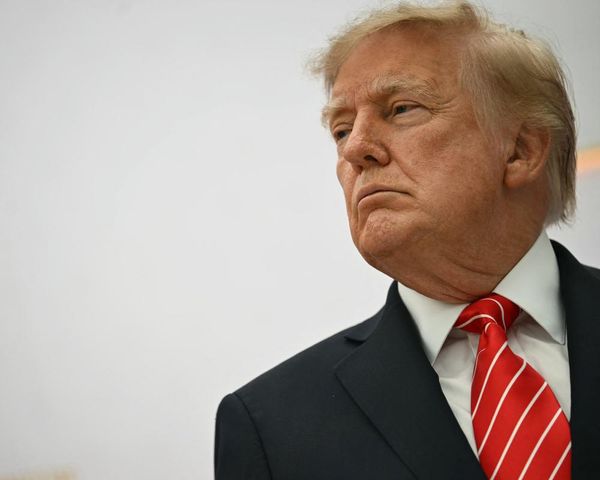
The US Federal Reserve is expected to hold its benchmark interest rate at a range of 3.5% to 3.75% on Thursday, in what will be the first policy decision under the new Fed chair – and Donald Trump’s pick – Kevin Warsh.
Investors will be closely watching Warsh’s comments in the press conference after the decision, for clues on his views on the likely path for US inflation and the economy more widely. Inflation in the world’s largest economy has jumped from 2.4% in February to a three-year high of 4.2% in May.

Before Trump struck a fresh deal with Iran at the weekend, Warsh was under mounting pressure to raise interest rates – against the president’s wishes – in response to rising prices, but he is expected to say that the opening of the strait of Hormuz will ease inflation over the rest of the year.

The Bank of England (BoE) is expected to hold interest rates at 3.75% despite UK inflation running at 2.8%, above its 2% target.

Analysts said most of the Bank’s nine-member monetary policy committee would adopt a “wait-and-see” approach when they meet on Thursday before reacting to the deal, which triggered an immediate drop in oil prices. Financial markets are now still pricing in one more UK rate rise this year, in December.

James Smith, an economist at ING, said it was uncertain how long a peace deal would hold. “But if the deal endures and oil starts flowing again, UK inflation would likely stay below 4% and enable the Bank of England to avoid a rate hike this summer,” he added.

Last week the European Central Bank (ECB) raised interest rates from 2% to 2.25% after eurozone consumer price inflation rose to 3.2% in May 2026, from 3% in April.

The ECB president, Christine Lagarde, said on Monday that higher energy prices were starting to feed through to other parts of the economy.

“Indirect effects of inflation, we have absolutely started to see that more or less everywhere in recent weeks,” Lagarde told French radio.

“When we start to feel second-round effects bubble up – which are risks of wage increases in particular – we necessarily have to take measures,” she added.

Officials are known to be concerned that the conflict in the Middle East has already encouraged aggressive wage bargaining, forcing manufacturers and retailers to push through price increases into the summer and autumn to maintain profit levels. Like the BoE and the Fed, the ECB’s inflation target is 2%.

The Bank of England governor, Andrew Bailey said last week that there was less pressure on the monetary policy committee to raise borrowing costs after commercial lenders raised rates on loans and mortgages.

Sign up to read this article
Read news from 100's of titles, curated specifically for you.
Already a member? Sign in here
Related Stories
Top stories on inkl right now
One subscription that gives you access to news from hundreds of sites
Already a member? Sign in here
Our Picks
Fourteen days free
Download the app
One app. One membership.
100+ trusted global sources.