
Get all your news in one place.
100’s of premium titles.
One app.
Start reading
Tom’s Hardware
Tom’s Hardware
Technology
Luke James

US and Japan move to loosen China’s rare earths grip — nations partner to build alternative pathways to power, resource independence

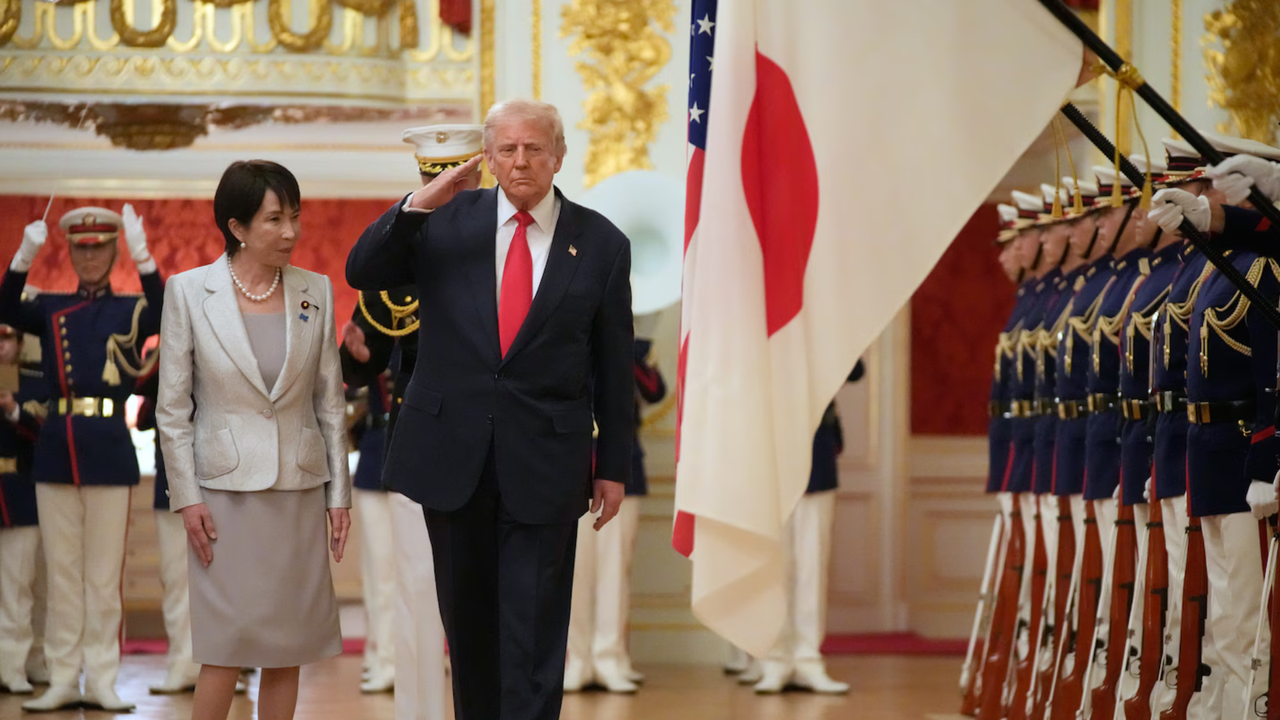
Trump salutes as he and Japanese PM Takaichi review the honor guard during at Akasaka Palace.

The US and Japan have signed a rare earths and energy cooperation agreement aimed squarely at China’s chokehold on critical tech supply chains. Announced on October 28 in Tokyo, the agreement commits both governments to securing mineral flows and accelerating the deployment of advanced nuclear power.

The timing of this is obviously no accident. President Trump is set to meet Chinese President Xi Jinping later this week, and today’s announcement served as a pointed signal that the US is actively building alternative pathways around China’s resource leverage. This is the first major bilateral engagement of Japan’s new Prime Minister Sanae Takaichi, who took office on October 21.

While specifics surrounding the cooperation agreement are not yet known, it’ll likely include pathways for accessing neodymium and praseodymium, two rare earths essential to producing the permanent magnets used in everything from EV motors to consumer hard drives. For now, this is a sector China still dominates. Despite holding around half of the world’s total rare earth oxides, it controls over 85% of the global refining and magnet-making capacity.

That grip has tightened recently through export controls on key processing technologies, sending neodymium prices into another volatility cycle. Any US-Japan move to de-risk magnet supply could help blunt cost shocks before they ripple downstream into PC hardware.

But minerals are only part of the story. According to Reuters, Japan’s factsheet for the talks noted a mutual interest to cooperate in the construction of next-gen nuclear power, with specific emphasis on “small modular reactors.” This overlaps with the BWRX-300 design being commercialized by GE Vernova and Hitachi, already approved for construction in North America. It aligns with a broader tech push: Google, Amazon, and Microsoft are all pursuing nuclear options as a long-term solution to rising energy needs for AI inference.

With projects like OpenAI’s Stargate and xAI’s Memphis facility well underway, and US fabs like TSMC Arizona already lobbying for dedicated power capacity, nuclear power is becoming a hardware issue. If the US-Japan partnership succeeds in fast-tracking advanced reactors, it could influence where, and how affordably, next-gen GPUs and AI servers are built and deployed.

Follow Tom's Hardware on Google News, or add us as a preferred source, to get our latest news, analysis, & reviews in your feeds.

Sign up to read this article
Read news from 100’s of titles, curated specifically for you.
Already a member? Sign in here
Related Stories
Top stories on inkl right now
One subscription that gives you access to news from hundreds of sites
Already a member? Sign in here
Our Picks
Fourteen days free
Download the app
One app. One membership.
100+ trusted global sources.







